

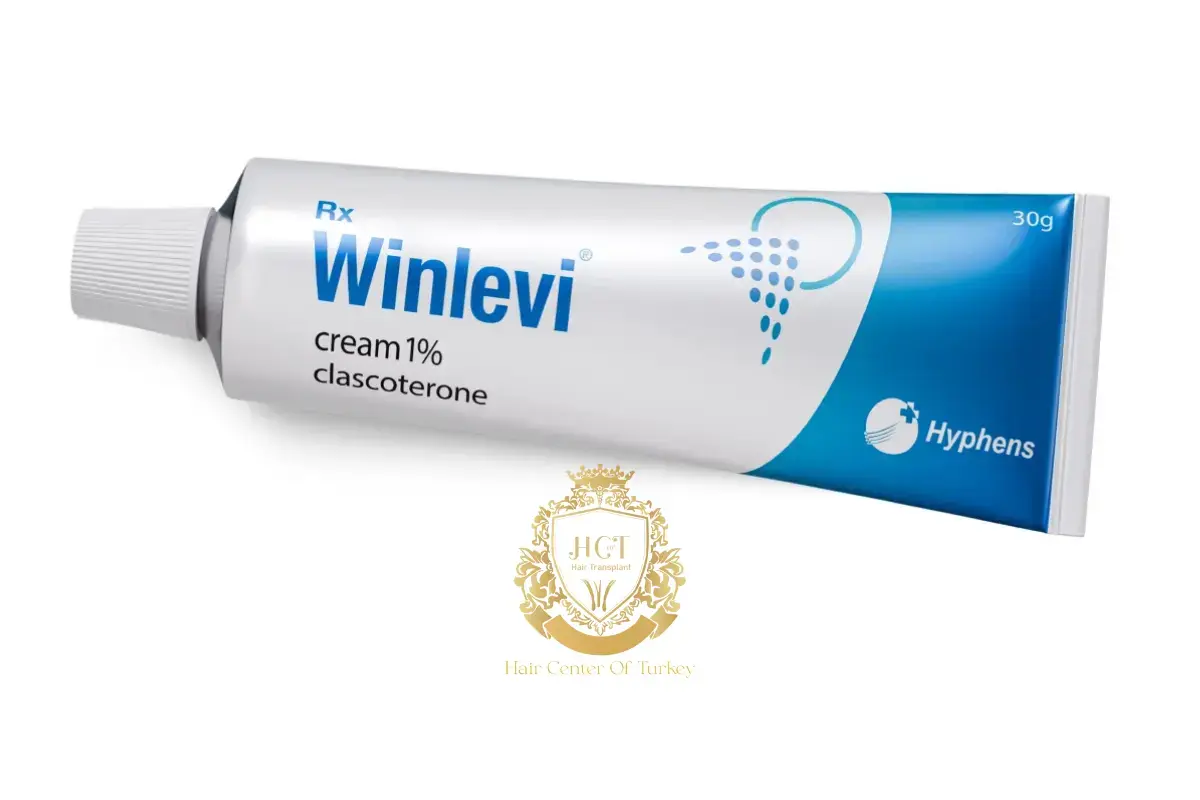
Clascoterone is a topical anti-androgen approved for acne, where the 1% cream is sold under the brand name Winlevi. Its hormone-blocking action has also drawn research interest for androgenetic hair loss, though it isn’t approved for that use yet. At Hair Center of Turkey — where three specialist doctors have carried out around 3,000 hair transplants and hair-loss treatments every year since 2014 — we explain how clascoterone works, what the current evidence shows for acne and hair loss, and where it might sit alongside proven treatments.
Table of Contents
What Is Clascoterone (Winlevi)?
- Clascoterone is a topical anti-androgen that blocks androgen receptors in the skin.
- Its approved use is acne — the best-known brand is Winlevi, a 1% prescription cream.
- Chemically it’s a steroidal molecule, but it is not a corticosteroid “steroid cream.”
- It is not an approved hair-loss treatment; that use is still under clinical research.
- For androgenetic hair loss, established options include minoxidil and, for some patients, finasteride or dutasteride.
What Is Clascoterone?
Clascoterone is a topical anti-androgen medication. In simple terms, it helps reduce the skin’s response to androgens (hormones like testosterone and dihydrotestosterone) at the receptor level. The best-known brand is Winlevi, a 1% cream prescribed for acne.
Unlike oral anti-androgens, clascoterone is designed to act mainly where you apply it. That local approach is the reason it has attracted attention not only in acne care, but also in other androgen-influenced concerns such as oily scalp and androgenetic (pattern) hair loss research.
Clascoterone (Winlevi): What It Is, How It Works, and What It Can (and Can’t) Do
Clascoterone (sold as Winlevi) is a prescription topical medication that blocks androgen receptors in the skin. It’s approved to treat acne by reducing androgen-driven oil production and inflammation. It is not a typical “steroid cream,” and it isn’t yet an approved hair-loss treatment. Here’s what to know about benefits, safety, cost, and common hair-related questions.
How Winlevi Works on Acne
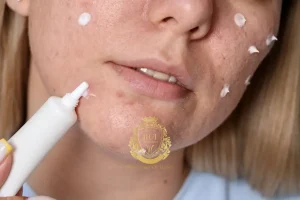
Acne is often driven by a mix of clogged pores, bacteria, inflammation, and sebum (oil). Androgens can increase sebum production, which can make breakouts harder to control. Winlevi works by blocking androgen receptors in the pilosebaceous unit, helping reduce oiliness and inflammation over time.
Most people use it as part of a broader routine that may also include a gentle cleanser, moisturizer, sunscreen, and—when needed—other prescription topicals. Your clinician will advise how to layer products to reduce irritation and keep treatment consistent.
Is Clascoterone a Topical Steroid?
This is a common point of confusion. Clascoterone is a steroidal molecule in terms of chemistry, but it is not used as a topical corticosteroid the way hydrocortisone or betamethasone creams are used for eczema and rashes. Its intended action is anti-androgenic, meaning it blocks androgen receptors in the skin.
That distinction matters because “steroid creams” usually refer to corticosteroids that calm immune-driven inflammation. Clascoterone isn’t prescribed for that purpose, and it shouldn’t be treated as a substitute for dermatologic steroid therapy.
Side Effects and Safety Basics
Most reported side effects are local and mild-to-moderate, such as redness, dryness, itching, burning, or peeling at the application site. These are similar to reactions seen with many topical acne treatments, especially early on.
Because the medication is meant to act locally, systemic absorption is generally low when used as directed. Still, it’s important to follow dosing instructions—especially if you are applying to large areas, using occlusive dressings, or combining multiple strong topicals.
Can Clascoterone Help With Hair Loss?
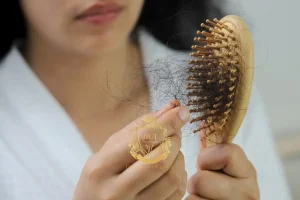
Interest in clascoterone for hair is based on the same hormone pathway that affects acne and oily skin. In androgenetic alopecia, dihydrotestosterone (DHT) can gradually shrink susceptible hair follicles. Blocking androgen receptors in the scalp is a logical strategy, and clinical studies are exploring it.
For now, it’s important to separate research interest from real-world expectations. Winlevi 1% is approved for acne, not hair regrowth. If you’re dealing with thinning, a clinician can help confirm the cause and build a plan using treatments with established results, such as topical minoxidil, and (for appropriate patients) prescription options like finasteride or dutasteride.
Where It Fits for Patients Considering Hair Restoration
At Hair Center of Turkey, we often see people who have tried many products before they consider hair transplantation. The first step is always diagnosis. Pattern hair loss, telogen effluvium, traction alopecia, and inflammatory scalp conditions can look similar at first glance, but they require different strategies.
If hair loss is androgen-driven, a doctor may discuss medical therapy to stabilize shedding and protect existing follicles. That medical foundation matters, even if you later choose a transplant, because it helps preserve non-transplanted hair over the long term.
How Clascoterone Works
Clascoterone is an androgen receptor inhibitor. Applied to the skin, it competes with hormones like dihydrotestosterone (DHT) and testosterone for the androgen receptors in sebaceous glands and hair follicles, which blunts the local hormonal signaling that drives oil production and inflammation in acne. It is broken down into an inactive compound close to where it is applied, so very little reaches the bloodstream. That local action is also why researchers have looked at it for androgenetic hair loss, which is itself driven by DHT acting on the follicle — but a shared mechanism is not the same as proven results, and clascoterone is not approved for hair loss.
Approved Use and How It Is Applied
The only approved use is acne. Winlevi 1% cream is licensed for acne vulgaris in patients aged 12 and older, applied as a thin layer to the affected area twice a day, morning and evening, on clean dry skin. There is no approved clascoterone product or established dosing for hair loss, so any use for that purpose is experimental and should only be considered under a doctor’s supervision. We do not recommend self-treating hair loss with an acne cream.
What the Research Shows: Acne and Hair Loss
For acne, the clinical trials behind the approval showed meaningful reductions in inflammatory and non-inflammatory lesions over 12 weeks, with side effects mostly limited to mild local skin reactions. The hair-loss picture is far earlier. A separate topical formulation has been studied for androgenetic alopecia, and early-phase trials reported some encouraging signals, but the evidence is limited, not yet confirmed in large studies, and has not led to approval. For now it is best read as a promising research direction rather than an established treatment.
Clascoterone vs. Finasteride, Dutasteride and Minoxidil
Finasteride and dutasteride are oral medicines that lower DHT throughout the body by blocking the 5-alpha-reductase enzyme; they have the strongest evidence for male pattern hair loss but carry the possibility of systemic side effects. Minoxidil works differently, extending the growth phase of the hair cycle rather than targeting hormones, and is used topically or orally. Clascoterone’s theoretical appeal is that it blocks the androgen receptor directly in the skin with little systemic absorption. The key difference is the evidence: finasteride and minoxidil are proven and widely used for hair loss, while clascoterone for that purpose is still investigational.
- Finasteride / dutasteride — oral 5-alpha-reductase inhibitors; strongest evidence for hair loss; possible systemic effects.
- Minoxidil — topical or oral; acts on the hair growth cycle rather than hormones; proven and widely used.
- Clascoterone — topical androgen receptor blocker; approved for acne, investigational for hair loss.
Who Should Avoid Clascoterone
Clascoterone should not be used by anyone allergic to it or its ingredients. In acne studies, applying it over large areas was occasionally linked to reversible suppression of the body’s natural cortisol signaling, so it should be used as directed rather than applied heavily. Safety data in pregnancy and breastfeeding is limited, so it is not recommended without medical advice, and it has not been studied in young children. If you are considering it off-label for hair loss, speak to a doctor first — especially if you have other skin conditions or take other medications.
Combining Clascoterone with Treatments at Hair Center of Turkey
At Hair Center of Turkey, we look at hair loss as a whole rather than pinning hopes on a single product. Proven options — finasteride, minoxidil, PRP and, where appropriate, hair transplantation — remain the backbone of what we recommend. If clascoterone’s research matures, it could one day complement those tools, but today our doctors plan treatment around what the evidence actually supports for each patient. If you are weighing your options, a consultation is the best way to find the right combination for your situation.
Frequently Asked Questions
Is clascoterone a steroid?
Yes, it’s a synthetic steroidal antiandrogen.
What does clascoterone do for skin?
It blocks androgen receptors, reducing sebum and inflammation to treat acne.
How is clascoterone different from finasteride?
Clascoterone blocks androgen receptors topically; finasteride lowers DHT via 5α-reductase inhibition.
Will clascoterone regrow hair?
Yes, clascoterone 5% showed increased hair counts in Phase 3 trials.
Is clascoterone better than minoxidil?
No; minoxidil has stronger evidence and approval for hair loss.
Explore the complete guide: Hair Loss Treatments