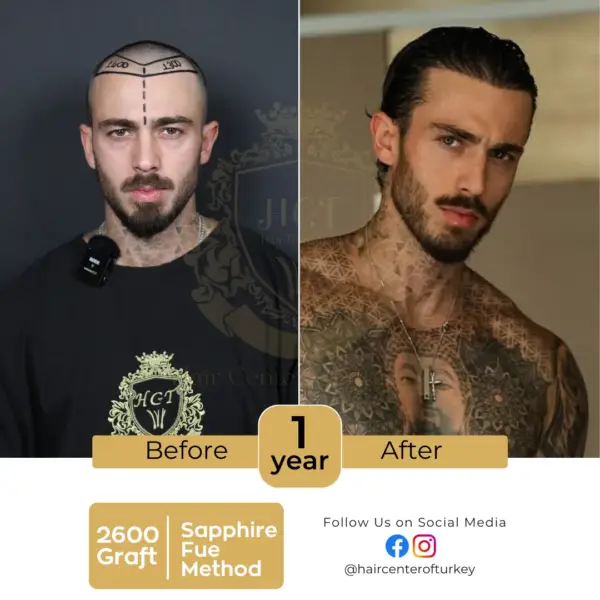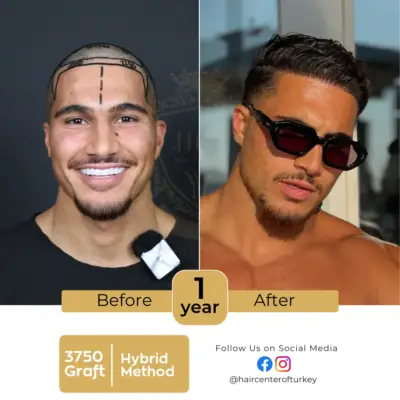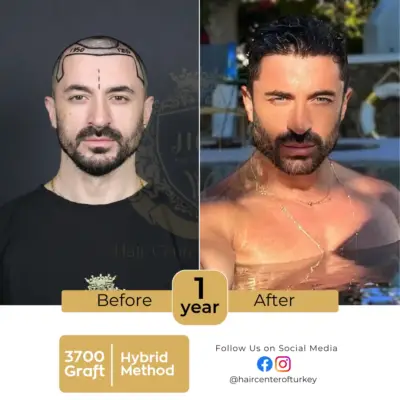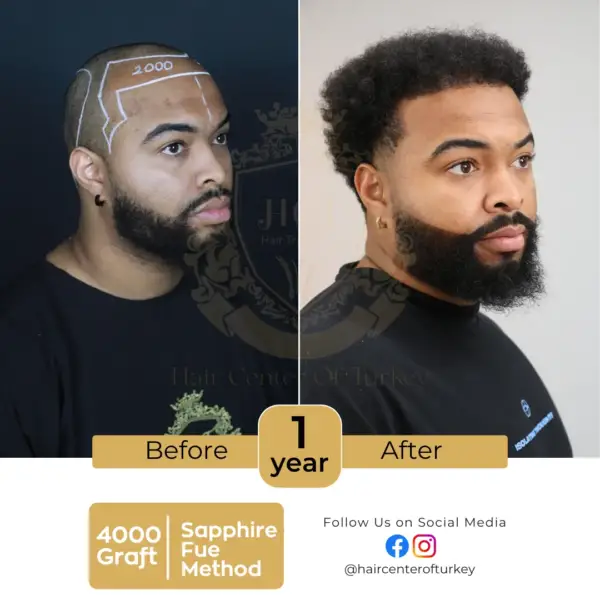



Yes. If follicles are alive but miniaturized, hair loss can regrow without a hair transplant using proven medical and in-clinic treatments.
Yes, hair can regrow without surgery when the follicles are still alive but shrinking. Whether hair loss regrow without a hair transplant depends on one thing: is the follicle intact, or has it been destroyed? Hair Center of Turkey, founded in 2014, works with US patients who want an honest read on their options before spending on treatment.
With three doctors and around 3,000 procedures every year, the clinic sees the full range of cases. That spans thinning that still responds to medication all the way to advanced loss that needs surgery. For American patients weighing years of prescriptions against a single procedure abroad, knowing which category you fall into saves both money and time.
Table of Contents
Which Types of Hair Loss Can Regrow Without Surgery
The deciding factor is whether your follicles are alive. Non-scarring hair loss, where the follicle has shrunk but stays in place, can regrow with the right treatment. Scarring or cicatricial alopecia is different: inflammation destroys the follicle and replaces it with scar tissue, so nothing grows from that spot again. In those cases, coverage requires relocating healthy hair into the affected scalp.
Think of it as a living-follicle test. As long as the root structure is intact, it can be reactivated by medication or an in-clinic therapy that wakes dormant follicles. Once that structure is scarred over or fully dead, no serum, laser, or pill brings it back.
Reversibility depends on follicle status, not on how thin the hair currently looks. A scalp can appear sparse while most follicles are only miniaturized and fully recoverable. That is why an accurate diagnosis comes first, and why understanding whether hair loss regrow without a hair transplant starts with a proper scalp assessment rather than a guess.
How Pattern Hair Loss Miniaturization Can Be Reversed
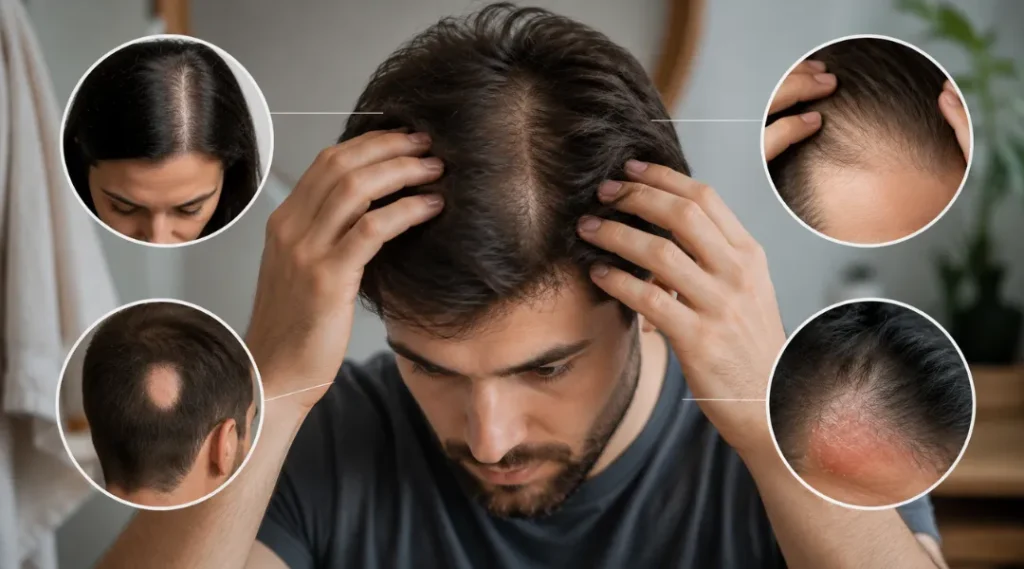
Androgenetic alopecia, the pattern loss most people recognize, is by far the most common type. Up to 80% of men and roughly 50% of women develop it during their lifetime. In the United States that works out to about 50 million men and 30 million women affected.
Pattern loss is driven by DHT, a hormone byproduct that gradually shrinks genetically sensitive follicles. Each cycle produces a finer, shorter hair until the follicle goes dormant, though it stays alive long before it truly dies. Finasteride 1 mg has been shown histologically to reverse this miniaturization within a single hair cycle in younger men. The same effect does not appear in postmenopausal women.
Timing decides the outcome. Early treatment can revive follicles that are shrinking but still active, restoring caliber and density. Once an area has been bald for years, most follicles are gone, and any non-surgical approach responds poorly. Specialists therefore push for early intervention rather than waiting.
Proven Non-Surgical Treatments That Regrow Hair
It helps to separate evidence from marketing first. A handful of treatments carry real clinical data; most shampoos, serums, and supplements do not.

Minoxidil: Stimulating and Extending Growth
Minoxidil widens the growth window of each follicle and pushes more hairs into the active phase. In a 12-month study of 904 men using 5% topical minoxidil, about 62% saw the affected area shrink and roughly 84% reported some degree of regrowth. The 5% concentration produces around 45% more regrowth than the 2% version. The catch is consistency: gains reverse within months if you stop applying it.
Finasteride and Combination Therapy
Finasteride works from the other direction. Instead of stimulating the follicle, it blocks the DHT that causes miniaturization in the first place. Used together, the two outperform either one alone. Low-dose oral minoxidil paired with finasteride reached stable or improved outcomes in about 92% of men, with visible regrowth in roughly 57% at the 12-month mark.
In-Clinic Options: PRP, LLLT, and Microneedling
Clinic-based treatments add another layer. PRP, which uses concentrated platelets from your own blood, has shown roughly 30–40% higher density after three to six months and improvement in 70–80% of suitable patients. PRP tends to rank higher for male pattern density, while low-level laser therapy has ranked highest for women in some analyses. Microneedling is often added as a booster.
Treatment | How It Works | Typical Result |
|---|---|---|
5% Minoxidil | Stimulates follicles, extends growth phase | ~84% saw some regrowth over 12 months |
Finasteride | Blocks the DHT that shrinks follicles | Reverses miniaturization within a cycle |
PRP | Concentrated platelets boost density | ~30–40% higher density in 3–6 months |
LLLT | Red-light energy stimulates follicles | Strong results for female pattern loss |
Temporary Hair Loss That Grows Back on Its Own
Not all shedding signals permanent loss. Telogen effluvium pushes a large share of follicles into the resting phase at once, usually after a stressor like illness, surgery, rapid weight loss, or childbirth. It looks alarming, yet it is typically temporary, and once the trigger resolves hair usually regrows within 6 to 12 months. For reference, losing 50 to 100 hairs a day is normal turnover, not a warning sign.
Several medical issues cause reversible thinning that responds to fixing the root problem. Thyroid disorders, low iron, and vitamin D deficiency all show up as diffuse shedding. Traction alopecia from tight ponytails, braids, or extensions can also recover if caught before the follicles scar.
The honest note on supplements is that they rarely reverse genetic hair loss. Biotin gummies, growth shampoos, and boutique serums only help when there is a genuine deficiency to correct. If your levels are normal, they mostly maintain what you already have.
Realistic Timelines, Risks, and Exceptions
Non-surgical treatment rewards patience. Most people notice a first response around three to six months, and a full 12 months is needed before judging results. An early shedding phase is normal and often frightens people into quitting too soon.
Safety and commitment both deserve honesty. Finasteride carries a small risk of sexual side effects in some men, and minoxidil can cause scalp dryness or an initial shedding bump. These treatments maintain results only while you use them. Stop, and the follicles return to their previous decline within months, so this is a long-term routine rather than a one-time fix.
There are clear limits. Long-standing baldness, fully scarred follicles, and advanced Norwood stages respond poorly no matter how disciplined the protocol. When the follicles are simply not there anymore, growth medication has nothing to act on. Recognizing that ceiling early prevents wasted years and money.
When a Hair Transplant in Turkey Becomes the Answer
When follicles are permanently scarred or an area has been bald for years, medication cannot bring them back. At that point a transplant becomes the realistic choice. The procedure relocates permanent, DHT-resistant follicles from the back of the scalp into thinning zones, giving a one-time structural fix rather than an ongoing maintenance plan. It does not stop pattern loss elsewhere, so many patients still use medication to protect their native hair.
For US patients, the math often drives the decision. Years of prescriptions, clinic visits, and add-on therapies add up, and the results stop when you stop. A single procedure abroad can cost less than a few years of ongoing treatment, which is why a hair transplant Turkey option draws so many American patients. The signal to consult a specialist is simple: your loss keeps advancing despite consistent, proper treatment.
The process at Hair Center of Turkey starts with consultation rather than a sales pitch. A doctor assesses follicle health, scalp laxity, donor density, and the pattern of loss before recommending anything.
Some candidates are told to try medication first, while others are clear surgical cases. Founded in 2014, the clinic runs with three doctors and around 3,000 procedures a year. It offers US patients a credentialed team and a clear medical-versus-surgical pathway instead of a one-size answer.
The takeaway is straightforward. Whether hair loss regrow without a hair transplant is possible comes down to living follicles and early action. A hair transplant Turkey procedure answers the cases where the follicles are gone.
Choosing between the two starts with an accurate diagnosis. This article is informational only and not a substitute for professional medical advice; consult a qualified physician about your specific condition before starting or stopping any treatment.
Frequently Asked Questions
Can Hair Grow Back Without a Transplant?
Yes, if the follicles are still alive but miniaturized. Non-scarring types like pattern loss and telogen effluvium can regrow with medication or by treating the underlying cause. Scarred, destroyed follicles cannot, which is the main limit on whether hair loss regrow without a hair transplant is possible.
Does Minoxidil Regrow Lost Hair or Just Prevent More Loss?
It does both to a degree. Minoxidil stimulates miniaturized follicles and can produce visible regrowth, not just slow the shedding. The results reverse within months if you stop, so it works only while you keep using it.
How Long Before I See Regrowth From Non-Surgical Treatments?
Most people see a first response around three to six months, with 12 months needed to judge full results. An initial temporary shedding phase is normal and not a reason to quit.
Is Thinning Hair From Stress or Illness Permanent?
Usually not. Telogen effluvium from stress, illness, surgery, or childbirth is temporary and typically regrows within 6 to 12 months once the trigger resolves. If shedding continues well past that window, a specialist should look for another cause.
When Is a Hair Transplant the Only Option?
When follicles are permanently scarred or an area has been bald for years with no active follicles, medication cannot regrow hair. At that stage a transplant becomes the realistic choice, after a specialist confirms the follicles are gone.
Explore the complete guide: Hair Loss Treatments