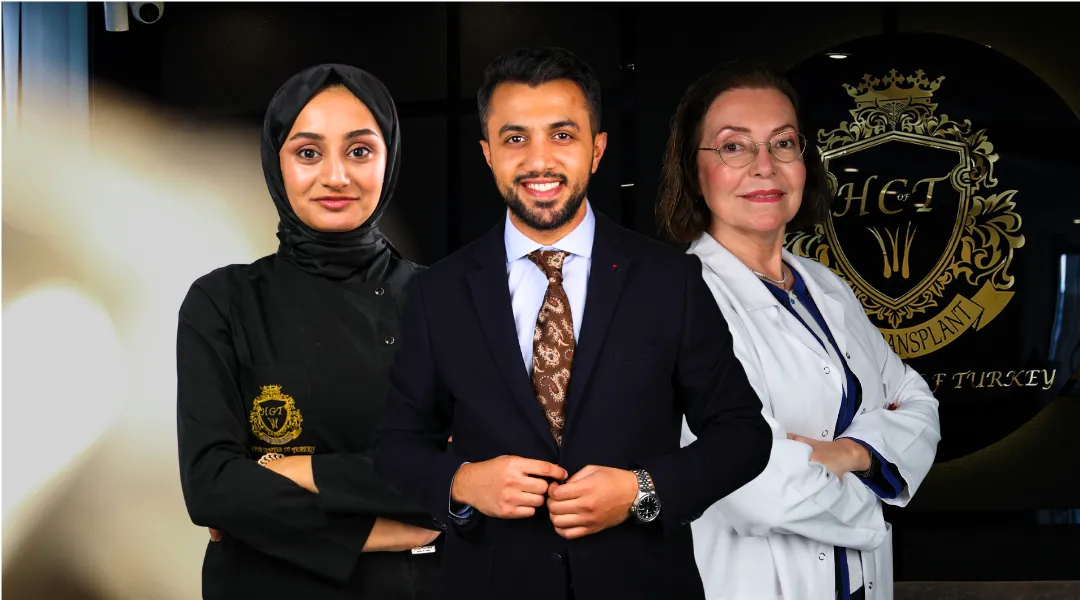
A doctor must handle design, extraction and channel incisions. Technicians assist with sorting and placement.
Hair Center of Turkey has worked to that division since 2014: three physicians, roughly 3,000 procedures a year, and a written plan that names your operating doctor, states the measured donor density behind your graft number, and gives you one contact who stays reachable through the twelve months of regrowth. Here is how to verify who does what before you book anything.
The Short Answer: Which Steps Belong To The Doctor
Four parts of the operation belong to a licensed physician: donor area planning and hairline drawing, local anesthesia, punch extraction or direct supervision of it, and the recipient site incisions. Trained technicians legitimately handle graft counting under stereomicroscope, holding-solution management, placement into channels the doctor has already opened, and post-op dressing.
Table of Contents
That split is not a preference. It follows the level of surgical risk each step carries. The technician steps are reversible within the session a graft handled roughly can be replaced from the same harvest. The physician steps are not: an incision, once made, is permanent scalp architecture.
The clinic’s caseload arithmetic is part of the same answer. Three physicians perform roughly 3,000 procedures a year, making this a physician-led operation rather than a technician-run assembly line. That workload is what makes the hair transplant Turkey division above possible in practice, not just on a website. Patients receive the operating doctor’s name in writing before any deposit is paid, along with the measured graft plan behind it and a named contact for the recovery months.
If you read nothing else: the incision stage is the step most closely tied to a natural result, and it is also the step most quietly delegated in high-volume clinics. A clinic that will not name your surgeon has already answered your question. Anyone comparing the hair transplant Turkey offers that clinics advertise online should treat that single fact as the first filter.
The second half of this article covers the other question patients keep asking. Why does the same set of photos produce quotes of 3,200, 4,500 and 6,000 grafts from three different Istanbul clinics? And what should a written surgical plan actually contain before you book a flight?
Why Recipient Site Incisions Decide The Result
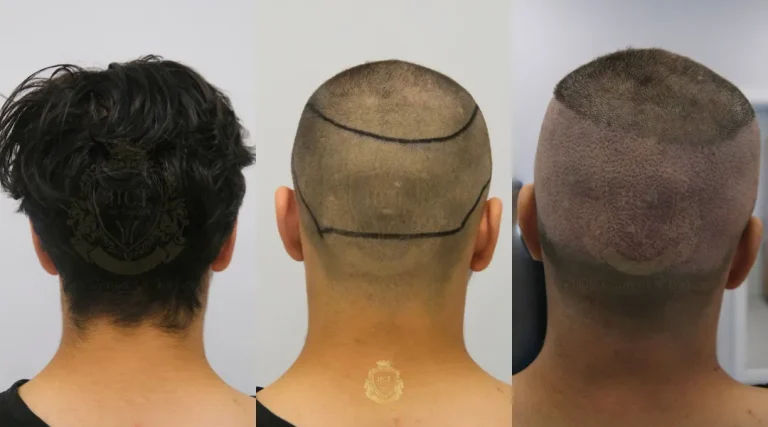
A recipient channel is a small slit in the scalp. Four variables are locked in the moment it is made: angle, direction, depth and density. Every follicle placed into that channel grows out along the axis the incision dictates. No amount of careful placement afterwards can rescue a channel cut at the wrong angle, which is why this stage sits with a hair transplant doctor rather than an assistant.
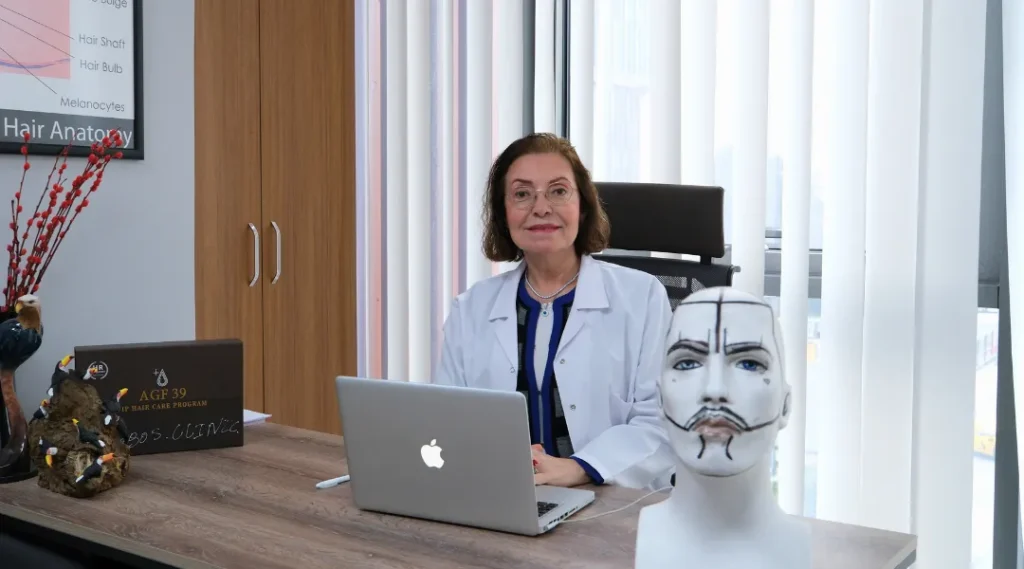
Angle and direction are not one setting applied across the whole scalp. At the frontal hairline the incisions run shallow, close to flat against the skin, so the first rows lie forward rather than standing up. Behind that transition zone the angle steepens.
At the crown, channels have to follow the natural whorl, which shifts direction across a few centimetres. A whorl rebuilt with parallel channels instead reads as a flat patch under overhead light a common giveaway in hair transplant Turkey results. Depth is matched to graft length: too shallow and the graft sits proud and dries out, too deep and it buries, which invites pitting and cyst formation.
Patients can ask about the numbers directly. FUE punch diameters typically run between 0.7 mm and 1.0 mm.
Frontal zone density is usually planned at roughly 30–45 grafts per cm², adjusted for donor reserve and hair caliber.
In hair transplant turkey practice, the crown is generally planned lighter, since it needs coverage across a wide, curved surface.
Single-hair grafts belong in the first one or two rows of the hairline; two- and three-hair grafts sit behind them, where bulk is wanted. Uniform, evenly spaced density across a hairline reads as artificial. A softer, deliberately irregular transition zone reads as natural, and that irregularity is a design decision made incision by incision.
Extraction carries its own physician responsibility. Punch depth and transection rate determine how many grafts survive the move in a hair transplant turkey procedure. A low single-digit transection rate is the working target.
Careless punching can still damage a meaningful share of a session before the grafts ever reach the recipient area. Over-harvesting thins the donor zone permanently.
Extraction spread evenly across the full safe donor area, rather than concentrated in the dense occipital strip because it is faster to work there, is what keeps the harvest from showing at short clipper lengths. Neither error can be undone in a later session.
Sapphire FUE Channels Versus DHI Implanter Pens
Sapphire FUE separates the two stages. The doctor opens all channels first, then technicians place grafts into them. DHI merges incision and placement into one motion using an implanter pen, so whoever holds the pen is effectively making the incision.
The instruments differ as much as the sequence. Sapphire blades are ground to fixed widths, commonly in the 0.8–1.5 mm range, and the surgeon selects a width per graft size.
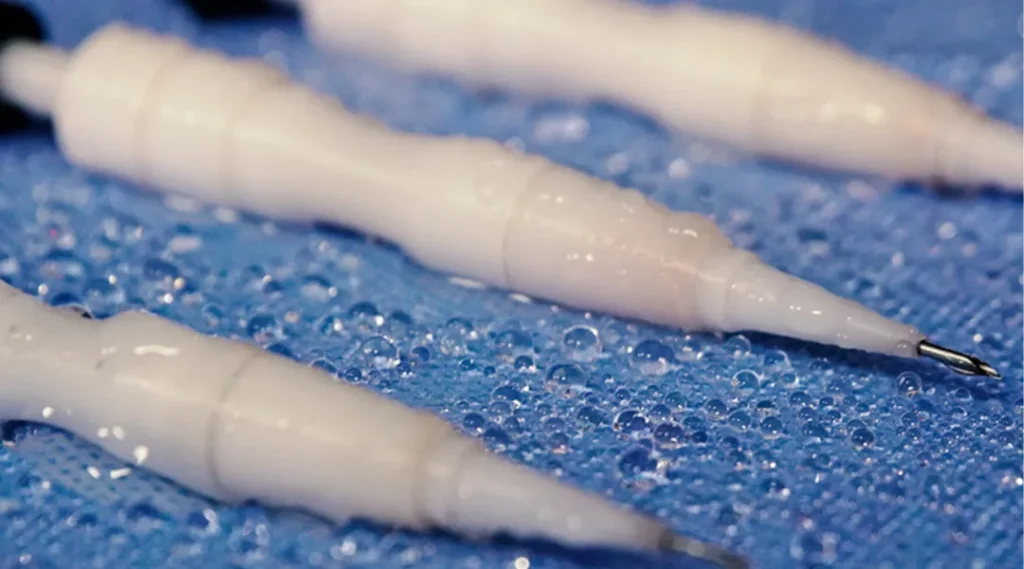
Choi implanter pens use tips of roughly 0.6–1.0 mm caliber matched to graft thickness, and a session runs on a rotation of several pens reloaded by technicians between insertions.
This matters when comparing clinics. A clinic can honestly say the doctor opens the channels in a sapphire FUE case and mean it. In a DHI case, the same claim requires the doctor to hold the pen for the full session, which can run six to eight hours. Ask which technique is planned, then ask who holds the instrument from the first graft to the last.
Ghost Surgery: What A Hair Transplant Doctor Must Not Delegate
Turkish Ministry of Health regulations classify hair transplantation as a surgical medical procedure that must be performed in an authorized health facility, with extraction and incision steps under physician responsibility. Technicians may assist. They are not authorized to perform those steps independently. The rule is clear enough on paper, and the gap sits in enforcement rather than in the regulation itself.
Turkey receives somewhere in the range of 1–1.5 million health tourism arrivals a year, with hair restoration consistently among the most requested procedures. That volume explains both the price advantage and the wide variation in standards. Some of the highest-volume clinics in the hair transplant Turkey market schedule 15 to 30 patients per surgeon per day, a load that mathematically limits how much of any single operation one doctor can personally perform.
Split across an eight-hour day, thirty patients leaves roughly fifteen minutes of surgeon time each enough for a greeting and a hairline sketch, not for extraction and several thousand incisions. The ISHRS has campaigned internationally against unlicensed practice for exactly this reason.
A caseload of roughly 3,000 procedures a year across three physicians produces different arithmetic. It works out to a handful of cases per doctor per day rather than a conveyor belt. That leaves room for the operating doctor to draw the hairline, administer anesthesia, perform extraction and open every channel, rather than appearing for a five-minute greeting before surgery starts.
Six Questions To Ask Before You Pay A Deposit
What is the full name and medical license number of the physician who will operate on me?
Is the facility authorized by the Turkish Ministry of Health as a health institution?
Who performs the extraction, and who opens the recipient channels?
If DHI is planned, who holds the implanter pen for the full session?
How many patients does this surgeon operate on per day?
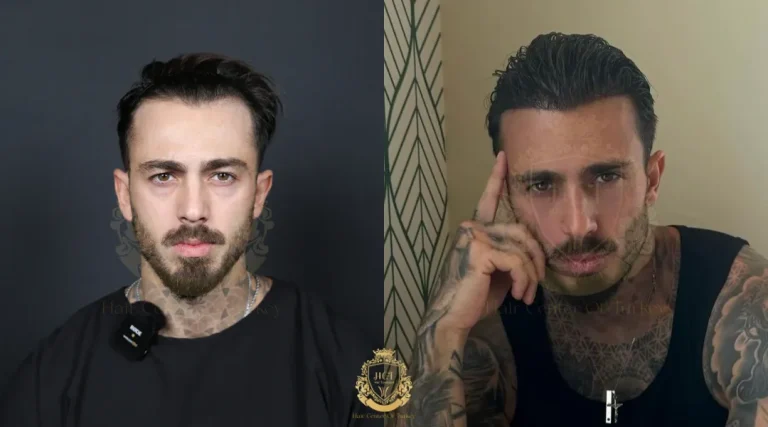
Can I see unedited 12-month results from patients at my Norwood stage?
Send these in writing and keep the reply. A named physician with a license number can be checked against Ministry of Health registration records, which is the point of asking for both rather than a first name. Experienced hair transplant specialists answer all six without hesitation, because the answers are simply facts about how their clinic runs. Vague replies, or answers that arrive only by phone, tell you something in themselves.
Why Online Graft Estimates Can Be Different
An online estimate reads coverage area from a photograph. An in-clinic examination measures donor density in follicular units per cm², assesses hair caliber, and checks for miniaturization in the donor zone. Those three measurements are what turn an area into a graft number, and none of them survive a phone camera. Lighting, camera angle and a Norwood stage judged from a single view all widen the margin further.
The measurements themselves carry a wide normal range, which is why two patients with identical photographs can hold very different graft budgets. Donor density commonly falls somewhere around 65–85 follicular units per cm², and hair caliber the thickness of the individual strand varies enough that fine hair can need noticeably more grafts than coarse hair to produce the same visual coverage. A donor zone already showing miniaturization is a warning about future loss, and it can only be seen under magnification.
Then there is the unit problem. One graft is a follicular unit containing an average of about 2 to 2.5 hairs, so a 4,000-graft session moves roughly 8,000–10,000 individual hairs. A quote given in hairs sounds close to twice as large as the identical quote given in grafts.
Some quotes switch between the two units without flagging it, which makes a like-for-like comparison impossible unless you ask.
Pricing structure distorts the estimate before any medical assessment happens. Per-graft pricing rewards a high quoted number. Flat package pricing rewards a low initial quote followed by an up-sell on the morning of surgery. Neither incentive has anything to do with your donor area.
Grafts Versus Hairs Versus Coverage Area
Term | What it measures | 4,000 units means |
|---|---|---|
Graft | One follicular unit, ~2–2.5 hairs | ~8,000–10,000 hairs |
Hair | One individual strand | ~1,600–2,000 grafts |
Coverage area | Surface in cm² to be filled | Depends on planned density |
What A Hair Transplant Turkey Package Price Actually Covers
Most quotes arrive as an all-in package rather than a surgical fee, which is one more reason two numbers rarely compare cleanly. A typical hair transplant Turkey package bundles the procedure with two or three nights of hotel accommodation, airport and clinic transfers, an interpreter, post-op medication, the first wash, and sometimes PRP sessions or a shampoo and lotion kit. The medical portion is not itemized, so a cheaper package can mean a cheaper hotel, and a more expensive one can mean an extra PRP round rather than more surgeon time.
Ask for the package contents in a list, and ask which line is the surgical fee. Confirm whether the price is fixed for the planned graft count or scales if the surgeon decides on the day that more grafts are needed that single clause is where morning-of-surgery up-sells live. Anything quoted per graft should also state the maximum, because an open-ended per-graft price gives the clinic a financial reason to harvest more than your donor area can spare.
Why A Lower Graft Number Can Be The Better Plan
Most patients have a lifetime safe donor supply of roughly 6,000–8,000 grafts across all sessions. Androgenetic loss continues after surgery. A 5,000-graft first session can therefore leave nothing in reserve for the recession that follows, while permanently thinning the donor zone.
A clinic quoting fewer grafts than a competitor may be protecting that reserve rather than under-delivering. A patient at Norwood 3 who spends 4,500 grafts on a low, dense hairline at 28 has no answer left at 40, when the crown opens and the temples move back again; the same donor supply split across two planned sessions covers both. Costs in Turkey commonly fall around €2,000–€4,500 per session against £6,000–£15,000 in the UK or $10,000–$20,000+ in the US. The gap comes from labor, currency and facility costs, not from a different technique or a cheaper graft.
Risks, Exclusions And When Hair Transplant Specialists Say No
Several conditions rule surgery out or require it to wait. Active alopecia areata, uncontrolled diabetes, bleeding disorders or ongoing anticoagulant use, a keloid history, and insufficient donor density all fall into this group. Patients under 25 with unstable diffuse thinning are usually advised to stabilize medically first. Operating into an active loss pattern produces a hairline that strands as the surrounding hair recedes.
The procedural risks are worth stating plainly. Folliculitis and poor graft survival are the common ones. Necrosis can occur where packing is too dense for the scalp’s blood supply, and the risk rises in smokers and in patients with diabetes, since both compromise the small vessels the grafts depend on. An unnatural hairline can only be softened by revision surgery, which spends donor grafts on correction rather than coverage, and permanent donor depletion from over-harvesting cannot be repaired at all.
At Norwood 6–7 with a limited donor area, expectations need adjusting before anything is drawn. A frame-and-forelock plan that restores structure to the front usually beats spreading the same grafts into thin uniform coverage across the whole scalp 6,000 grafts spread across a Norwood 6 scalp lands near 10 grafts per cm², which shows scalp through the result under direct light. Instagram results represent a best case with favorable donor characteristics, not a forecast for your case.
Cross-border accountability deserves the same scrutiny as the surgery. Ask who reviews your follow-up photos, what the response time is, and what the revision policy states in writing if a complication appears weeks after you fly home. A policy that only exists in a WhatsApp message is not a policy.
Inside The Procedure Day And The Written Surgical Plan
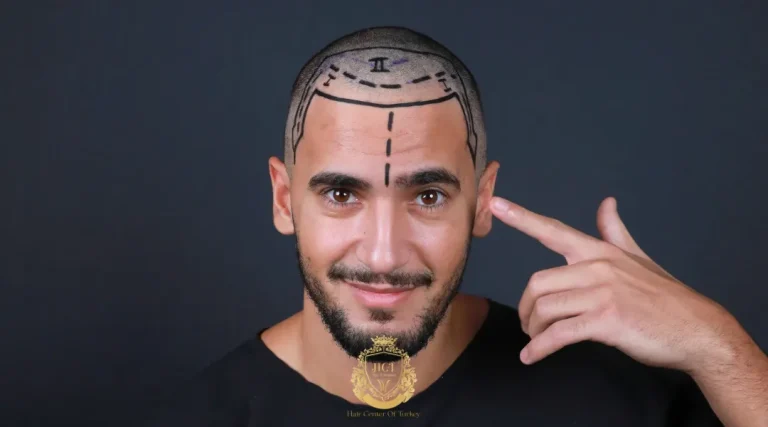
The day starts with a physician consultation and hairline drawing, confirmed with the patient at the mirror before anything is finalized. Blood tests follow, then local anesthesia administered by the doctor. Extraction comes next, typically two to four hours depending on graft count, then channel opening by the doctor, then technician-assisted placement into those pre-made channels.
Grafts wait in chilled holding solution between the two stages, and time out of the body is one of the quiet variables in survival rates. Same-day photo documentation closes the session. The day-1 wash includes hands-on technique training before the patient leaves.
A written surgical plan should name the operating physician and license number, the planned graft count alongside the measured donor density figure, the technique (FUE, sapphire or DHI), the anesthesia protocol, the complication policy, and a named contact reachable from abroad during recovery. A plan missing the density measurement is a sales quote wearing a medical format.
Set that plan against a realistic timeline. Shock shedding runs through weeks 2–6 and affects transplanted and existing hair alike, which is why month 2 photographs often look worse than the day before surgery. Regrowth begins around month 3–4, and roughly 60–70% of the result is visible by month 6–8. Final assessment happens at 12 months, extending to 18 for dense-packed or repair cases.
Medical Reviewer, Sources And Related Reading
Reviewed by a Hair Center of Turkey physician. Sources: Turkish Ministry of Health private health institution regulations covering authorized facilities and physician responsibility, and ISHRS position statements on unlicensed practice in hair restoration.
Related reading: the pillar guide to hair transplant Turkey planning, plus cluster pages on FUE versus DHI, graft number calculation, donor area planning, and the month-by-month recovery timeline.
Frequently Asked Questions
Does the doctor actually perform the hair transplant in Turkey, or do technicians do it?
In a properly run clinic the physician performs the medical steps, meaning consultation and hairline design, anesthesia, extraction, and the recipient site incisions, while trained technicians assist with graft sorting, storage and placement. Turkish Ministry of Health rules place the surgical steps under physician responsibility. Ask the clinic to name the operating physician in writing before you pay a deposit.
Which single step matters most for a natural-looking result?
Opening the recipient channels. The angle, direction, depth and density of each incision decide how the hair grows out and whether the hairline looks natural or artificial. This step cannot be corrected later by good placement, which is why it should stay in the physician hands.
Is a graft the same thing as a hair?
No. One graft is a follicular unit holding an average of about 2 to 2.5 hairs, so a 4,000-graft procedure moves roughly 8,000–10,000 hairs. A quote given in hairs will always sound about twice as large as the same quote given in grafts, so confirm which unit a clinic is using.
Is 5,000 grafts in one session better than 3,000?
Not automatically. Most people have a lifetime safe donor supply of roughly 6,000–8,000 grafts, so a large first session can leave nothing for future loss and can permanently thin the donor area. A lower, well-planned number that protects donor reserve is often the better long-term decision.
How can I check a clinic before traveling for a hair transplant Turkey procedure?
Ask for the operating physician name and medical license number, confirm the facility is Ministry of Health authorized, and request a written plan stating who performs extraction and incisions. Also ask for unedited 12-month result photos of patients at your Norwood stage, since a clinic that avoids naming the surgeon is answering the question.