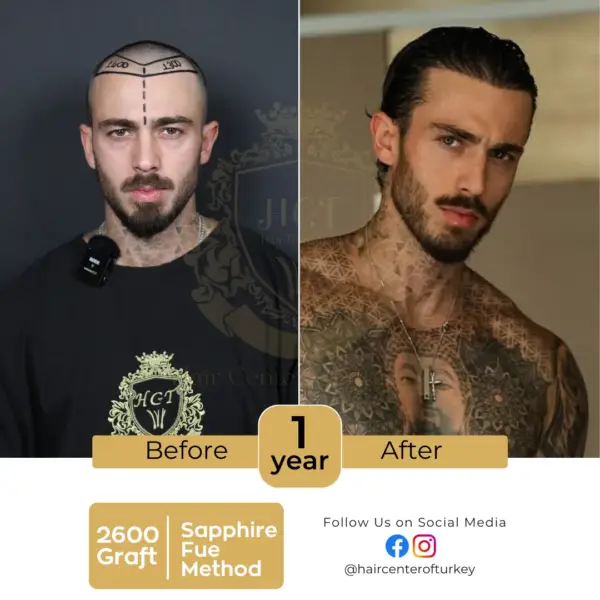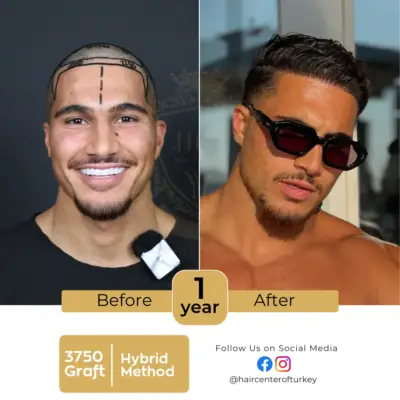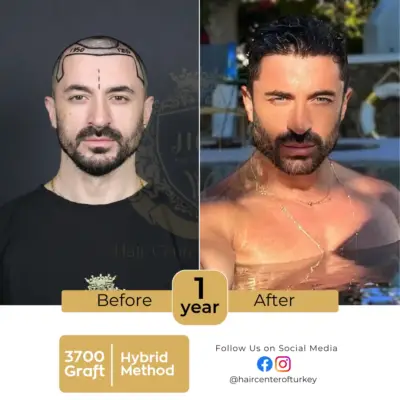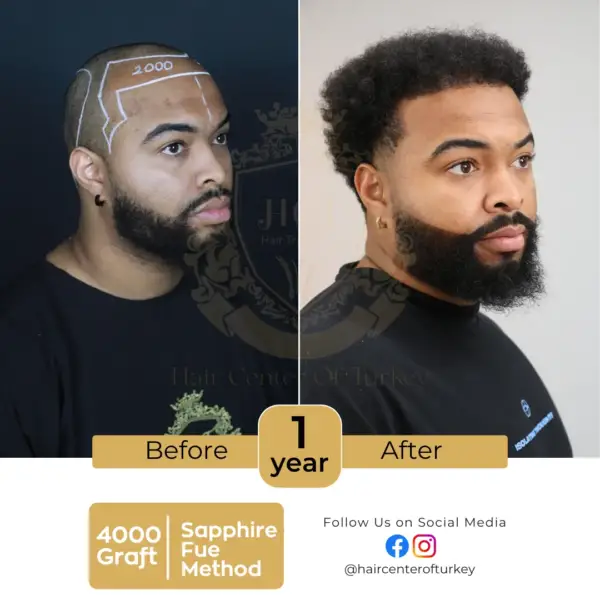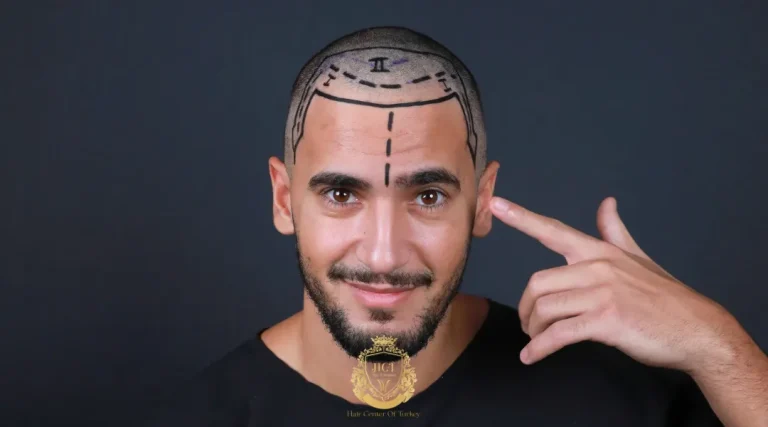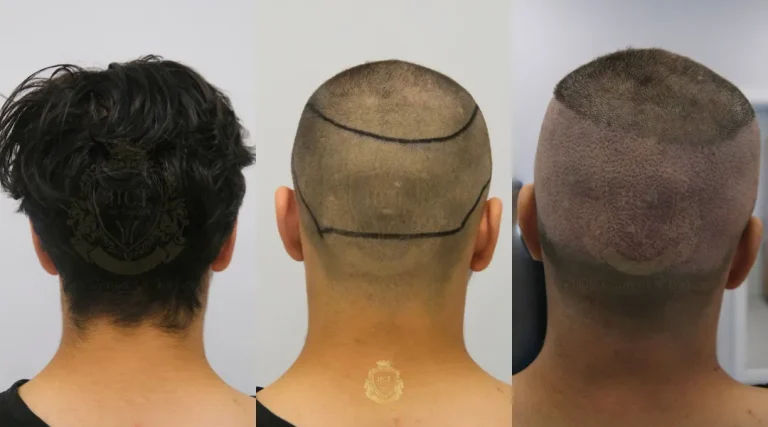



Hair transplant results in Turkey look different because of dense packing, sharply drawn straight hairlines, and the Sapphire FUE and DHI default technique stack.
Hair Transplant Results In Turkey: The Short Answer
Hair transplant results in Turkey often look different due to the common practice of dense packing, meaning higher graft counts placed in a single session. Add the aggressive straight hairline designs preferred by many local clinics and the extensive use of Sapphire FUE and DHI techniques, and the visual signature becomes recognizable. Finding a specialized clinic is key to avoiding unnatural, overharvested looks.
Table of Contents
The variable that decides your outcome is the clinic, not the country. Istanbul contains both the most technically refined surgeon-led practices in the field and the highest concentration of assembly-line operations anywhere. Two patients can fly into the same airport in the same week and come home with results a decade apart in quality. What follows breaks down each of the three drivers, then covers how to judge a result honestly rather than through a marketing photo.
Turkey Hair Transplant Vs The US And UK: Two Result Philosophies
The gap between a Turkey hair transplant and a US or UK procedure is not a skill gap. It is a difference in what each system optimizes for, and that difference is visible in the finished head of hair.
| Factor | Turkey | US / UK |
|---|---|---|
| Approach | Maximum coverage in one visit, high-volume operational model | Staged surgery, conservative donor spending |
| Average Grafts per Session | 4,000+ | 2,000–3,000 |
| Hairline Philosophy | Sharp, low, dense, sharply defined edge | Conservative, recessed, age-appropriate |
| Technique Focus | Sapphire FUE and DHI implanter pens | Standard steel-blade FUE, stick-and-place |
The Turkish model buys immediate transformation. One flight, one operation, and a dramatic month-12 photograph that covers hairline, midscalp, and crown at once. The Western model buys optionality instead. By capping a session near 2,500 grafts and recessing the hairline, a surgeon keeps donor reserves for the hair loss that has not happened yet. The frontal line that results still makes sense on a 55-year-old face.
Neither philosophy is wrong on its own terms. They answer different questions. One asks how much hair can be restored today, the other asks how much hair the patient will still have to work with in twenty years.
Scale explains why the Turkish philosophy hardened into a standard. The country performs an estimated 1.1 to 1.5 million procedures annually and hosts somewhere between 640,000 and 975,000 international patients each year. Istanbul alone holds over 500 hair transplant clinics, the highest concentration of any city worldwide, supporting an industry valued at more than $2.6 billion. When that many clinics compete for the same inbound patient, the graft number on the quote becomes the easiest thing to compete on.
Price follows that volume. A full package in Turkey commonly lands between $2,000 and $4,000, including hotel and transfers, against roughly $8,000 to $15,000 or more in the US and UK, where clinics typically charge $3 to $8 per graft. Part of the gap is genuine cost-of-living arbitrage and real economies of scale. Surgical staff, facility overhead, and accommodation all cost a fraction of their Western equivalents. The rest is what gets compressed: consultation time, surgeon hours per case, individualized design, and long-term follow-up.
Dense Packing And Mega Session FUE: Where The Volume Comes From
Dense packing is the practice of implanting follicular units close together in a single pass. Turkish clinics commonly work at 40 to 50 follicular units per square centimeter. Many US and UK surgeons stop at 25 to 35 FU/cm² and plan a second pass later if more density is needed. That single number accounts for much of the visual difference people notice in Turkey results photos.
How Dense Packing Affects Graft Survival
Packing density and graft survival move in opposite directions. Classic data from Mayer et al. records roughly 97% survival at 10 grafts/cm², falling to about 72% at 30 grafts/cm². Other clinical series are more favorable, showing near-complete survival at 30 grafts/cm² declining to roughly 84% at 50 grafts/cm². The series disagree on magnitude, but not on direction.
The mechanism is blood supply. Every recipient channel is a small wound, and packing them tightly means each graft competes for perfusion in tissue that has been repeatedly incised. Channel depth, angle control, and the time grafts spend outside the body all compound the effect. Push far enough and the risk stops being cosmetic. Unger and Shapiro’s foundational work places 30 to 50 FU/cm² as the range that is generally well tolerated, with 35 to 40 FU/cm² treated as the practical optimum. A 2026 Frontiers in Medicine review lists packing above 50 FU/cm² as a recognized technical risk factor for scalp necrosis.
So a higher number on the quote is a trade, not a free upgrade. Five thousand grafts placed at 50 FU/cm² with 84% survival delivers fewer surviving follicles than the arithmetic suggests. Those follicles came out of a donor area that cannot regrow them, which makes the loss permanent rather than recoverable at a second session.
What A 4,000-6,000 Graft Mega Session Actually Covers
A mega session is an 8 to 12 hour operation in which 4 to 8 trained technicians extract and place simultaneously. One team harvests from the donor zone while another opens channels and a third loads implanter pens. That parallelism is the only reason 4,000 to 6,000 grafts can be moved in a single day, and it is why the model depends on technician skill rather than surgeon hours.
The coverage claim is genuine. A well-run mega session addresses hairline, midscalp, and crown in one visit, which is exactly what a patient who has flown in for a week wants. Western practices split the same territory across two or three surgeries spaced 8 to 12 months apart, capping each near 2,500 to 3,000 grafts to limit donor stress and let the scalp recover between passes. That is a 40% to 100% difference in single-session load, and the body absorbs it either way.
Length of surgery carries its own cost. Grafts harvested in hour two wait longer outside the body than grafts harvested in hour ten, and patient fatigue, swelling, and anesthetic load all accumulate across a twelve-hour day. Clinics that run mega sessions well control for this with staged holding solutions and disciplined graft handling. Clinics that run them badly simply run them long.
Natural Hairline Design Vs The Straight Line Template
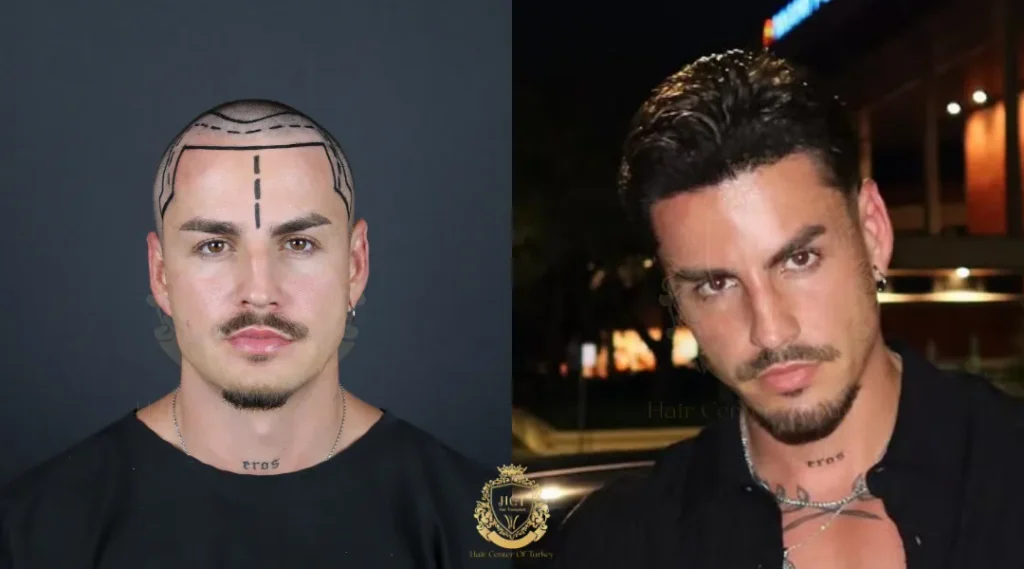
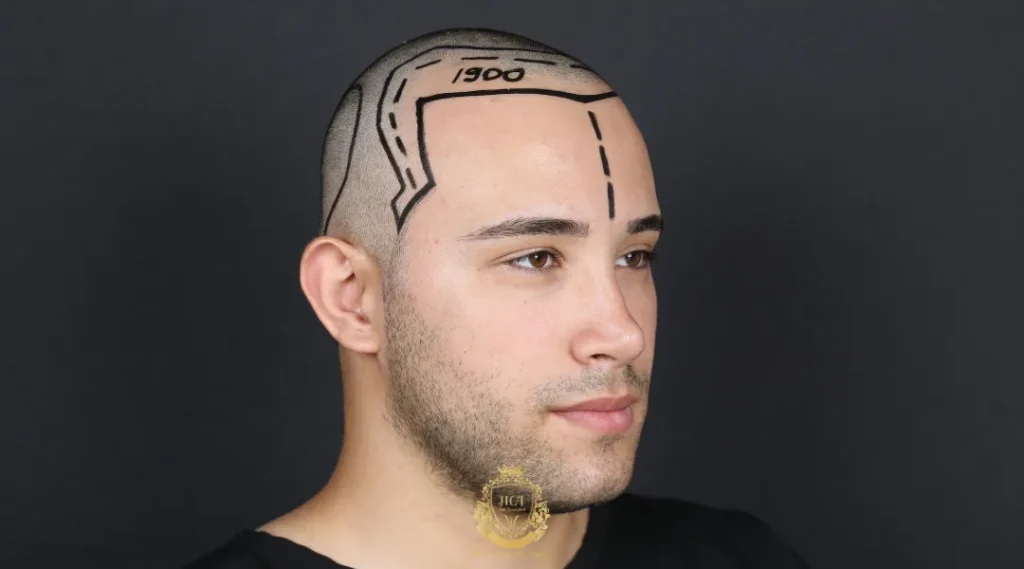
The straight, low, sharply defined hairline is the clearest visual marker of a template job. It photographs dramatically at month 12, which is precisely why high-volume clinics keep drawing it. In person, under real light and at conversational distance, it reads as a border rather than a hairline. It also ages badly, since the surrounding native hair keeps receding around a line that stays fixed.
What Makes A Hairline Read As Natural
A natural hairline has no edge. It has macro irregularity, the gentle undulation of the overall shape, and micro irregularity, the small unevenness of individual follicles along the leading edge. It opens with a soft transition zone built from single-hair grafts, with scattered sentinel hairs sitting slightly forward of the main line to blur where the hairline begins.
Design also has to respect the face rather than the calendar. Temporal peaks need rebuilding in proportion to the skull, and the frontotemporal angle should sit where the person’s bone structure and age put it, not where a package template puts it. A hairline drawn 2 cm too low on a 26-year-old is a permanent commitment made with a donor supply that has to last another 40 years.
Perception matters more than raw count. Native scalp density in someone who has never lost hair runs roughly 65 to 100 FU/cm², about 180 to 200 hairs/cm², and the eye reads coverage as full at around 50% of native density. A well-designed 40 FU/cm² result looks dense. A badly designed one at the same count does not, because the eye is reading angle, irregularity, and shadow rather than counting follicles.
Why Multi-Hair Grafts In The Front Row Give A Transplant Away
Follicular units naturally contain one to four hairs. Along a real hairline, the front row is almost entirely single-hair units, with two-hair units appearing a few millimeters back and three or four-hair units reserved for the midscalp where density does the work.
Placing multi-hair grafts in the front row is faster, covers more area per graft, and produces the tufted, pluggy look people recognize instantly. That is a design failure, not a technique failure. No implanter pen and no blade material corrects for it. The practical check costs nothing: the hairline should be drawn on your scalp, photographed, shown to you, and adjusted before a single channel is opened.
Graft sorting under magnification is what makes correct placement possible. A team that separates singles, doubles, and triples properly has the material to build a gradient. A team working at speed without that step places whatever comes next in the tray.
Sapphire FUE And DHI: Real Advantage Or Marketing Label?
Sapphire FUE refers to the blade material used to open recipient channels. Sapphire blades hold a finer edge than steel, producing smoother and slightly smaller incisions. Smaller channels permit tighter inter-graft spacing and tend to heal faster with less crusting. The procedure itself is unchanged, and the grafts are the same grafts.
DHI uses a Choi implanter pen that opens the channel and places the graft in one motion, skipping the pre-made incision step entirely. That gives direct control over angle, direction, and depth at the moment of placement, which genuinely helps in hairline refinement and in unshaven cases where existing hair limits visibility. It is slower per graft, which is why many clinics use DHI for the frontal zone and conventional placement behind it.
Both are refinements of one operation rather than competing operations. Neither compensates for a poorly designed hairline, an inexperienced placement team, or a donor area that has already been stripped. Technique naming is the most inflated part of clinic marketing, and a clinic that leads with its blade material rather than its design process is telling you where its priorities sit. Branded variants with proprietary-sounding names are usually the same two procedures under a trademark.
Hair Mills Vs Boutique Clinics: The Single Biggest Variable
The widest quality gap in this field is not between Turkey and the West. It is inside Turkey, between two operational models that share a city and sometimes a street.
A hair mill runs 15 to 30 patients a day with rotating technicians, a template hairline applied across nearly every case, and a fixed package price that includes the hotel. The surgeon may be present for consent and nothing else. A boutique, surgeon-led practice handles one or two cases a day, with the hairline drawn to the individual’s facial proportions and a graft plan built against their actual donor budget. Same country, same techniques, completely different hair transplant results.
Ask the accountability questions before any deposit clears. Who draws the hairline. Who opens the recipient channels. Who places the grafts. Whether that same named team will be in the room on your date. Vague or shifting answers to those four questions are more predictive than any before-and-after gallery.
The pattern is measurable rather than anecdotal. The ISHRS 2025 Practice Census found repair procedures rose to 6.9% of all hair transplant cases in 2024, up from 5.4% in 2021. The share of repairs attributed to a previous black market transplant averaged 10%, up from 6% over the same period, and 59% of member surgeons reported black market clinics operating in their own cities.
Consultation depth screens for the difference cheaply. A remote WhatsApp assessment from three phone photos with a graft number quoted within hours cannot account for donor density, miniaturization, or family history. In-person trichoscopy, measured donor density, and a written lifetime graft plan take longer and cost the clinic more, which is exactly why the high-volume model skips them. A clinic that asks for your family history of hair loss and your current medication before quoting a number is working from a different playbook than one that quotes first.
Donor Area Management And The Cost Of Overharvesting
The safe donor zone is the band of permanent hair across the back and sides that is genetically resistant to DHT. For an average patient it yields roughly 6,000 to 8,000 grafts across a lifetime, and only about 40% to 50% of donor follicles can be harvested before visible thinning appears in the donor area itself.
The moth-eaten and see-through donor patterns come from violating the per-session limit rather than the lifetime one. Removing more than 20% to 30% of follicles from a single donor zone in one sitting leaves gaps the surrounding hair cannot cover. An over-ambitious 5,000-graft quote on a patient with average density requires exactly that kind of concentrated extraction, which is why the number that sounds generous is often the warning sign. Harvesting outside the safe zone, above the occipital ridge or too low on the nape, causes the same problem for a different reason: those follicles were never permanent to begin with, and they thin out years later along with the hair around them.
One asymmetry should shape every decision here. A badly designed hairline can sometimes be repaired: grafts can be removed, redistributed, and softened. Follicles removed from the donor do not regenerate. An overharvested donor is managed rather than fixed, through scalp micropigmentation to reduce contrast between skin and remaining hair, selective beard or body hair grafting into the worst patches, and simply keeping the hair longer.
That ceiling sets realistic expectations. Roughly 2,000 to 2,500 grafts rebuild a hairline and frontal third. Three thousand to 4,000 cover front plus midscalp. Full crown coverage on advanced Norwood stages can exceed what one donor area can safely give, and no technique changes that arithmetic. A clinic that declines an over-ambitious plan and offers a staged one is demonstrating judgment.
Reading Hair Transplant Before After Photos And The 12-Month Timeline
Most hair transplant before after comparisons circulating online are not fraudulent so much as premature. Understanding the growth curve makes them easy to grade.
Month By Month: What Normal Growth Looks Like
Transplanted hairs shed within 2 to 4 weeks. Shock loss affecting surrounding native hair typically appears between weeks 2 and 6, and the scalp can look worse than it did before surgery. Months 2 to 4 are the ugly duckling phase, when nothing visible is happening above the skin and follicles are re-entering their growth cycle underneath.
First visible growth arrives around months 4 to 6, usually as fine, wispy hair that does not yet resemble the final result. By months 6 to 8, roughly 60% to 70% of the outcome is on the head. Caliber keeps thickening and the hairline keeps softening through months 12 to 18, and the crown lags behind everything else, sometimes needing 18 to 24 months to settle.
Twelve months is the earliest honest assessment point. Panic at month 4 is the most common emotional event in this process and almost never reflects a failed procedure.
Red Flags In Clinic Result Photos
Check the water first. Wet hair clumps and reads as roughly twice the density of dry hair, which is why so many after photos are taken straight out of the shower. Then check the light: flat overhead lighting fills in gaps that side lighting exposes. A changed camera angle between before and after, typically a downward-tilted before and a level after, manufactures coverage that was never added.
Look for what is missing. Hair fibers and concealers are undetectable in a still image. Styling that sweeps hair backward hides a thin crown completely. Most revealing of all is the absent donor-area photograph, the most common omission in clinic galleries and the one that would show whether the density up front was borrowed unsustainably from the back.
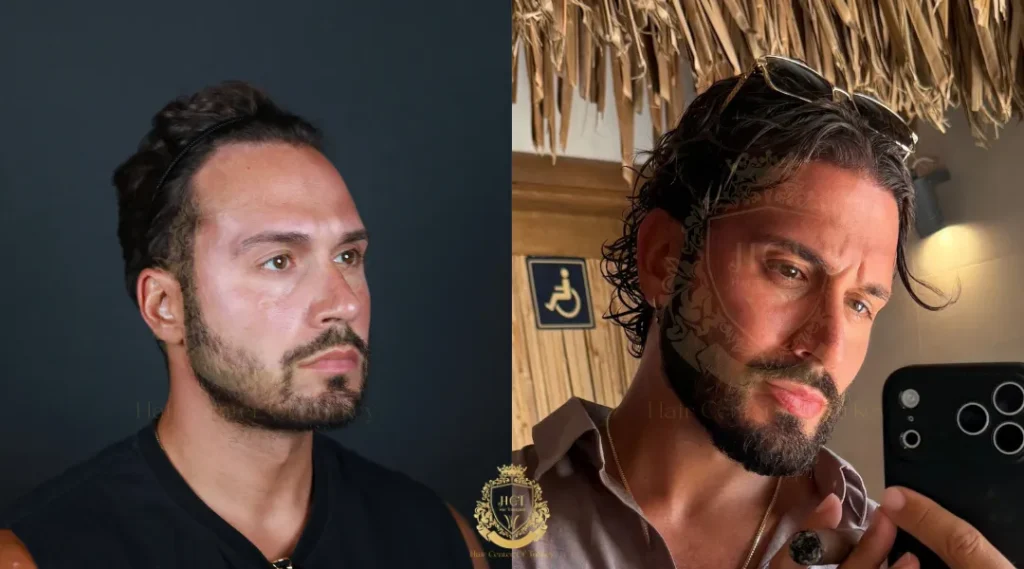
An honest 12-month result set is boring by comparison: same angle, same lighting, dry and unstyled hair, the crown shown from above, and the donor area photographed at short length. Clinics confident in their hair transplant results in Turkey publish that version, because it holds up. Video walkarounds under ordinary indoor light are harder to stage than stills, and a clinic willing to connect you with a past patient at the same Norwood stage is offering the strongest evidence available.
Dense packing, hairline design, and donor management together determine whether hair transplant results read as native hair or as a procedure. None of them is decided by the country on the passport. Surgery also does nothing for the native hair surrounding the transplant, which is why medical management with finasteride or minoxidil belongs in the plan from the start, protecting the hair the new grafts were designed around.
Frequently Asked Questions
Why do some Turkish hair transplants look unnatural?
Almost always design and volume, not the country. High-volume hair mills apply a template hairline that is low, flat, and sharply edged instead of drawing one to the individual facial proportions, then pair it with graft counts that overharvest the donor. Surgeon-led clinics in Turkey using irregular transition zones and single-hair leading edges produce hair transplant results that are difficult to distinguish from native hair.
How do clinics in Turkey achieve higher density?
Through dense packing combined with large teams and long sessions. Turkish clinics commonly implant 40 to 50 follicular units per cm² where many Western surgeons stop at 25 to 35, running 8 to 12 hour mega sessions with 4 to 8 technicians extracting and placing simultaneously. The trade-off is real, since graft survival declines as packing density rises, so a higher number does not automatically mean a fuller final result.
Are straight hairlines standard in Turkey?
They are common but not required, and they are the clearest marker of a template job. A natural hairline is never a straight line: it has macro irregularity, a soft transition zone of single-hair grafts, rebuilt temporal angles, and a shape suited to the person age and forehead. A good clinic draws it on your scalp, shows it to you, and adjusts it before opening a single channel.
How many grafts do I actually need, and is 5,000 in one session safe?
It depends on Norwood stage and donor density rather than package price. Roughly 2,000 to 2,500 grafts rebuild a hairline and frontal third, 3,000 to 4,000 cover front plus midscalp, and full crown coverage on advanced loss can exceed what one donor area safely gives. A 5,000-graft single session is possible with an exceptional donor but sits at the edge, since only 40% to 50% of donor follicles are harvestable in a lifetime.
When can I judge my hair transplant results?
At twelve months, not before. Transplanted hairs shed within 2 to 4 weeks, regrowth begins around month 3 to 4, and roughly 60% to 70% of final density is visible by month 6 to 8. Caliber keeps thickening through month 12 to 18 and the crown can take 18 to 24 months, which is why judging hair transplant before after progress at month 4 causes so much unnecessary panic.
Explore the complete guide: Hair Transplant Results