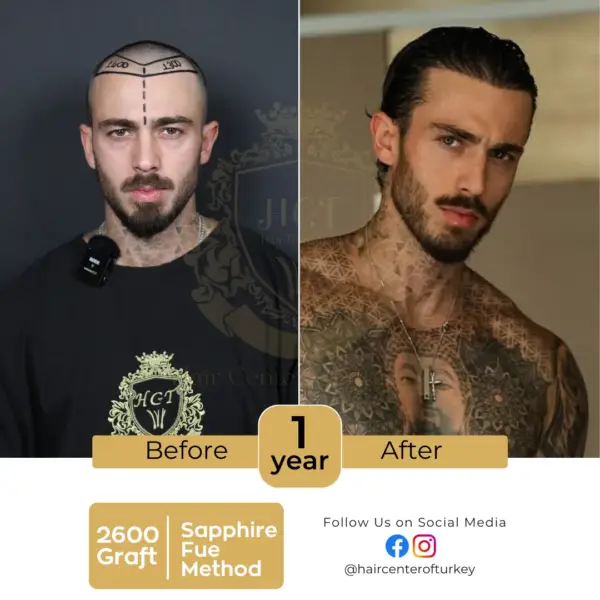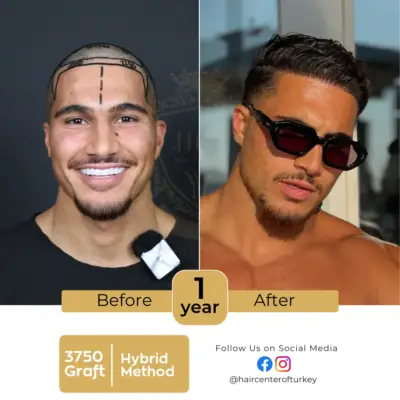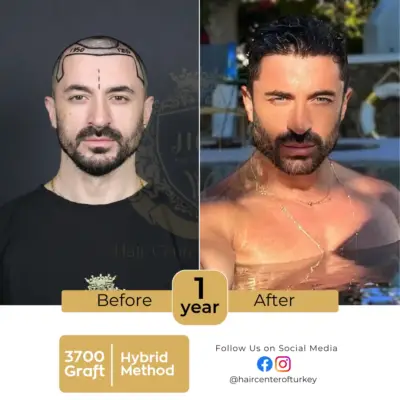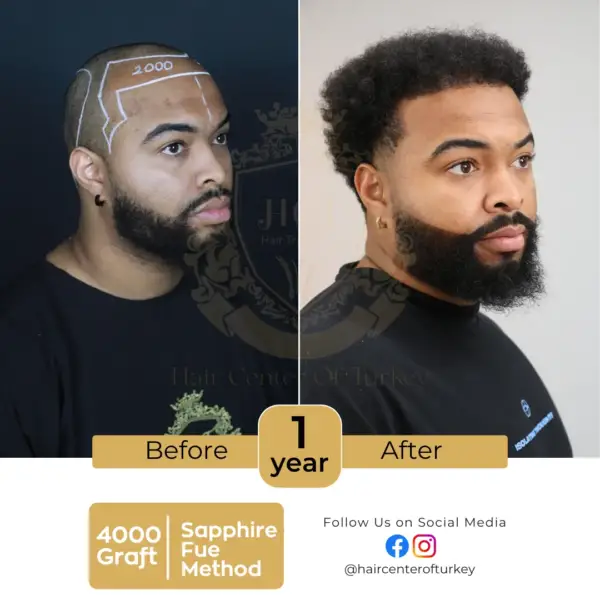



For US patients, the real total budget for hair transplant in Turkey typically ranges from $3,000 to $5,500. This includes an all-inclusive clinic package ($2,000-$3,500) and round-trip flights from the US ($800-$1,500), covering hotel, transfers, and the procedure without hidden fees.
Most quote pages stop at the package price. That number is the smaller half of the story. What matters is the figure you have spent by the time you unlock your front door back home. This guide breaks that total down line by line, including the costs American patients consistently underestimate.
The Real Hair Transplant Costs for a US Patient, Line by Line
The real total budget for hair transplant in Turkey lands between $3,000 and $5,500 for most American patients. That range pairs an all-inclusive clinic package of $2,000 to $3,500 with round-trip airfare of $800 to $1,500. It covers the hotel, the transfers, and the surgery itself. Nothing in the figure is a promotional teaser price.
Table of Contents
Here is how the money actually distributes across a single trip:
Expense Type | Estimated Cost (USD) | What is Included |
|---|---|---|
All-inclusive Package | $2,000 – $3,500 | The procedure, 3-4 hotel nights, VIP airport and clinic transfers, English-speaking translator, pre-op blood work, take-home medications and post-op kit |
Round-trip Flights from USA | $800 – $1,500 | Economy fare from JFK, ORD, IAD or LAX to Istanbul. Roughly $700-$1,100 in low season (January, February, November) versus $1,200-$1,800 in the June-August peak |
Visa Fees | $0 | Turkey removed the visa requirement for US passport holders in January 2024. Tourist stays of up to 90 days within any 180-day period, no e-Visa purchase needed |
Extra Meals | $150 – $300 | Food outside the hotel breakfast across a 4-5 day stay, including airport meals and anything ordered in during recovery days |
One line belongs underneath that table rather than inside it: a contingency of $300 to $500. That reserve absorbs pharmacy purchases and a seat or baggage upgrade on the way home. It also covers tips for the transfer driver and the clinic team, plus the foreign transaction fees your card applies quietly. Patients who skip the contingency are usually the ones who report going over budget.
The schedule driving these numbers is compact. Day one is arrival and consultation. Day two is surgery. Day three brings rest and the first medicated wash, and most patients fly home on day four or five. Booking a buffer day costs less than moving a flight at short notice.
What ‘All-Inclusive’ Actually Covers in a Turkish Package
A standard Turkish package is built around a fixed set of inclusions, and reputable clinics confirm all of them in writing. Expect three to four hotel nights, VIP airport and clinic transfers, and an English-speaking translator assigned to your case. Pre-operative blood work, the procedure, take-home medications, and the post-op kit are also standard. The first medicated wash is normally performed at the clinic before you travel home.
Several items sit outside that list even when the words “all-inclusive” appear at the top of the quote. PRP sessions, sedation upgrades, follow-up beyond a phone or WhatsApp check-in, extra hotel nights, and grafts beyond the package cap are commonly priced separately. Each one is modest on its own. Together they can add several hundred dollars to a trip you thought was fully paid.
International airfare is almost never included. It is the largest single cost the headline price hides. A $2,200 package advertised on a landing page is functionally a $3,400 trip once a flight from Chicago or Washington is booked. Read every quote as a partial figure until you have confirmed otherwise.
Ask for an itemized inclusion list by email before any deposit changes hands. Verbal assurances given over WhatsApp are not pricing, and they tend to evaporate when a coordinator changes mid-process. A written list is also what lets you compare two clinics honestly. Keep that email, because it becomes your reference if the final invoice arrives with lines you did not expect.
Why Hair Transplant Prices in Turkey Undercut the US
American clinics price per graft, typically $4 to $10. A routine 2,500 to 3,000 graft session therefore lands at roughly $10,000 to $25,000 in surgery cost alone. Turkish clinics sell that same graft count as a flat package between $2,000 and $3,500, with the hotel and transfers folded in. The comparison is not close. It is the reason the total budget for hair transplant in Turkey stays under what many US patients pay in deposits.

The roughly 70% saving is structural. Clinic operating costs and staff salaries are lower, and the exchange rate favors dollar holders. Hundreds of Istanbul clinics compete for the same international patients, while high procedure volume spreads fixed costs thin. A lower price in this market is not automatic evidence of a lower standard.
Hair transplant prices elsewhere confirm the pattern. UK clinics commonly quote £5,000 to £12,000, and German or Spanish clinics land between €5,000 and €10,000. Turkey receives well over a million international patients annually, and hair restoration sits consistently among the leading procedure categories. That volume is what holds package rates where they are.
The honest caveat: a US price buys surgeon-performed work and a revision appointment you can drive to. That access has real value, and it never appears on a price sheet.
Flat Package Pricing vs Per-Graft Pricing
A flat package caps your financial exposure, which is exactly why patients like it. It also tends to cap your grafts. For a Norwood 2 or 3 case needing 2,000 to 2,800 grafts, that ceiling rarely binds.
Advanced Norwood 5 or 6 cases are where the models diverge. Per-graft pricing scales honestly with the work required, but it can run thousands past the headline figure. Ask which model governs your quote. Ask what the overage rate is, and get that number in writing before you commit.
What ‘Unlimited Grafts’ Really Means
Your donor area sets a hard biological limit, generally a few thousand grafts harvested safely in one sitting. No marketing promise moves that number. In practice, “unlimited” means the clinic will not upcharge for whatever your donor area can supply that day. That is a billing policy rather than a surgical one. A written graft estimate following a donor density assessment is worth far more.
Turkey’s Three Price Tiers and What You Get for the Money
Turkey sells three genuinely different products under one country name. Budget clinics run about $1,500 to $1,900, staffed technician-heavy with high daily patient volume and shared surgeon oversight. Mid-market clinics sit at $2,000 to $3,500. Surgeon-led premium clinics charge $4,000 to $7,000, where the physician personally performs the incisions and takes fewer cases per day.
Budget, Mid-Market, and Surgeon-Led Clinics
One question separates a $1,800 quote from a $3,200 quote on quality rather than price. Who performs the incisions and the extractions, a licensed physician or a technician? Ask it directly, ask for the answer in writing, and treat evasion as the answer.
Technique adds another layer. DHI and Sapphire FUE variants typically add $500 to $1,500 to a Turkish package. The instrument matters considerably less to your result than the experience of the person holding it. Paying up for a technique while paying down on the operator is a poor trade.
Istanbul vs Ankara, Antalya, and Izmir
Istanbul carries the highest clinic density, the most competitive hair transplant prices, and direct flights from US hubs. Antalya and Izmir packages often quote slightly lower. The saving usually disappears once a domestic connection is added to the itinerary. You also absorb an extra half-day of travel while your scalp is healing. Ankara sits in between, with fewer international-facing clinics and less price pressure.
HSA, FSA, and US Health Insurance: What You Can Actually Claim
The obstacle is classification, not geography. IRS Publication 502 excludes cosmetic surgery from qualified medical expenses. A transplant for ordinary androgenetic alopecia falls squarely inside that exclusion. Care received abroad can qualify in principle, so the Turkish address on the invoice is not what disqualifies the expense.
When HSA or FSA Funds Are Eligible
Reimbursement becomes defensible in a narrow set of cases. Hair loss caused by disease, by a medical treatment such as chemotherapy, by trauma or burns, or by a congenital condition can meet the standard. Each requires physician documentation supporting medical necessity, prepared before the procedure rather than after.
The penalty for getting this wrong is concrete. Spending HSA funds on an ineligible expense means income tax on the amount plus a 20% penalty if you are under 65. Where medical travel genuinely qualifies, lodging deductions are capped at $50 per night per person. That covers a fraction of a real hotel bill. Confirm eligibility with your plan administrator before the card is charged.
Where US Insurance Coverage Stops
US plans exclude cosmetic procedures and restrict coverage to in-network domestic providers. A Turkish clinic falls outside the network on two counts at once. A dermatologist letter does not change a cosmetic classification into a covered benefit.
Most plans do cover emergency care abroad. That applies to an urgent complication, not to the elective surgery that produced it. Budget the trip as fully out-of-pocket and price a separate medical travel insurance policy. That is the realistic way to plan a total budget for hair transplant in Turkey.
Hidden Fees and Out-of-Pocket Costs Patients Underestimate
The costs that break a budget are small and numerous. Sedation upgrades, an extra hotel night, and seat or baggage upgrades on the return leg all land outside the quote. So do an international data plan, tips for the transfer and clinic teams, and the foreign transaction or currency conversion fees on your card. Together they routinely reach $300 to $500.
Surgery day carries its own surprise. A surgeon may say your case needs 800 more grafts than the quote assumed, and the overage is billed on the spot. Ask in advance whether the quoted count came from a donor density assessment or from a sales page. Confirm the per-graft rate above the cap in writing.
Return-flight timing is a cost driver few people anticipate. You cannot fly home comfortably before the first medicated wash on day three. Moving a booked flight later costs more than reserving the buffer day at the outset. Airlines charge change fees precisely when you have no alternative.
Setting aside $300 to $500 specifically for this category keeps the total budget for hair transplant in Turkey inside the range you planned for.
Long-Term Hair Transplant Costs After You Fly Home
Surgery relocates hair. It does not stop hair loss. Most patients continue finasteride or minoxidil for years afterward to protect native hair around the transplanted zone, and many add periodic PRP sessions at US pricing. Those medications and maintenance visits are the ongoing hair transplant costs budget guides tend to leave out.

Donor supply is finite. A lifetime safe donor area is commonly estimated at 5,000 to 8,000 grafts total. A single session therefore rarely settles an advanced Norwood 5 or 6 case permanently, and a meaningful share of patients return years later for a second procedure.
That return trip is another full travel budget. Written graft guarantees, where clinics offer them, usually cover the procedure only. Airfare and hotel remain yours. Planning a long-horizon number instead of a single-trip total gives you a figure that survives contact with reality.
Complications 6,000 miles from the operating room are managed remotely or by a local dermatologist, and that consultation carries its own fee.
How to Vet a Quote Before You Wire a Deposit
Verify the clinic before the money moves. Confirm Turkish Ministry of Health licensing, and check for JCI accreditation where the facility claims it. Get written confirmation of who performs the incisions, obtain a written graft estimate, and read the refund and revision terms in full. A clinic unwilling to put those in an email has told you something useful.
Payment mechanics matter as much as price. A credit card gives you chargeback rights that a bank wire cannot, so pay the deposit on a card even if the balance is settled another way. Check your card’s foreign transaction fee. Three percent on a $3,000 package is $90 you did not plan for.
Patients who overspend are usually the ones who compared headline prices instead of inclusion lists. A fully itemized quote plus a $300 to $500 contingency turns the $3,000 to $5,500 estimate into an accurate one. It also makes real hair transplant costs predictable rather than a surprise at the airport.
Frequently Asked Questions
Can I use my HSA or FSA to pay for a hair transplant in Turkey?
Usually no, because the IRS treats transplants for common male- or female-pattern hair loss as cosmetic surgery rather than a qualified medical expense. The narrow exception covers hair loss caused by disease, medical treatment, trauma, burns, or a congenital condition, supported by physician documentation. Using HSA funds on an ineligible expense triggers income tax plus a 20% penalty under age 65, so check with your plan administrator first.
Does US health insurance cover any costs of getting a hair transplant abroad?
Essentially none. US plans exclude cosmetic procedures and limit coverage to in-network domestic providers, so a Turkish clinic sits outside the network regardless of the procedure. Emergency care abroad is usually covered for an urgent complication, not for the elective surgery behind it, which means the entire budget is out-of-pocket.
Are accommodation and flights included in the initial quote?
Accommodation usually is; flights almost never are. A standard package covers three to four hotel nights, transfers, a translator, the procedure, medications, and the post-op kit. International airfare of $800 to $1,500 remains yours. That single omission is the biggest gap between a quoted price and a real total budget for hair transplant in Turkey.
What happens if I need a second session or a revision?
You would generally need to return to Turkey, since guarantees are honored at the original clinic. A written graft guarantee typically covers the procedure only, leaving airfare and hotel as your cost. Because second sessions are common in advanced cases, planning for a possible return trip gives you a more honest total budget for hair transplant in Turkey than a single-trip figure.
Explore the complete guide: Hair Transplant Cost in Turkey 2026