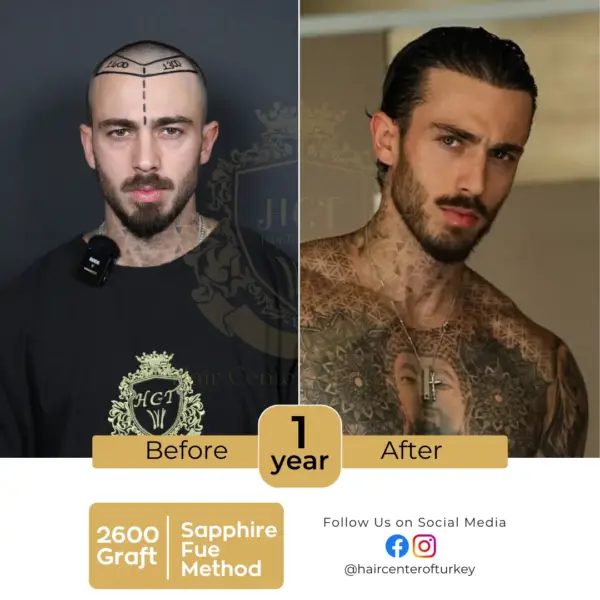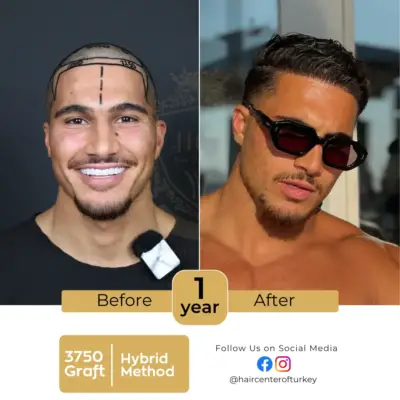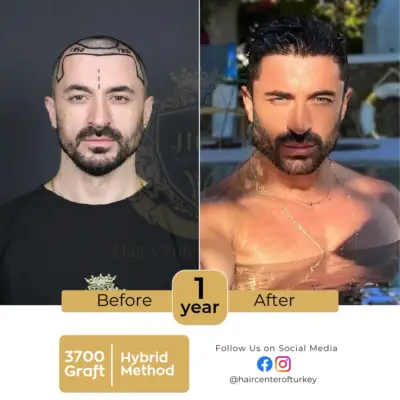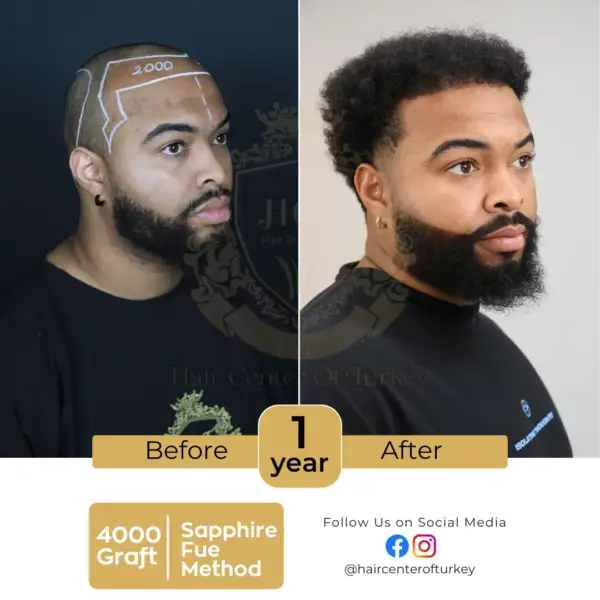


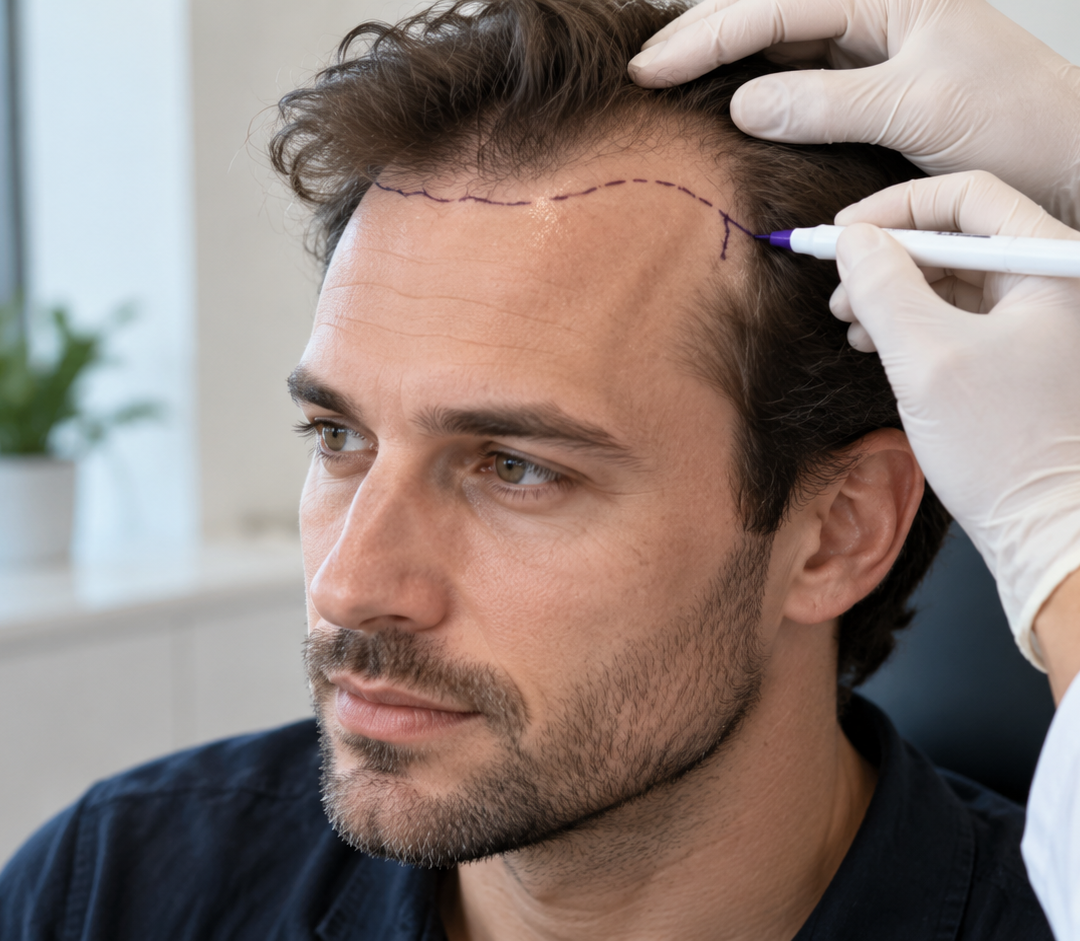
A natural hairline is planned around age, face shape and donor supply, then built from single-hair grafts set at low angles with slight irregularity.
By Dr. Rasime Erkan
A natural hairline is designed one person at a time. The surgeon chooses a position that suits the patient’s age, facial proportions, wishes, donor supply and likely future hair loss. The edge is then built from single-hair grafts placed at low angles, following the direction the hair grows. At Hair Center of Turkey, founded in 2014 with three doctors and around 3,000 annual procedures, international patients usually begin with a photo-based pre-assessment before they travel, and they stay in touch for aftercare follow-up once they are home. This guide explains how natural hairline design works in practice, from the first pen line on the scalp to the final result.
Key Takeaway: What Makes A Hairline Look Natural
Good natural hairline design suits the face it frames and still looks right decades later. Four details do most of the work. These are a soft edge of fine hairs, small irregularities, density that builds gradually, and grafts that follow the original growth direction.
Table of Contents
No surgeon or technique can guarantee a particular result. The planned line is drawn on the scalp and agreed with the patient before any surgery begins.
How Surgeons Decide Where The Hairline Should Sit
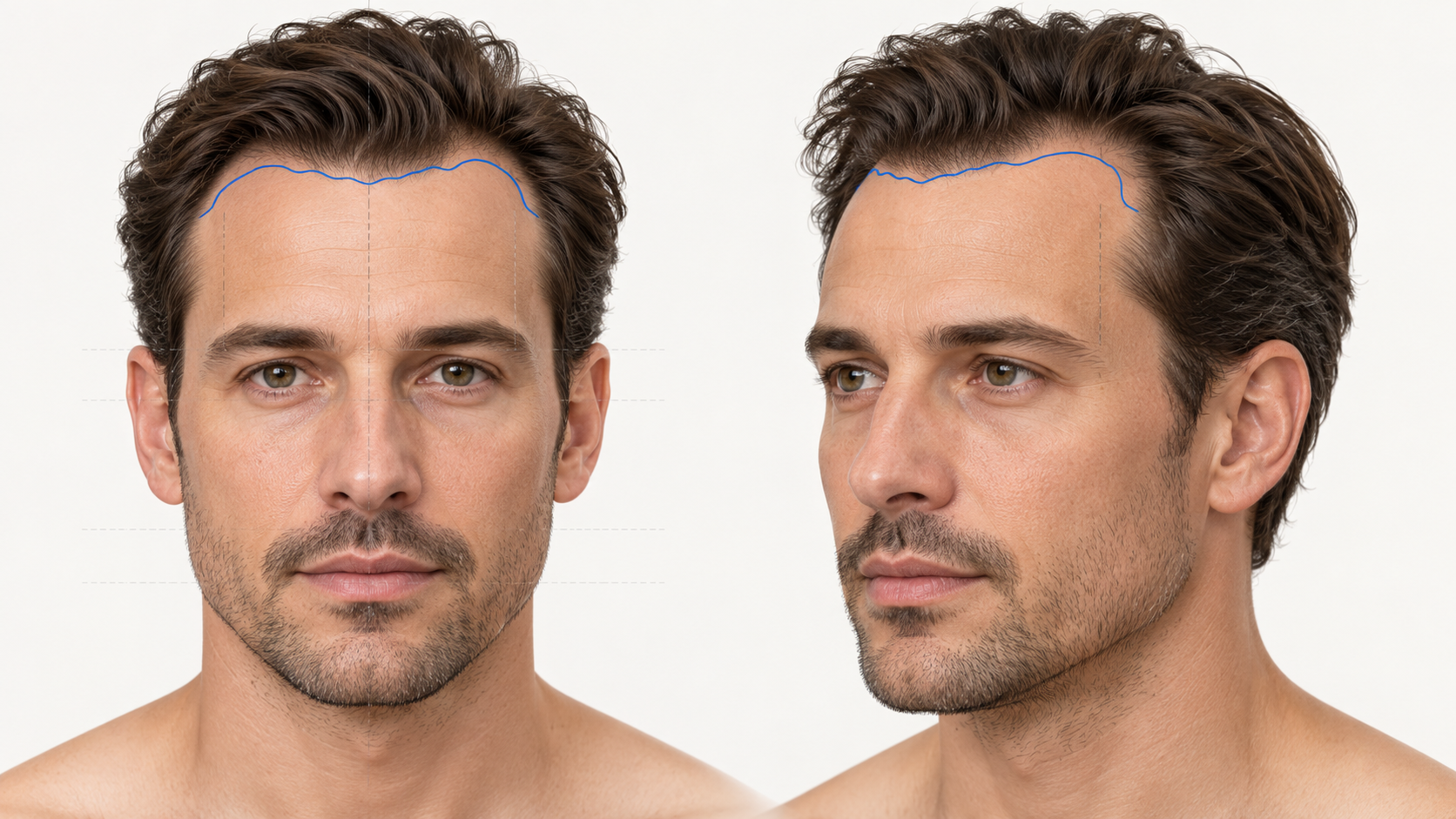
The first question is where the hairline should sit, not how many grafts it needs. Position has the biggest influence on whether the result looks believable at 30, 50 and 70.
Age, Facial Proportions And Why There Is No Universal Measurement
Hair restoration surgeons often distinguish a mature hairline from a juvenile one. A mature hairline has a slight recession at the temples and stays plausible as the surrounding hair ages. A low, flat juvenile line can look out of place once the hair behind it thins. That is why surgeons usually avoid recreating a teenager’s hairline in an adult.
Planning starts from facial landmarks. These include the glabella (the smooth point between the eyebrows), the mid-frontal point at the centre of the hairline, the frontotemporal angles and the temporal points. Published guidance on hairline design uses the idea of facial thirds as a starting reference. In men, this often places the mid-frontal point roughly 7–10 cm above the glabella.
That range is only a starting point. It is adjusted for face height, forehead slope, skull shape and age, so two men of the same height can need very different hairlines. No single centimetre rule fits everyone, and a careful plan is judged face by face.
Balancing Patient Wishes With Donor Supply And Future Loss
Patient preferences matter. Some people want a strong, defined frame. Others prefer something softer that makes the change less noticeable to friends and colleagues. The surgeon weighs these wishes against what can be maintained medically and aesthetically, and explains clearly where the two differ.
Donor supply is limited over a whole lifetime. Hair moved to the front cannot be used later for the crown or mid-scalp. Your Norwood or Ludwig stage and your family history help predict how far your hair loss may progress. Good planning tries to avoid an isolated “island” hairline with bare scalp behind it. Our guide to donor area capacity and graft numbers explains this budgeting in more detail.
Building A Soft, Natural Hairline Edge
Once the position is agreed, attention turns to how the edge is built. Even a well-placed hairline looks artificial if the edge is abrupt or the hairs point the wrong way.
Transition Zone, Micro-Irregularity And Density Gradient
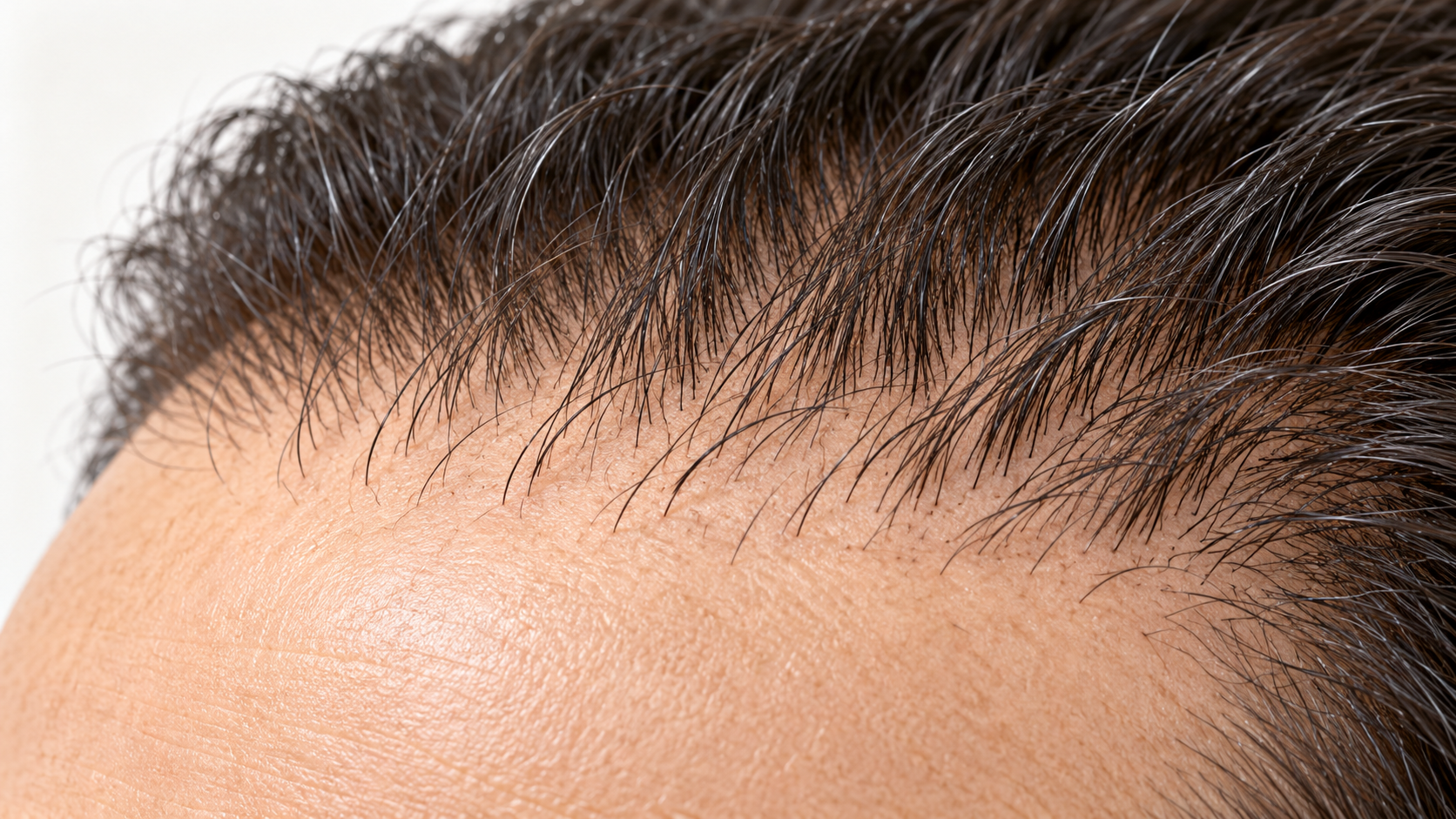
The Recipient Area review in the Journal of Cutaneous and Aesthetic Surgery describes a transition zone about 0.5–1 cm wide. This zone is made almost entirely of 1-hair follicular units. Two-hair units are added further back, in what is often called the “defined zone”. A straight row of multi-hair grafts creates the “pluggy” look many people associate with older procedures.
Small, deliberate irregularities copy the way hair actually grows. Density then rises gradually from the edge backwards. The density target varies with hair calibre, skin contrast, donor supply and scalp health; there is no single graft density that suits every patient. This is how a limited donor supply can still produce a convincing frame.
Graft Angle And Direction
At the front, grafts are placed at shallow angles that follow the existing hair direction. Temple hairs often lie flatter; their direction must be mapped individually. These angles decide how the hairline looks up close, when wet, in wind and under bright overhead light. Grafts placed too upright stand out the moment the hair is pushed back.
How Hair Type, Sex And Natural Asymmetry Change The Design
Hair type changes the plan. Coarse or curly hair gives more visual coverage per graft, while fine, straight hair covers less. Afro-textured hair needs careful handling because the follicles curve beneath the skin. Dark, coarse hair against pale skin also makes any irregularity easier to see, so the edge has to be especially soft.
Hairline shapes vary among women, and temporal recession can occur. Treatment may address pattern hair loss, traction-related loss or a high hairline, depending on diagnosis and donor stability. Our female hair transplant guide covers this in more depth.
Existing asymmetry and cowlicks are usually respected rather than made perfectly even. FUE and FUT can both produce natural results in experienced hands. Neither harvesting method is automatically better; the design and placement matter more.
What Happens During Clinical Assessment And Planning
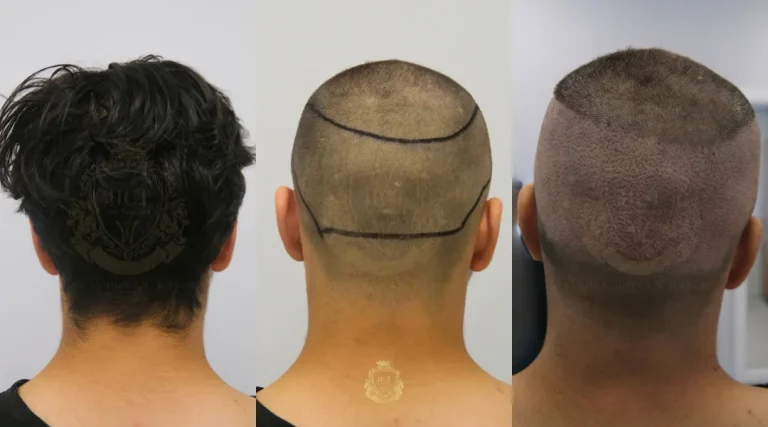
Assessment usually begins with a scalp examination and trichoscopy, a magnified view of the hair and skin. The surgeon maps donor density and scalp laxity, notes cowlicks and asymmetry, and reviews your medical history. The Hair Transplant Practice Guidelines also describe discussing medications such as finasteride or minoxidil. These can help stabilise native hair, though whether they suit you is a separate medical decision.
Some people are not suitable candidates, or not yet. This includes people with diffuse unpatterned alopecia, active scarring alopecia or inflammatory scalp disease. A very weak donor area or rapidly progressing loss at a young age can also rule surgery out for now. The same applies when expectations exceed what the donor area can supply. Medication, scalp micropigmentation or a hair system may suit some of these patients better.
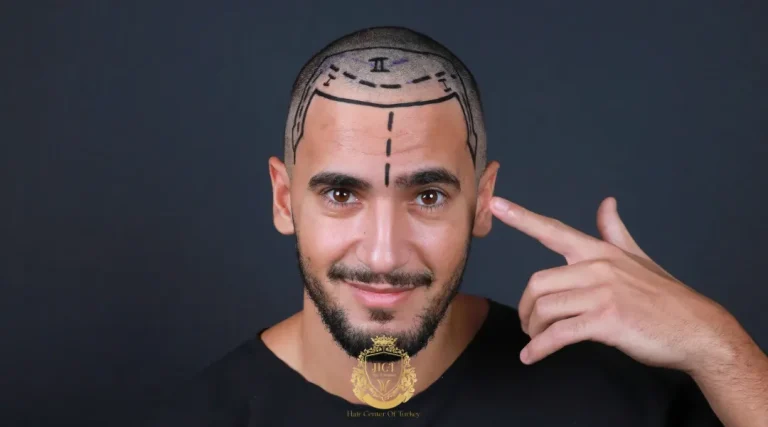
The surgeon then draws the proposed line, discusses it with you and adjusts it where needed. Your agreement and consent are confirmed before any surgery begins.
For international patients, photos allow an early opinion, but the in-person examination decides the final plan. Most visits to Turkey take a few days. Ask who draws the hairline and who makes the recipient incisions, and check the doctor’s credentials. Our Hair Center of Turkey website covers travel and aftercare planning.
Risks, Exceptions And Why A Too-Low Hairline Is Hard To Fix
A hairline placed too low or too straight is one of the hardest problems to reverse. Removing grafts by FUE extraction, electrolysis or excision may take several sessions and can leave scars. Every misplaced graft also uses donor hair that may be needed later for areas that thin over time.
Possible complications include infection, bleeding, scarring, pitting, cobblestoning, kinked or ingrown hairs and folliculitis. Shock loss around the treated area, poor graft growth and an over-harvested donor area can also occur. Reviews of hair transplant complications report that most are uncommon and often manageable. Careful planning and technique lower the risk, but they do not remove it.
An earlier unnatural hairline can often be improved. Common approaches include softening the edge with single hairs, removing or redistributing grafts, and adding density behind the line. How much can be done depends on the donor reserve that remains. A consultation with a surgeon experienced in revision surgery is needed to assess what can realistically be corrected.
Healing And Growth Timeline: What To Expect Month By Month
Scabs usually clear in about 7–10 days. Between roughly 2 and 6 weeks, most transplanted hairs shed. This is often called the “ugly duckling” phase, and it is expected.
New growth usually starts around months 3–4 and lengthens by about 1 cm a month. The result is clearly visible at 6–9 months and close to final at 12–18 months. Timing varies with the patient and treated area; some results continue to mature beyond a year. Our recovery timeline article goes through each stage.
Patience and regular follow-up help you judge the result fairly. If you are considering surgery, a consultation is the right place to discuss your own natural hairline design and what it can realistically achieve.
Sources
Hairline design in hair replacement surgery. PubMed 19034816.
Recipient Area. J Cutan Aesthet Surg. PMC6371721.
Hair Transplant Practice Guidelines. J Cutan Aesthet Surg. PMC8611706.
Kerure AS, Patwardhan N. Complications in Hair Transplantation. J Cutan Aesthet Surg. 2018.
Written by Dr. Rasime Erkan.
Frequently Asked Questions
Can I choose exactly where my new hairline goes?
Your preferences matter, but the final line balances them with your facial proportions, age, donor supply and likely future loss. The surgeon proposes a natural hairline design, and you agree on it together before surgery.
Why don’t surgeons just place the hairline as low as possible?
A very low hairline needs more grafts and can look unnatural with age. It may also leave a visible gap if the hair behind it thins. It is hard to correct and often needs several removal sessions.
Is there a standard measurement for where a hairline should start?
No single centimetre rule fits everyone. Ranges such as 7–10 cm above the glabella in men are only reference points. Surgeons adjust them for face shape, forehead slope and age.
My hairline was never symmetrical. Will it be made perfectly even?
Natural hairlines are rarely perfectly symmetrical. Good natural hairline design usually corrects obvious imbalance but keeps slight irregularity, so the result does not look artificial.
When will I see what my new hairline really looks like?
Transplanted hairs usually shed within a few weeks and start growing around months 3–4. They look clearly better by 6–9 months and are close to final at 12–18 months.