

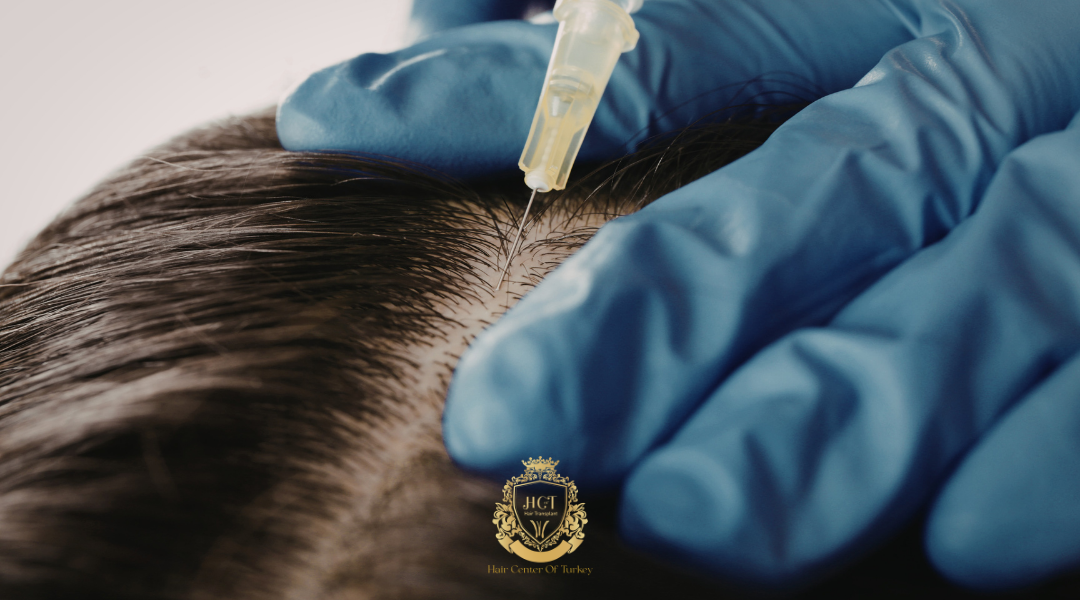
Exosome Treatment for Hair Loss
Hair loss does not always begin with the need for surgery. For many people, the first stage is confusion. They notice more shedding in the shower, reduced density in the mirror, or a scalp that no longer looks as full as it once did. At that point, they often begin searching for a treatment that feels supportive, modern, and less invasive than a hair transplant. This is exactly why we created this page. At Hair Center of Turkey, we believe patients should be able to understand exosome treatment for hair loss in a clear and realistic way before deciding whether it belongs in their personal hair restoration plan.
Table of Contents
What Is Exosome Treatment for Hair Loss?
Exosome treatment for hair loss is a non-surgical approach that is often discussed as part of modern hair support and scalp care. It is generally considered by people who want to improve the condition of the scalp, support weaker follicles, and address early or moderate thinning without moving directly toward surgery.
In simple terms, this treatment is usually presented as a regenerative scalp-focused option. The goal is not to create instant density overnight or replace every other hair loss solution. Instead, the purpose is to support the environment in which hair grows and to help patients who still have existing hair follicles that may benefit from a more advanced supportive treatment plan.
That distinction matters. Exosome treatment is usually not approached the same way as a hair transplant. A transplant is designed to move grafts from one area to another. Exosome therapy, on the other hand, is more commonly considered for support, maintenance, and improvement in suitable cases. For the right patient, it can become part of a broader plan focused on preserving and strengthening hair rather than only replacing what has already been lost.
How Exosome Treatment for Hair Loss Works
Exosome treatment for hair loss is typically discussed as a way of supporting scalp quality and follicle activity through targeted application. While the scientific language behind the treatment can sound highly technical, the patient experience is usually much simpler to understand. The treatment is designed to focus on the scalp and support the area where hair growth begins.
From a patient’s point of view, the important question is not whether the treatment sounds advanced, but whether it matches the condition of the hair and scalp. A good clinic does not recommend regenerative care simply because it is popular. It recommends it when the patient still has active follicles, signs of thinning, or a pattern of hair loss that may benefit from a supportive non-surgical approach.This is why Hair Center of Turkey places strong importance on assessment first. The real value of exosome treatment is not the name alone. The value comes from using it at the right stage, for the right patient, and with the right expectations.
Who Is a Good Candidate for Exosome Treatment for Hair Loss?
Exosome treatment for hair loss is usually more suitable for patients who still have hair to support rather than large fully bald areas. In many cases, the treatment is considered for people who want to be proactive before their hair loss becomes more advanced.
Patients who may be considered suitable often include:
- people with early to moderate hair thinning
- individuals who notice reduced density or weaker-looking hair
- men and women with ongoing shedding but still visible follicle activity
- patients looking for a non-surgical step before considering a transplant
- people who want to support an existing hair restoration plan
It may be less suitable as a stand-alone solution for:
- large bald areas with very limited active follicles
- patients expecting instant dramatic coverage
- cases where hair transplant surgery is more clearly the logical next step
This is why the consultation matters so much. A treatment should never be selected only because it sounds innovative. It should be chosen because it fits the scalp condition, the pattern of hair loss, and the long-term goal of the patient.
Benefits of Exosome Treatment for Hair Loss

When used for the right patient, exosome treatment for hair loss may offer several practical advantages. The benefit is not that it replaces every other option. The benefit is that it may support hair care in a way that feels structured, modern, and less invasive.
Some of the reasons patients show interest in this treatment include:
- Non-surgical support: it may appeal to patients who are not ready for a transplant
- Focus on existing hair: it is often considered for preserving and supporting active follicles
- Part of a broader plan: it can fit into a longer hair restoration strategy rather than acting as a one-time decision
- Scalp-centered care: many patients like the idea of treating the scalp environment directly
- Low-disruption treatment path: compared with surgery, the process may feel more manageable for daily life
- Modern regenerative appeal: patients often look for newer supportive options when standard routines no longer feel enough
The key point is that these benefits should be explained honestly. This treatment is usually best understood as a supportive option, not as an unrealistic promise.
What Happens During the Session?
This is one of the first practical questions patients ask, and understandably so. A treatment may sound interesting on paper, but people want to know what the actual appointment feels like. At Hair Center of Turkey, the logic of the session should always be built around evaluation, comfort, and clarity.
The process generally begins with reviewing the scalp and confirming the treatment areas. Once the plan is clear, the selected application is carried out in a controlled clinical setting. Because this is not a hair transplant procedure, the session is usually much lighter in structure than a full surgical day. Patients are not entering the same kind of long operation process associated with graft harvesting and implantation.
This difference is important for people who want support but do not yet want the intensity of surgery. The session is often viewed as a more practical appointment within a broader treatment journey. Patients also tend to appreciate knowing that the process is designed around scalp care rather than major downtime.
Recovery After Exosome Treatment for Hair Loss
Recovery after exosome treatment for hair loss is usually one of the reasons the treatment attracts attention. Many patients want a solution that feels professional and modern, but they also want to return to normal life without a long healing period.
Because this is a non-surgical treatment, recovery is generally more manageable than the recovery process after a transplant. That said, aftercare still matters. The scalp should be treated carefully, and patients should follow the clinic’s specific guidance regarding washing, sweating, sun exposure, and the use of hair products in the early period after the session.
This part of the process should not be rushed or treated casually. Even when a treatment is relatively light, consistency and aftercare influence the overall experience. Good clinics explain not only the benefits of a session, but also what the patient should expect afterward and how the next stage of the plan will be managed.
Exosome Treatment for Hair Loss vs PRP
Exosome treatment for hair loss and PRP are often compared because both are discussed as non-surgical supportive options. Patients who are searching for regenerative hair care often come across both names and naturally want to know which one is better.
The most useful answer is that neither treatment is automatically better for every patient. PRP and exosome therapy are different approaches, and the more suitable option depends on the patient’s scalp condition, degree of thinning, treatment expectations, and overall plan. Some patients may be guided toward one option because it fits their case more naturally. Others may need a broader strategy in which the comparison itself matters less than the total treatment roadmap.
This is where experience matters. A quality clinic does not treat these options like trend-based products. It looks at the patient, the stage of hair loss, and the long-term goal. The best choice is not the one with the strongest marketing. It is the one that makes the most clinical sense.
When Results Become Visible
One of the most important things to explain honestly is timing. Patients want results, but they also want clarity. Exosome treatment for hair loss should be understood as a gradual process, not a sudden transformation.
The first phase is usually more about supporting the scalp and creating the right conditions than about immediate visible density. Over time, some patients begin to look for signs such as healthier-looking hair, reduced weakness, or improvement in overall quality. Any visible progress is usually judged across a longer period, not in the first few days.
This is why realistic communication matters so much. Treatments in the hair loss field often disappoint patients not because nothing was done, but because expectations were framed poorly. A well-written service page should never suggest that one session changes everything. A more honest message is that progress, when it happens, is usually gradual and should be assessed with patience and consistency.
Is Exosome Treatment for Hair Loss Right for Men and Women?
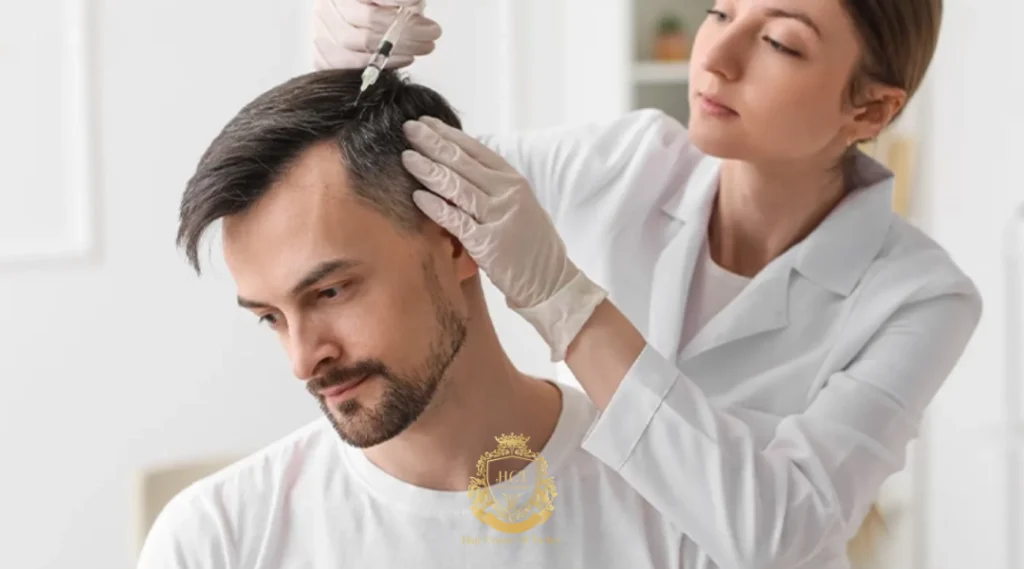
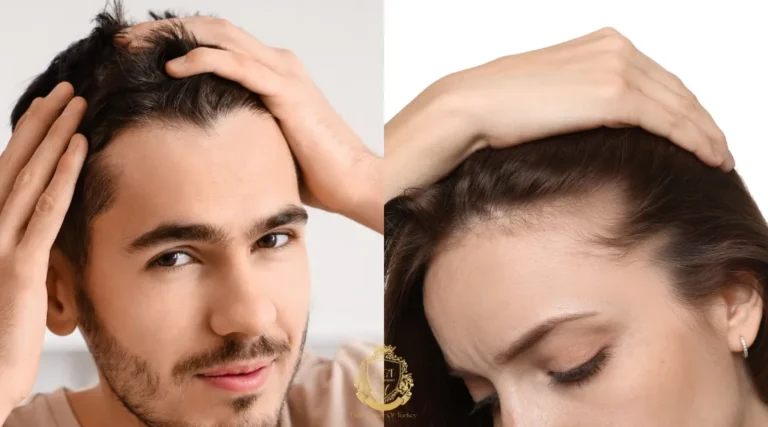
Exosome treatment for hair loss may be considered for both men and women, depending on the type of thinning and the overall condition of the scalp. Hair loss does not affect only one group, and treatment planning should not be based on gender alone. It should be based on diagnosis, follicle activity, hair quality, and realistic goals.
In men, the treatment is often discussed around pattern hair loss, reduced density, and early intervention before wider loss develops. In women, the focus may be more related to diffuse thinning, weakened hair quality, or a desire to support existing density with a non-surgical approach. Even when the treatment name is the same, the planning logic can differ depending on the patient’s presentation.That is why personalized evaluation remains central. The same treatment can sound appealing to many people, but suitability is always individual. At Hair Center of Turkey, the goal should never be to fit every patient into one treatment category. The goal is to decide whether the treatment truly fits the patient.
Exosome Treatment at Hair Center of Turkey
At Hair Center of Turkey, exosome treatment is approached as part of a personalized hair care strategy rather than a one-size-fits-all solution. Every patient’s scalp condition, level of thinning, and treatment goals are different, which is why the process should begin with careful assessment and realistic planning. The purpose is not simply to offer a trending treatment, but to determine whether exosome therapy fits the patient’s actual needs.
For patients who are suitable candidates, Hair Center of Turkey aims to integrate exosome treatment into a broader and more structured approach to hair restoration. This may be relevant for individuals who want a non-surgical supportive option, those looking to strengthen an existing treatment plan, or patients who want to explore regenerative care before considering surgery. What matters most is building the right roadmap, not applying the same solution to every case.
The Hair Center of Turkey approach focuses on clarity, patient guidance, and realistic expectations from the start. Rather than presenting exosome treatment as a dramatic overnight answer, the goal is to support the scalp in a professional clinical setting and place the treatment within a medically reasoned plan. For patients exploring modern options for hair thinning and scalp support, Hair Center of Turkey offers a more structured and patient-specific perspective on exosome treatment.
Frequently Asked Questions About Exosome Treatment for Hair Loss
Is exosome treatment for hair loss painful?
Most patients are more concerned about the idea of the treatment than the reality of it. Since this is not a hair transplant surgery, the session is usually perceived as much lighter and more manageable.
How many sessions are needed?
There is no single answer that fits everyone. The number of sessions depends on the condition of the scalp, the degree of thinning, and the broader treatment plan.
Can exosome treatment replace a hair transplant?
Not in every case. For some patients, it may be a supportive option before surgery is needed. For others, especially those with more advanced loss, a transplant may still be the more appropriate path.
Is it only for early hair loss?
It is often more relevant in early or moderate stages, especially when there are still active follicles to support. In more advanced cases, expectations need to be managed much more carefully.
Can women have this treatment too?
Yes. Women may also be suitable candidates, depending on the pattern of hair thinning and the condition of the scalp.
Why do patients choose Hair Center of Turkey for this kind of care?
Because patients are not only looking for a treatment name. They are looking for a clinic that evaluates the scalp properly, explains the process honestly, and builds a plan around real need rather than generic promises.
Explore the complete guide: Hair Loss Treatments