

Jimmy Carr Hair Transplant: Which Technique Was Used?
Jimmy Carr has said he had a hair transplant, describing it as moving hair from the back of his head to the front. From his natural-looking hairline and the absence of a visible strip scar, many specialists suspect an FUE (Follicular Unit Extraction) procedure. The clinic and exact method have not been officially confirmed.
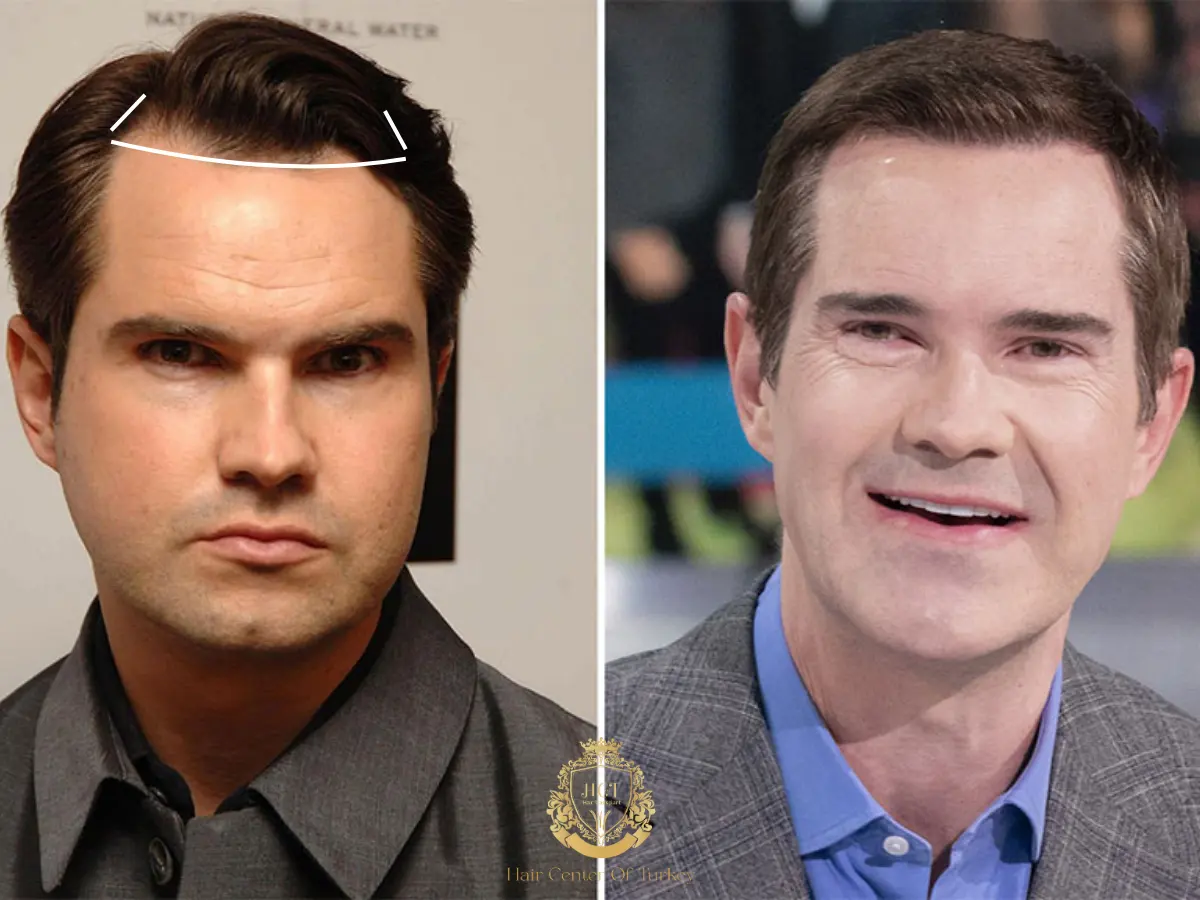
Jimmy Carr Hair Loss And Why It Happens
Male pattern hair loss is common and usually progressive. For many men, recession starts at the temples and hairline, then gradually thins across the front and crown.
In Jimmy Carr’s case, older photos show a clear recession at the temples with a higher, “M-shaped” hairline. That pattern is typical of androgenetic alopecia, where genetically sensitive follicles miniaturize over time.
Did Jimmy Carr Get A Hair Transplant?
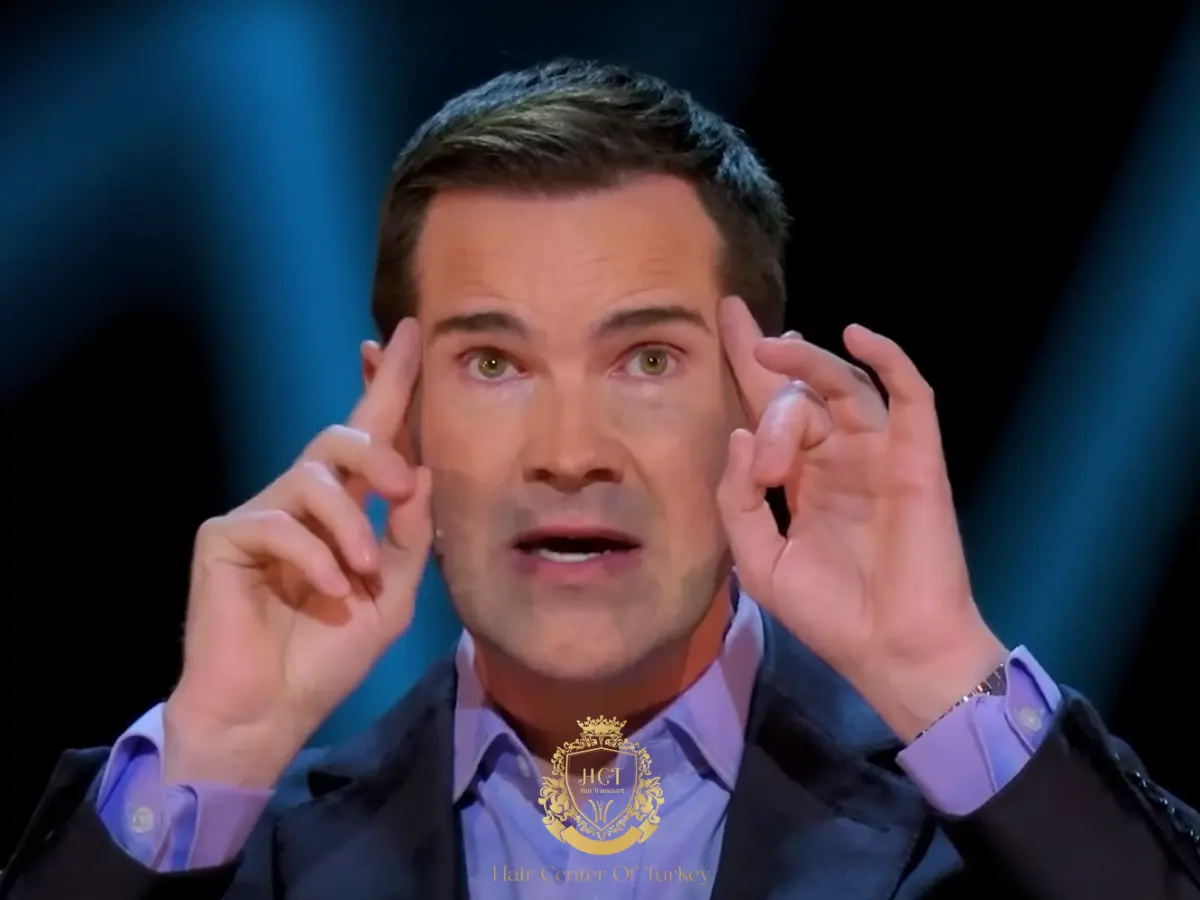
Yes. Jimmy Carr has talked about his hair transplant publicly and even turned it into a joke. In a TV interview, he described his hair as “socially distancing” from his forehead and said the procedure involved taking hair from the back of his head and placing it at the front.
That description matches how modern transplants work: follicles are harvested from the donor area (usually the back and sides), then implanted into thinning areas to rebuild the hairline.
Jimmy Carr Hair Transplant Before And After
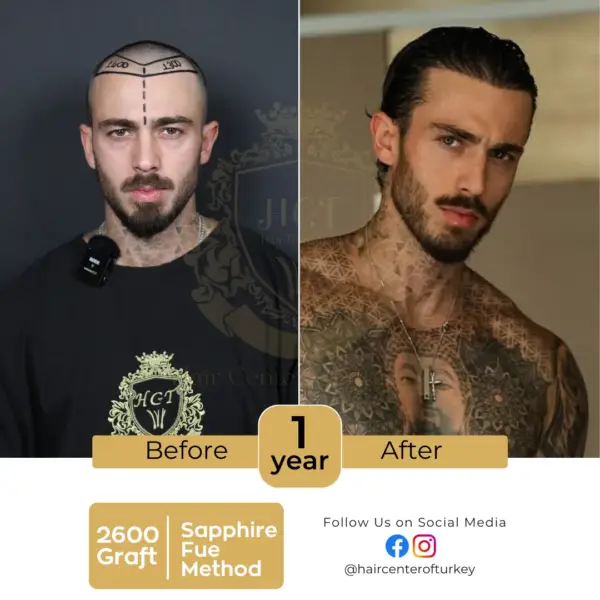
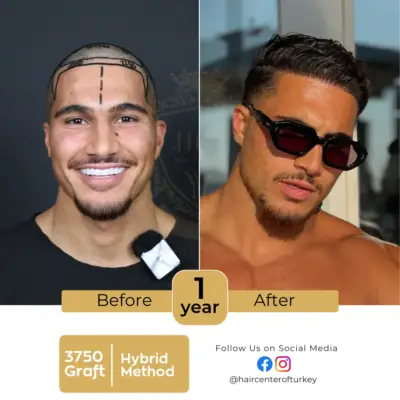
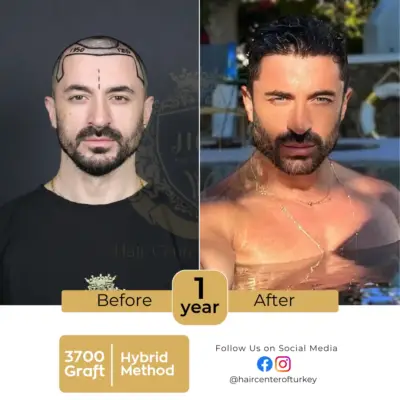
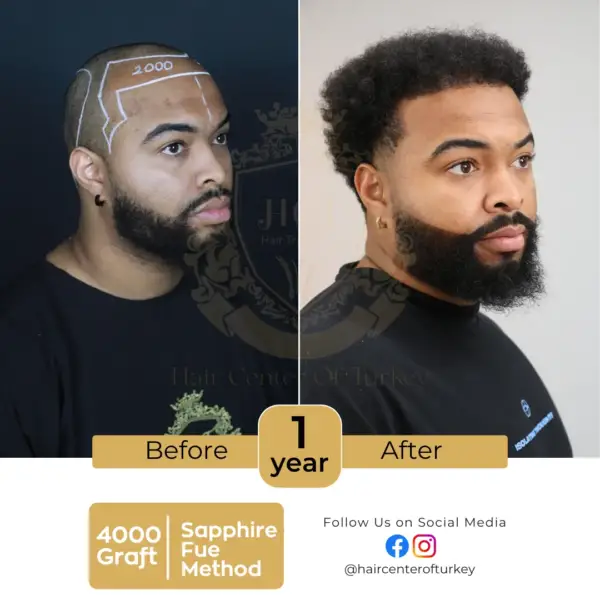
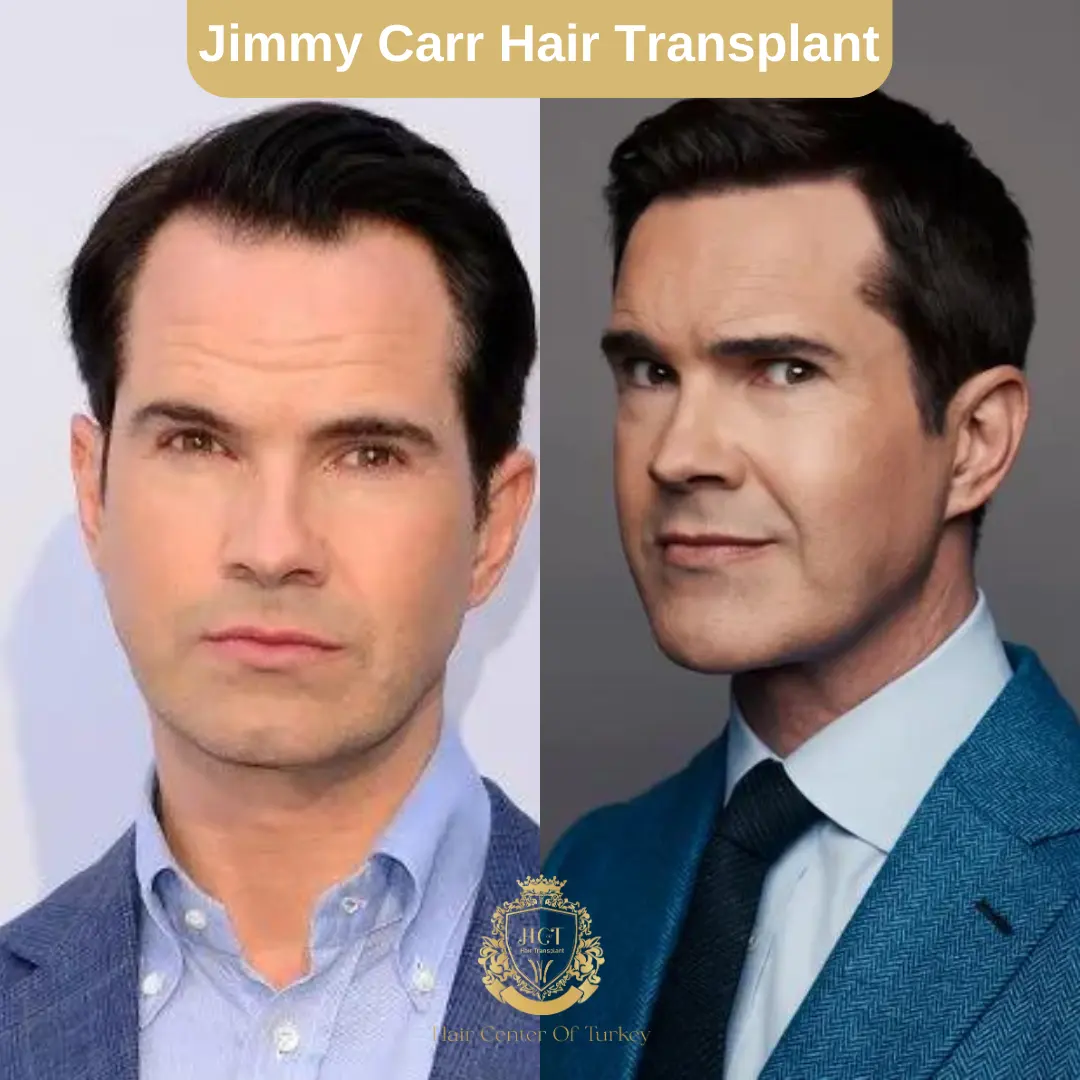
Comparing before-and-after photos, the biggest change is in the frontal hairline and temple points. The hairline looks lower and more even, with better framing around the face.
A natural result usually comes from two things: conservative placement (an age-appropriate hairline) and careful graft angling. When those details are done well, the transplanted hair blends into existing hair without looking “pluggy.”
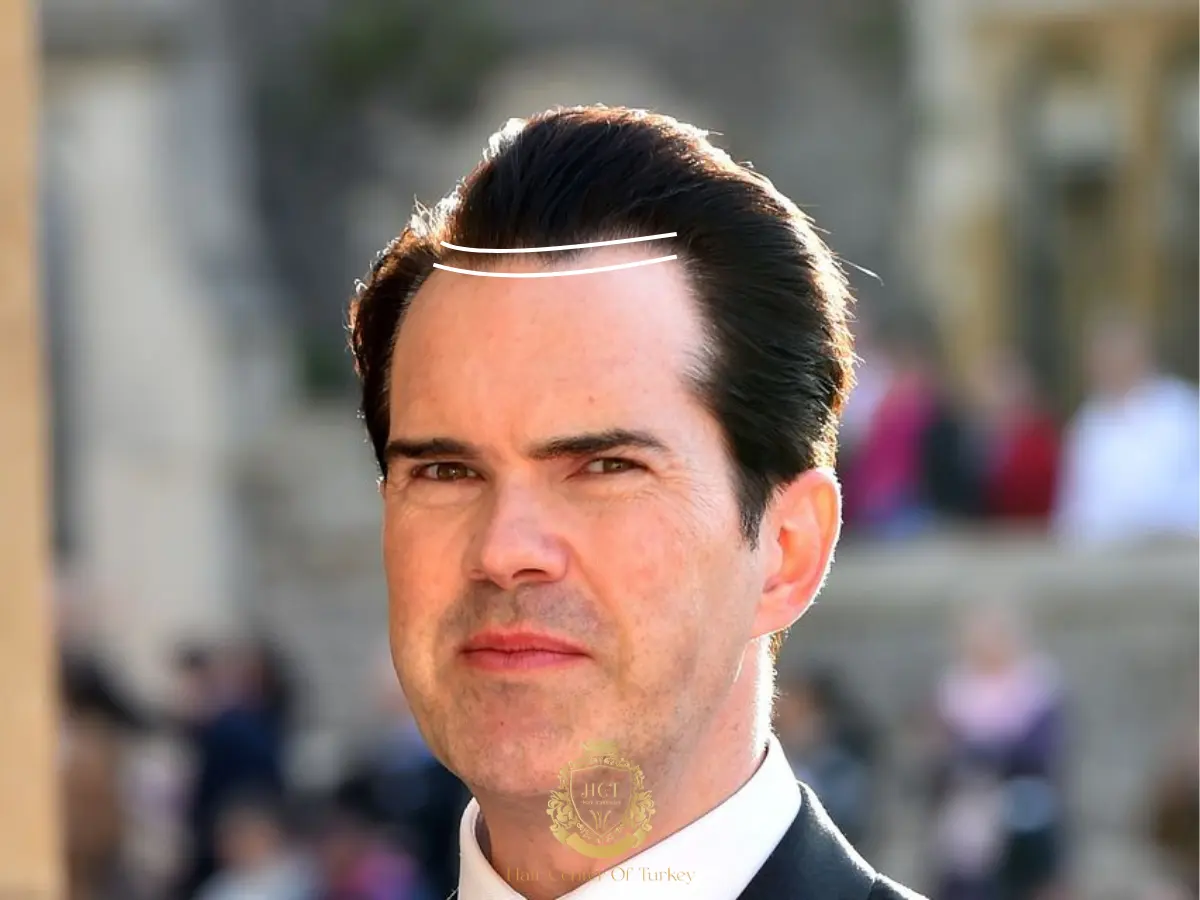
Which Hair Transplant Technique Was Used?
No clinic has publicly released Jimmy Carr’s surgical plan, graft count, or technique details. Still, hair professionals commonly point to FUE as the most likely method based on visible outcomes and what Carr described.
Why FUE Is The Leading Guess
FUE involves extracting individual follicular units with a tiny punch tool and implanting them into micro-incisions along the new hairline. It is widely used for public-facing patients because it avoids a long, linear scar associated with older strip surgery (FUT).
Carr’s result shows a refined hairline and no obvious strip scar in public images. That combination often aligns with an FUE approach.
Could It Have Been DHI Or Sapphire FUE?
Some clinics market variations like DHI (Direct Hair Implantation) or Sapphire FUE (using sapphire blades for incisions). Without surgical documentation, it is not possible to say which instruments were used.
What matters most for natural results is not the marketing label. Surgeon planning, graft placement, and post-op care tend to have the biggest impact.
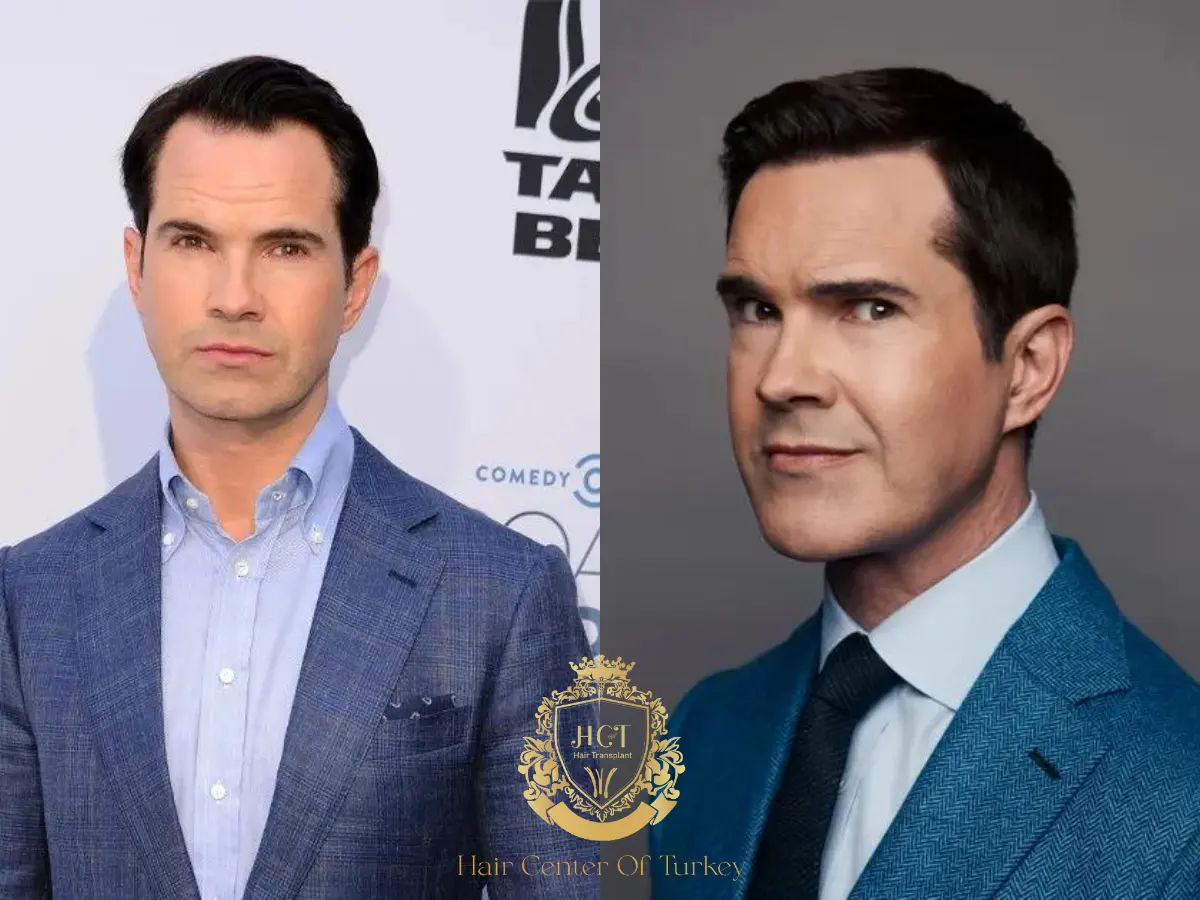
How Many Grafts Might Have Been Needed?
Estimating graft numbers from photos is never exact. For a receding hairline and temple recession, many patients fall somewhere in the 1,500–3,000 graft range depending on hair caliber, density goals, and how much area needs coverage.
A proper consultation includes donor assessment, hairline design, and a realistic density plan. Those details determine the graft count more reliably than photos.
How Much Did Jimmy Carr’s Hair Transplant Cost?
Jimmy Carr has not shared a price. Costs vary widely based on location, surgeon involvement, technique, graft count, and aftercare.
As a general guide, UK procedures are typically priced higher than medical-travel packages. The best way to budget is to compare like-for-like quotes that include consultation, surgery, medications, and follow-up care.

Where Did Jimmy Carr Get His Hair Transplant?
Jimmy Carr has not publicly confirmed the clinic name. Some UK clinics have posted content suggesting he was treated there, but those claims are not the same as an official patient statement.
If you are choosing a clinic, focus on what you can verify: surgeon credentials, documented patient outcomes, transparent planning, and clear aftercare.
What To Look For In A Safe, Natural Hair Transplant
A good transplant is designed to look normal in daylight, on camera, and years later. These checkpoints help you evaluate a clinic:
- Doctor-led planning: hairline design and graft strategy should be individualized.
- Real patient cases: consistent before/after photos with similar hair loss patterns to yours.
- Clear aftercare: written instructions, follow-ups, and easy access to the medical team.
- Natural hairline design: softer, irregular hairline with appropriate density and angles.
Book A Personal Consultation With Hair Center Of Turkey
Hair Center of Turkey is a boutique hair transplant clinic focused on personalized planning and VIP-style patient care. If you want a professional opinion on your hair loss stage and graft needs, you can request a free consultation and receive a tailored treatment plan from the medical team.
F.A.Q.
What Did Jimmy Carr Say About His Hair Transplant?
He joked that his hair was “socially distancing” from his forehead and described the transplant as taking hair from the back of his head and putting it on the front.
Was Jimmy Carr’s Hair Transplant Successful?
From public appearances, the hairline looks fuller and natural, especially at the front. Only a clinical follow-up could confirm medical details such as density and growth cycle, but the cosmetic outcome appears strong.
Why Do Celebrities Often Choose FUE?
FUE can be discreet because it does not leave a long linear scar. It also allows detailed hairline work when performed by an experienced team.
How Long Does A Hair Transplant Take To Look Natural?
Many patients see early change after a few months, with more noticeable growth around 6–9 months. Final maturation can take up to 12–18 months, depending on the individual and the area treated.
Explore the complete guide: Celebrity Hair Transplants – Film, TV and Music