


Tests before hair transplant surgery commonly include a CBC with platelets, clotting tests, glucose or HbA1c, HIV and hepatitis screening, and a scalp exam.
Your assessment also includes a scalp and donor examination. There is no universal mandatory test panel; your clinician considers your health, medicines and anaesthesia plan.
Founded in 2014, Hair Center of Turkey has three doctors and performs around 3,000 procedures annually for local and international patients. For international patients, the main benefit is planning. Medical history and screening are reviewed before travel where possible, so a problem can be found early instead of on the day of surgery.
Table of Contents
Hair Transplant Blood Tests Clinics Commonly Request
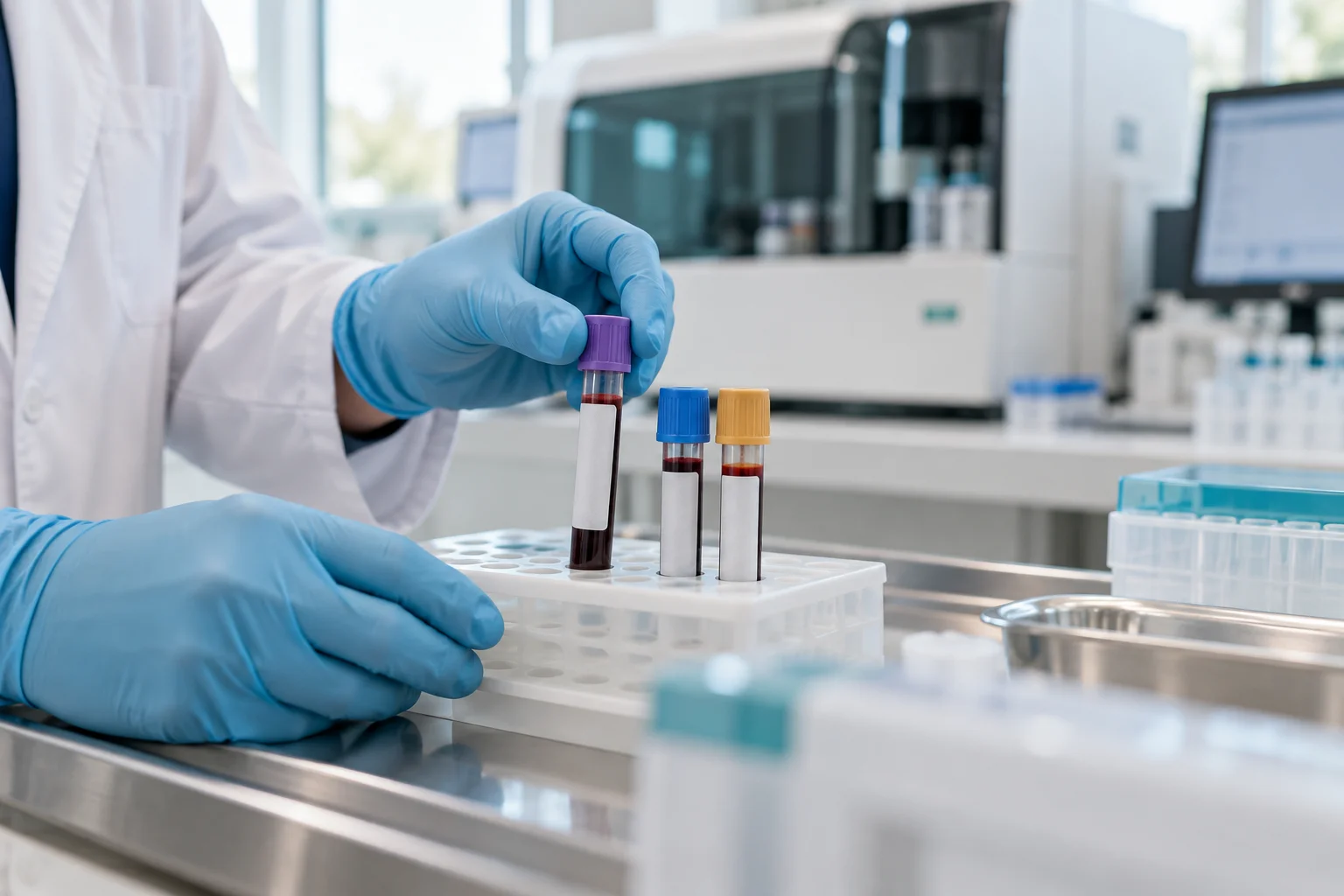
A hair transplant is usually done under local anaesthesia. The team assesses bleeding risk, healing and infection-related concerns. They also review whether local anaesthesia or additional sedation is suitable for you.
Your history, medicines and clinic policy determine the requested tests. Laboratories may use different normal ranges, so results need clinical interpretation.
CBC Before Hair Transplant: Blood Count And Platelets
A complete blood count measures red cells, white cells and platelets. Low haemoglobin can point to anaemia, which may affect healing and how well you cope with a long session. A raised white cell count can suggest an infection that should be looked at first.
Platelets help blood clot at thousands of tiny graft sites. A CBC before hair transplant surgery gives the team a baseline for bleeding risk. If a result is unexpected, a clinician reviews it in the light of your history rather than judging it against a single cut-off.
Coagulation Tests: PT/INR And aPTT
Prothrombin time (PT, often reported as INR) and activated partial thromboplastin time (aPTT) show how quickly blood clots. They may be indicated with liver disease, a bleeding history or certain anticoagulants. Routine PT/INR and aPTT do not reliably measure every direct oral anticoagulant.
Blood Sugar: Fasting Glucose And HbA1c
A glucose test shows your blood sugar at a single moment. HbA1c reflects average control over roughly the past three months, so it gives a broader picture. Poorly controlled diabetes can slow wound healing and raise infection risk, and this result helps the team plan safely.
HIV, Hepatitis B And Hepatitis C Screening
Screening for HIV, hepatitis B (HBsAg) and hepatitis C (anti-HCV) supports infection control and patient care. A positive result does not automatically rule out surgery. It means the clinic needs to discuss next steps with you, and clinics handle this in different ways.
Tests That Depend On Your Medical History And Anaesthesia Plan
Some tests before hair transplant surgery are added only when your age, symptoms, conditions, medicines or sedation plan suggest a need. This is the point where hair transplant screening becomes individual rather than standard.
General surgical guidance works the same way. The UK’s NICE guideline NG45 on routine preoperative tests covers elective surgery in general, not hair transplants specifically. It links testing to how major the surgery is and to the patient’s ASA physical status, a standard score of overall health.
For healthy adults having minor surgery, NICE generally does not recommend routine blood tests or an ECG unless their history calls for them. It does recommend offering HbA1c testing to people with diabetes who have not had one in the last three months. A hair clinic may still ask for a broader panel as part of its own policy.
ECG Before Hair Transplant: When It Is Needed
An ECG records the heart’s electrical activity. An ECG before hair transplant surgery is usually requested for older patients, people with heart disease or palpitations, people on certain medicines, or when sedation is planned. A healthy younger adult having local anaesthesia alone may not need one. Your clinician makes that call.
Kidney And Liver Function Tests
Kidney tests (creatinine, eGFR and electrolytes) and liver function tests are usually added when a condition or long-term medicine makes them relevant. Examples include treatment for high blood pressure, diabetes, known liver disease, or regular medicines that the liver or kidneys process. These results can also affect how the team plans local anaesthetic doses and post-operative painkillers.
Thyroid And Ferritin: Ruling Out Other Causes Of Hair Loss
Thyroid tests (TSH) and ferritin or iron studies are useful when hair loss looks like diffuse shedding. They also help when the cause may lie elsewhere in the body rather than in a genetic pattern. If such a cause is found and treated first, a transplant may no longer be the right next step.
Scalp And Donor Area Examination
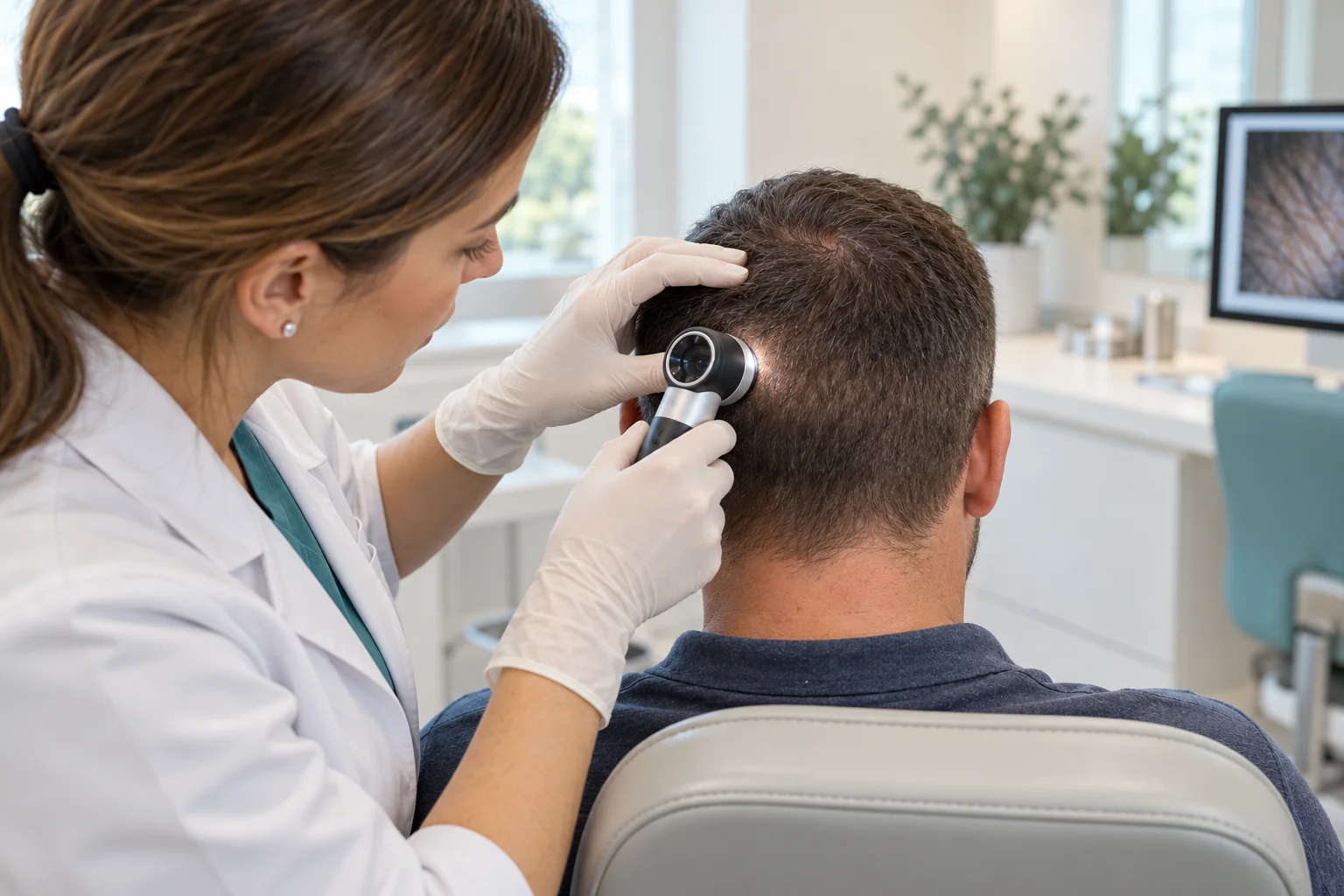
Lab tests and the scalp examination answer different questions in hair transplant screening. Blood tests help show whether surgery is safe for you. The examination shows whether you are a suitable candidate, what the diagnosis is, and what result you can realistically expect.
During the examination, the doctor checks donor density, hair thickness and quality, and the pattern and progression of your hair loss. They also estimate how many grafts the donor area can reasonably supply. These findings shape the surgical plan far more than any blood result.
Trichoscopy is a magnified view of the scalp and hair shafts. It helps tell androgenetic alopecia (genetic pattern hair loss) apart from conditions such as alopecia areata or scarring alopecia. A scalp biopsy is not routine. It is only considered when there is a clear reason, for example suspected scarring alopecia, where transplanted grafts might not survive.
Risks, Exceptions And What Abnormal Results Mean
Any abnormal result needs a clinician’s assessment. Depending on the finding, surgery may go ahead with precautions, need further tests or a specialist’s input, or be postponed until the problem is managed.
Normal results are reassuring, but they do not guarantee a procedure free of complications. Tests are only one part of a wider safety process. That process also includes your history, the examination, the anaesthesia plan and monitoring during surgery.
Take particular care with medicines. Do not stop prescribed medicines on your own, including anticoagulants, antiplatelet drugs or diabetes treatment, because stopping them suddenly can carry serious risks. Tell your prescribing doctor and the surgical team about every medicine and supplement you take, including finasteride and minoxidil. Let them agree on any change together.
Fasting is not required for everyone. It may be needed for a specific blood test or for sedation. Follow the instructions from your clinic and laboratory rather than general advice found online.
Preoperative Hair Transplant Assessment: What Happens In The Clinical Process
A typical preoperative hair transplant assessment follows a clear order:
You share your medical history, any known allergies and a full list of your medicines before you travel.
You have blood tests either at home or when you arrive.
The clinic reviews the results and examines your scalp.
You give informed consent, and the team runs final checks on the day of surgery.
The NHS guidance on preparing for surgery describes a similar process in general terms. It explains that a pre-operative assessment may take place days or weeks before an operation. It can include questions about your health, a physical check, and blood tests or other investigations as needed.
For patients travelling abroad, the main trade-off is timing. Testing at home lets the clinic see your results before you book flights, which lowers the risk of a wasted trip. Testing on arrival is simpler to organise. If a result turns out abnormal after you have travelled, though, surgery may need to be postponed.
Option | Main advantage | Main drawback |
|---|---|---|
Tests at home before travel | Problems found before you fly | Clinic must accept the lab and timing |
Tests at the clinic on arrival | One lab, one format, easy to arrange | Surgery may be postponed after you have travelled |
Hair Transplant Preparation: Questions To Confirm With Your Clinic
Good hair transplant preparation means getting the details confirmed in writing before you travel. Ask your treating clinic:
How recent do my results need to be?
Which laboratories and report formats do you accept, and in which language?
Do I need to fast for any test or for the procedure itself?
What happens if an infection screen is positive or a result is abnormal?
Key Takeaways, Author And Sources
Screening tests and a scalp and donor examination help clinicians assess suitability. Other tests are added based on your health, medicines and anaesthesia plan. A clinician assesses any abnormal result, which may delay surgery. Normal results support safety but do not guarantee it.
Author: Dr. Rasime Erkan
References
NICE NG45: Routine preoperative tests for elective surgery (general elective-surgery guidance, not specific to hair transplants)
Related guides from Hair Center of Turkey
Frequently Asked Questions
What blood tests are usually done before a hair transplant?
Many clinics request a CBC with platelets, coagulation tests, glucose or HbA1c, and HIV, hepatitis B and hepatitis C screening. The exact tests before hair transplant surgery depend on your health history and the treating clinic. No single list applies to everyone.
Do I need an ECG before hair transplant surgery?
Not always. An ECG is usually requested because of your age, heart history, symptoms, medicines or a plan to use sedation. Your clinician makes that decision.
Can I use blood test results from my home country?
Often yes, but clinics differ on which results they accept and how recent they must be. Before you travel, confirm with your treating clinic which tests before hair transplant surgery they need, how recent they should be and in what format.
Do I need to fast before my tests or the procedure?
Fasting is not required for everyone. Some glucose tests or sedation plans may need it, so follow the specific instructions from your clinic and laboratory.
What happens if one of my results is abnormal?
A clinician needs to assess it. Depending on the finding, surgery may go ahead with precautions, need further tests or a specialist’s input, or be postponed.