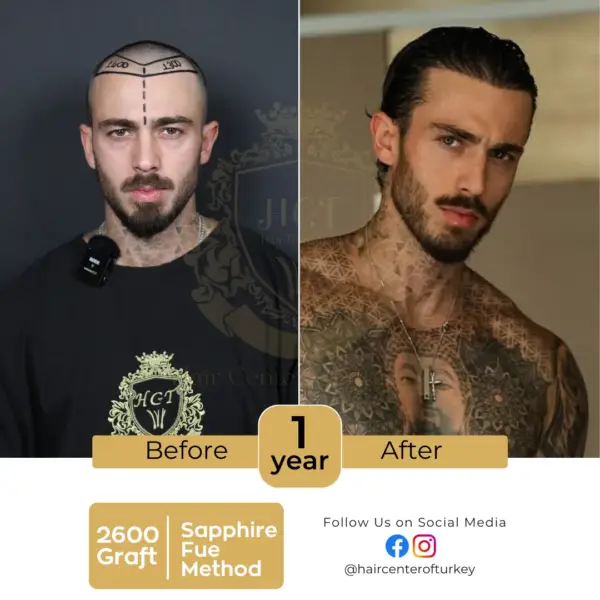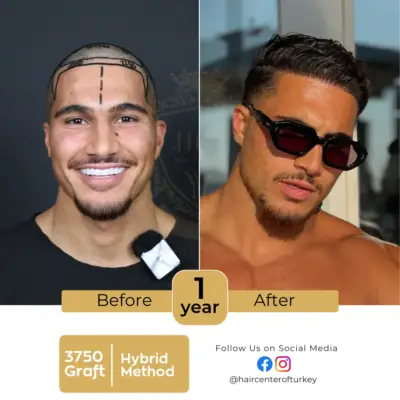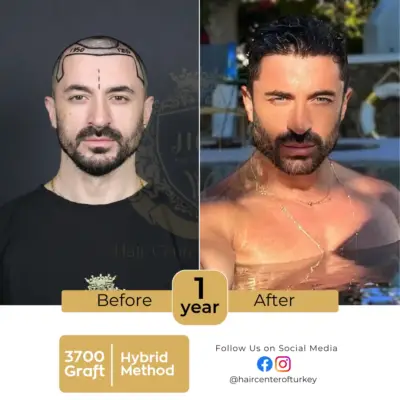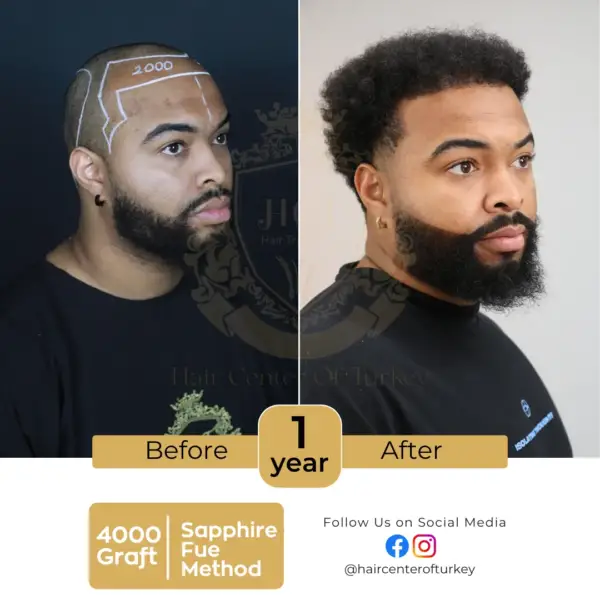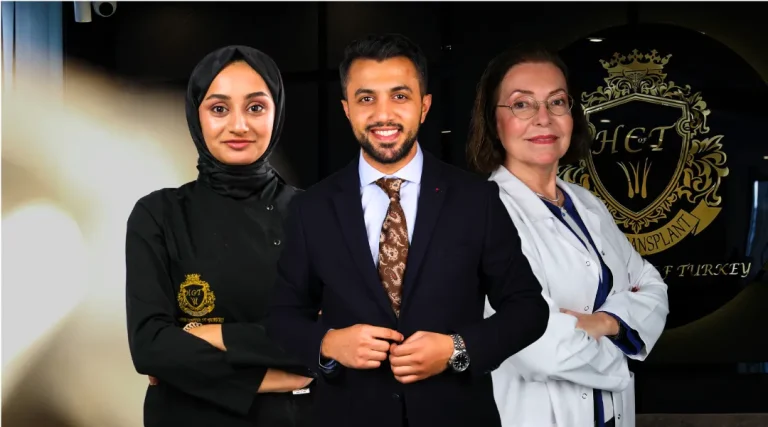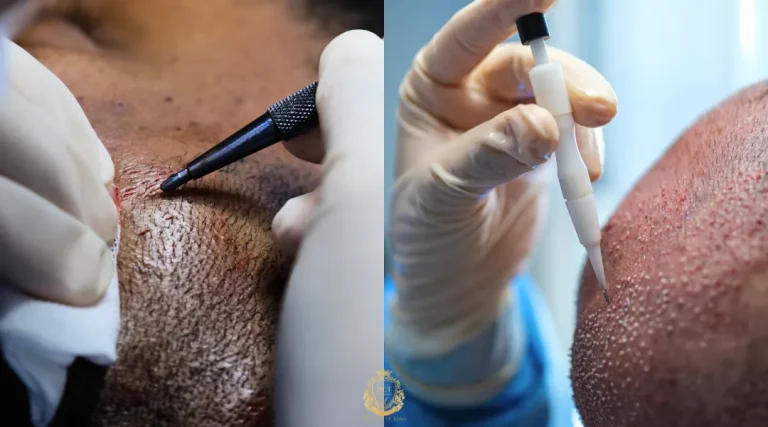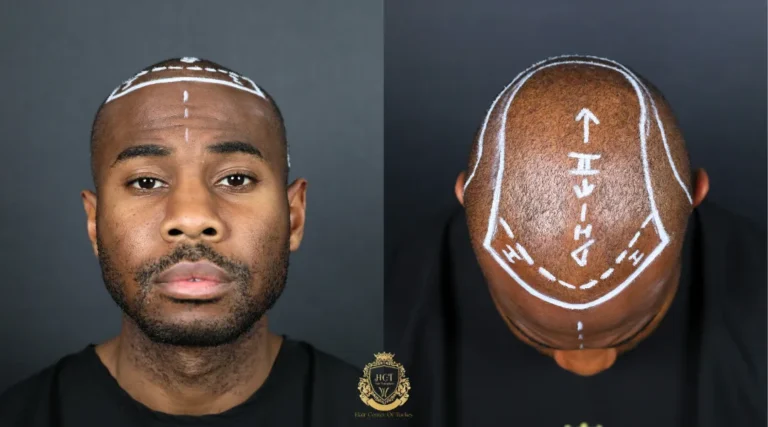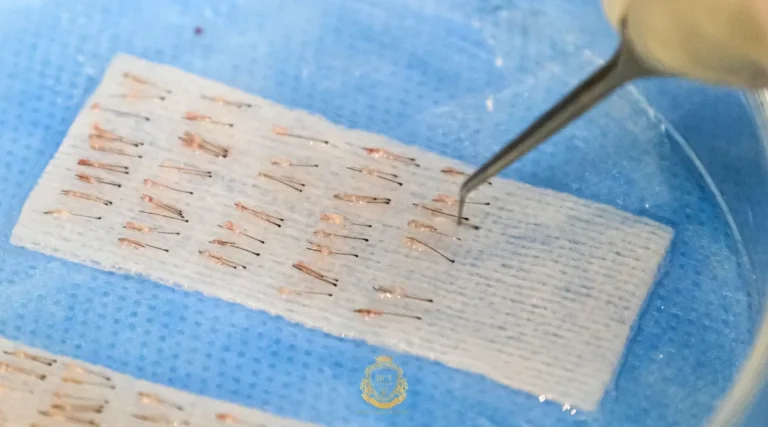



Germany’s hair transplant clinics are known for strict medical regulation and modern FUE and DHI equipment, which is why they draw patients from across Europe. Since 2014, Hair Center of Turkey has built a track record on the other side of that comparison, carrying out around 3,000 hair transplant procedures a year using Sapphire FUE and DHI techniques. This guide walks through how German clinics operate, what they typically cost, and where Turkey still comes up as the main alternative for patients comparing options before booking.
Hair Transplant Clinics In Germany
Germany is often one of the first countries people look at when they start researching hair transplant options in Europe. That makes sense. The country has a strong medical reputation, a large private aesthetics market, and visible clinic hubs in cities like Munich, Berlin, Hamburg, and Düsseldorf. But hair restoration is one of those fields where a country’s reputation can create a false sense of certainty. A transplant does not turn out well just because it was done in Germany. It turns out well because the case was diagnosed properly, the donor area was managed conservatively, the hairline was designed with restraint, and the physician treated the procedure as long-term planning rather than a one-day cosmetic sale. Germany’s Association of German Hair Surgeons presents hair transplantation as a complex surgical procedure that should ideally succeed the first time and stresses that patients need reliable medical orientation, not pseudo-medical marketing.
That point matters more than most patients expect. Online, the German market often looks neat and reassuring: clean clinic websites, polished before-and-after galleries, technical terminology, and consultation forms that make the process seem straightforward. In reality, Germany’s hair transplant market is just as mixed as anywhere else. There are careful, physician-led practices, and there are also businesses that market confidence more aggressively than they explain medical judgment. The same German professional association says a hair transplant is scalp and skin surgery and should be carried out personally by doctors with appropriate training and experience. That is the standard patients should measure against, not brand aesthetics alone.
The “best hair transplant surgeons in Germany” question is also more complicated than it sounds. There is no official national ranking that settles who is best. A smarter way to approach the search is to look for verifiable signs of specialization and accountability. The VDHC describes itself as a nonprofit professional society of doctors who specialize in hair transplantation in Germany, while the ABHRS physician directory includes Germany-based diplomates such as Hanieh Erdmann in Bargteheide. That does not create a universal league table, but it does show that patients can use professional associations and credential directories as filters instead of relying on advertising alone.
Germany also attracts attention because many patients assume local or nearby European care must be more practical than medical travel. In some cases, that is true. Being closer to home can make consultations feel easier and follow-up less stressful. But the price side changes the conversation very quickly. Publicly posted German clinic prices show that hair transplantation in Germany is usually a serious private-pay decision. Munich’s Haarzentrum an der Oper says treatment generally starts at around €3,000 and that final pricing depends on graft count, treatment area size, donor resources, patient history, time required, and method selection such as FUE, FUT, or DHI. Dr. Metz’s Munich practice states that hair transplantation costs start at €6,000 on one page and from €6,500 on its broader pricing page.
That pricing reality matters even more because German statutory insurance generally does not treat cosmetic hair transplantation as a covered benefit. Barmer’s current guidance says hair transplants are not a service of statutory health insurance because they are considered cosmetic measures aimed at achieving denser or longer hair rather than compensating for total hair loss. In plain terms, most patients should expect to fund the procedure themselves. Once that becomes clear, the question stops being “Can I do this in Germany?” and becomes “Does Germany offer the best overall value for my case?”

Table of Contents
How should you choose a hair transplant clinic in Germany?
- Check whether the clinic talks like a medical practice, not a sales funnel. The Association of German Hair Surgeons says patients often struggle to find reliable orientation among pseudo-medical information and commercial offers, and it frames its role as patient information and advice rather than sales.
- Ask who actually performs the critical parts of surgery. The same association says hair transplantation is scalp and skin surgery and must be performed personally by doctors with proper training and experience.
- Look for verifiable specialization. Germany has a dedicated professional body for hair surgeons, and the ABHRS directory includes Germany-based diplomates, which gives patients at least one way to verify that a surgeon’s credentials are not purely self-claimed.
- Pay attention to how the clinic explains cost. Haarzentrum an der Oper makes clear that price depends on donor reserves, area size, patient history, time, and technique, which is a healthier sign than one-size-fits-all package language.
- Judge before-and-after cases by naturalness, not just density. Cleveland Clinic notes that some patients may need touch-up surgery to achieve a natural-looking result, which is a reminder that “dense” and “natural” are not always the same thing.
- Ask about recovery and follow-up before you ask about discounts. NHS guidance says transplanted grafts are still settling in early on, transplanted hair can shed before regrowth, and final results may take 10 to 18 months to assess. A clinic that cannot explain that timeline clearly is not giving you the full picture.
Technique is another area where patients often get distracted by terminology. German clinics, like clinics elsewhere, frequently market FUE, FUT, and increasingly DHI-style options. Haarzentrum an der Oper openly lists DHI, FUE, and FUT among its services, which reflects what many patients already see in the market: a mix of classic and newer positioning. But method names do not guarantee results. The real issue is whether the method suits your donor supply, current level of hair loss, hair caliber, and long-term pattern. A clinic that recommends the same method to everyone is usually thinking more about workflow than about the patient in front of them.
For the basics, NHS still gives one of the clearest summaries: FUT involves removing a strip of scalp from the back of the head and preparing grafts from it, while FUE removes individual follicular units directly from the donor area. The German association likewise describes hair transplantation as a microsurgical redistribution of a person’s own hair, usually from the back of the scalp, performed as an outpatient procedure under local anesthesia within a few hours. It also notes that hospitalization and general anesthesia are generally not necessary. That combination of sources makes one thing clear: the technique matters, but the broader surgical plan matters more.
This becomes especially important when patients start thinking about “best surgeons.” The wrong mindset is to search for a famous name and assume the rest will take care of itself. The better mindset is to ask whether the surgeon sees the transplant as a one-time cosmetic fix or as part of a long-term hair-loss strategy. The German association explicitly says donor hair is limited and that candidacy should be checked in an individual preliminary examination, including density, hair thickness, donor capacity, and what is realistically possible. It also says only as much hair as necessary should be transplanted to achieve good coverage. That is exactly the kind of conservative thinking patients should want.
Recovery is another place where expectations often drift away from reality. NHS says a hair transplant is generally safe but still carries surgical risks such as bleeding, infection, allergic reaction, scarring, or the transplant not taking properly. Cleveland Clinic says full results can take up to a year and that several follow-up visits are common. It also notes that some people need touch-up procedures to get the most natural-looking result. So even in a high-cost market like Germany, a hair transplant is not a magic, instant-finish procedure. It is surgery followed by patience, follow-up, and realistic expectations.
This is exactly where Germany becomes a more complicated choice than people expect. On paper, it offers medical credibility and proximity. In practice, it often combines those benefits with high private-pay pricing and a market where patients still need to vet clinics carefully. A nearby clinic is convenient, but convenience alone does not make it the smartest option. Once a patient understands that recovery takes time, that donor hair is finite, and that good planning may matter more than local geography, Germany stops being the automatic winner and becomes just one option on a broader shortlist.
Why do many patients eventually compare Germany with Turkey?
Germany is often expensive for an elective procedure. Public German examples show treatment starting around €3,000 in Munich and rising to €6,000 or €6,500 and up at other practices, while Barmer makes clear that hair transplantation is generally not covered by statutory insurance.
Turkey has an official international-health framework, not just clinic advertising. The Turkish Ministry of Health’s Health Tourism Department publishes current lists of healthcare providers authorized for international health tourism, dated 25 February 2026.
HealthTürkiye says the providers on its platform operate under government-defined rules and that the site’s information is verified by the Republic of Türkiye Ministry of Health. It also says authorized facilities and intermediaries are regularly monitored.
Turkey openly markets the factors many self-paying patients care about most. HealthTürkiye lists cost-efficient treatment, qualified doctors and health professionals, no waiting time, modern medical technology, and no language barrier among its reasons to choose Türkiye.
For a planned procedure like hair transplantation, overall structure matters almost as much as the surgery itself. HealthTürkiye says authorized intermediary organizations help with issues like travel, transfers, accommodation logistics, facility contact, and process transparency, which can make cross-border treatment feel more organized than patients expect.

That does not mean every clinic in Turkey is automatically better than every clinic in Germany. It means the comparison is no longer as simple as “Germany equals safer.” Germany has strong medical branding, but the patient still has to navigate cost, surgeon selection, method choice, candidacy, and aftercare. Turkey, by contrast, has spent years building a more visible international-patient structure around those same decisions. HealthTürkiye presents itself not just as a marketing site, but as an official platform with government-verified information and authorized providers. For many hair-transplant patients, that kind of structure matters a great deal.
So where does that leave someone comparing Germany and Turkey? Germany can absolutely be the right choice for a patient who strongly prefers nearby care, feels more comfortable staying local, and accepts the cost. But once price, waiting, logistics, and long-term value enter the equation, Turkey becomes hard to ignore. Official Turkish sources are very direct about how they position the country: cost-efficient treatment, qualified professionals, no waiting time, and a verified international-health platform. For many elective hair-transplant cases, that is a more attractive package than paying premium German prices simply for proximity.
The real lesson is that “best” is the wrong word unless it includes context. The best clinic is not the clinic with the most polished German website. It is the clinic that evaluates your hair loss honestly, protects your donor area, explains recovery clearly, and gives you a treatment plan that still makes sense years from now. Germany has clinics that can do that. But if your goal is to balance medical seriousness with better overall value, hair transplantation in Turkey will often make more practical sense. In that comparison, Germany remains a respectable option, but Turkey is frequently the more strategic one.
FAQs On Hair Transplants In Germany
How much does a hair transplant cost in Germany?
€5,000–€10,000 typically; small sessions from ~€3,500, large cases can exceed €12,000.
Which country is best for hair transplant?
Turkey is the most popular destination, combining high-volume expertise with lower prices.
What is the safest country to get a hair transplant?
Germany is among the safest, with strict licensing, hygiene standards, and inspections.
Is Germany good for hair transplants?
Yes—Germany offers well-regulated clinics and experienced surgeons, but higher prices.
How much is a hair transplant in Germany?
€5,000–€10,000 typically; small sessions from ~€3,500, large cases can exceed €12,000.
Explore the complete guide: International Hair Transplant Locations