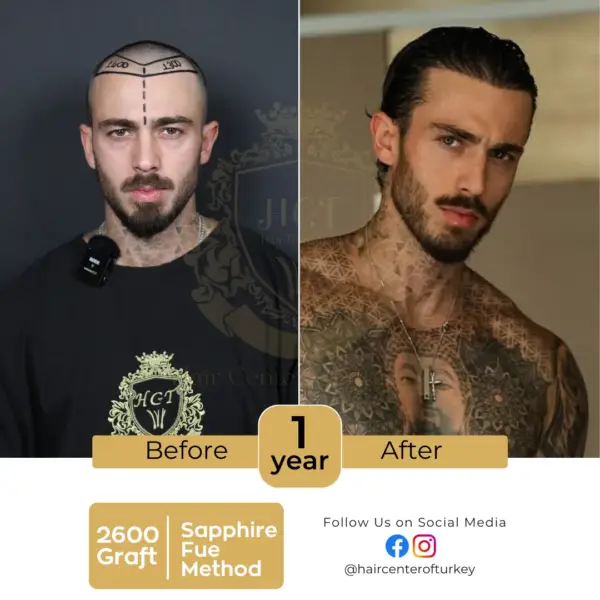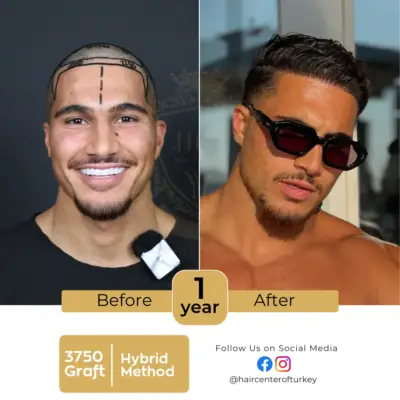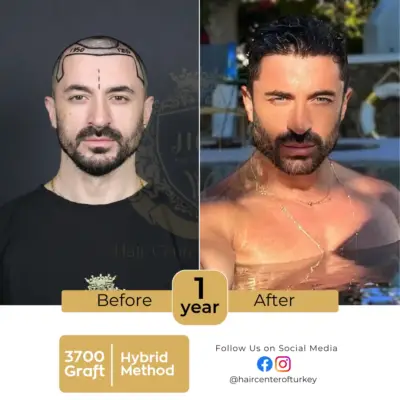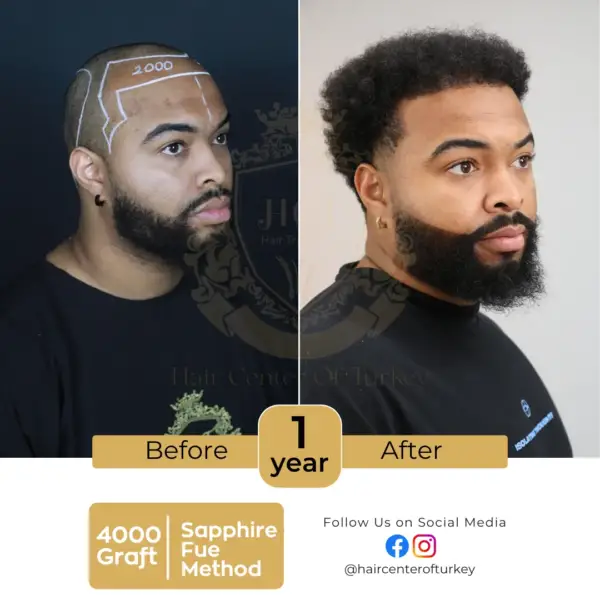


Hair Transplant Near Me Turkey
Typing “hair transplant near me Turkey” into a search bar might sound contradictory at first. If you do not live in Turkey, how can it be “near me”? But that is exactly how the modern hair transplant search behaves. People are no longer thinking only in terms of physical distance. They are thinking in terms of access, convenience, trust, and whether the whole journey feels easier to manage from consultation to recovery. That shift is one of the main reasons Turkey keeps appearing in the same conversation as hair restoration. The official Heal in Türkiye platform presents the country as a major health-tourism destination because of its skilled personnel, advanced technological infrastructure, ease of access, and competitive treatment costs. The same official source says that 801,723 people visited Türkiye for healthcare services in the second quarter of 2024 alone.
That number matters because it changes how patients think. A hair transplant is not like buying a haircut close to home. It is a medical decision, a cosmetic decision, and a travel decision all at once. Patients want a clinic that feels experienced, but they also want a destination that already understands international arrivals. Turkey benefits from both. On the official platform, hair transplant appears among the treatment categories, and the wider system is clearly built to serve foreign patients rather than treating them as an afterthought.
Table of Contents
Is “hair transplant near me Turkey” actually a sensible thing to search?
Yes, it is more sensible than it sounds. In practice, “near me” has started to mean “easy for me to reach and easy for me to navigate,” not just “five minutes from my house.” That is especially true for elective procedures like hair transplantation, where patients are often willing to travel if the destination offers a smoother overall experience. Turkey’s official platform openly markets a 360° service model, quick health visa support through the treating institution, and complication or travel insurance support for patients who request it. When a country organizes the trip this way, it starts to feel “closer” even before you board the plane.
There is also a practical reason this search phrase works so well. Many local clinics around the world can perform hair transplants, but not all of them are equally prepared for the full patient journey. Turkey has turned that journey into part of its appeal. The official FAQ on Heal in Türkiye lists hair transplant among the country’s most preferred treatments and explains that health visa applications are handled by the health institution or authorized facilitator. So when people search for a hair transplant near me in Turkey, what they often mean is this: “Where can I go that feels organized, proven, and built for international patients?” In that sense, Turkey is not a strange answer. It is one of the most predictable ones.
Why do so many patients searching for “hair transplant near me” end up choosing Turkey?
Because Turkey turns a complicated decision into a more manageable one. Hair loss itself is upsetting enough. Once someone decides to do something about it, the last thing they want is a confusing process. They do not want to juggle ten separate providers, guess how long they should stay, or wonder who to call if they have a question after landing. Turkey’s health-tourism system addresses that fear directly. The official platform highlights provider search, treatment categories, quick health visa support, and discounted complication and travel insurance arranged through participating institutions. Those are not minor extras. For many patients, they are part of what makes the trip feel realistic in the first place.
Another reason is visibility. Turkey has become so strongly associated with hair transplant treatment that patients often begin their search locally and end it internationally. That does not happen by accident. It happens when a destination becomes familiar enough that patients stop seeing it as “abroad” and start seeing it as the obvious specialist route. The official Heal in Türkiye portal reinforces that impression by presenting the country as a place where healthcare travel has been steadily growing since 2015 and where advanced infrastructure, ease of access, and experienced personnel are already part of the pitch.
The emotional side matters too. People searching “hair transplant near me” are usually not comparing airports for fun. They are trying to reduce uncertainty. They want the process to feel contained. Turkey works well in that context because it offers something larger than a surgical day. It offers a destination where medical travel has already been systematized. That makes the decision feel less risky, even before the patient has chosen a specific clinic. That is an inference, but it follows directly from how the official platform structures the patient journey around treatment, travel, and support.
What should you look for before booking a clinic in Turkey?
- Make sure the clinic is transparent about who will actually perform the critical parts of the procedure. ISHRS advises patients to find a clinic where the doctor takes time to explain the benefits, side effects, and downsides of surgery rather than turning the process into a sales conversation.
- Check whether the provider appears on official or reputable channels and whether the clinic seems set up for international care. The official Heal in Türkiye platform includes provider search and health-travel support, which gives patients a more structured starting point than random advertising alone.
- Ask how aftercare works after you leave Turkey. The NHS says grafts are not secure for the first two weeks and that patients need to be very careful during that time, so follow-up instructions are not optional.
- Be wary of any clinic that treats hair transplantation like a guaranteed beauty service rather than a medical procedure. The NHS notes that hair transplant is generally safe but still carries risks such as bleeding, infection, allergic reaction, poor graft take, and visible scarring.
- Use doctor-search tools where possible. ISHRS offers a public doctor finder and says its search includes Member and Fellow Member physicians, which can help patients begin with a more informed shortlist.
How does the trip actually work when you choose Turkey for a hair transplant?
For many patients, the biggest surprise is how structured the process feels. The official provider pages on Heal in Türkiye show exactly the kind of facilities international patients usually care about, including hotel booking and airport pickup, while the broader platform emphasizes quick health visa support and complication insurance options. That does not mean every provider offers the same package, but it does show that Turkey’s system is built around the practical realities of medical travel. The point is not simply to arrive, have surgery, and disappear. The point is to reduce the friction around the whole trip.
This is where the phrase “hair transplant near me Turkey” starts to make emotional sense. Many patients do not need the geographically closest clinic. They need the clinic that feels easiest to understand. They need a destination with direct flights, coordinated logistics, and a team that has seen international patients countless times before. Turkey’s official platform leans heavily into that promise, and that is one reason the country keeps outperforming destinations that may technically be closer on a map.
It is also worth being realistic about the limits. A smooth travel system does not replace medical judgment. CDC guidance on medical tourism warns that follow-up care for complications after returning home can be expensive and may not be covered by ordinary health insurance. It also notes that patients may need care in their home country if problems arise later. So Turkey makes the journey easier, but patients still need to choose carefully and plan for continuity after they fly back.
What should you prepare before flying to Turkey for a hair transplant?
- Keep your passport, clinic confirmation, and medical documents organized before departure. The official Heal in Türkiye system says the health institution can apply for a quick health visa on your behalf, so paperwork matters from the start.
- Prepare for the first two weeks as a real recovery period, not as a sightseeing marathon. The NHS says grafts are not secure during that time and need careful handling.
- Plan your return with aftercare in mind. CDC medical tourism guidance says patients may need follow-up care after they get home and that this can be expensive, so it is smart to know who you will contact if you have concerns later.
- Review insurance options rather than assuming a standard travel policy covers everything. The official Heal in Türkiye platform says health institutions can arrange complication and travel insurance at discounted prices on request.
- Treat the trip like a medical journey, not only a cosmetic one. The NHS lists real surgical risks, and CDC guidance notes that travel after surgery can carry added concerns, including continuity-of-care issues after you return home.
Is it safe to get a hair transplant in Turkey?
It can be, but safety depends more on the clinic than the country name. That is the most important truth in this entire conversation. The NHS describes hair transplant as generally safe, but still a procedure with risks that include bleeding, infection, allergic reaction, scarring, and the possibility that the transplant may not take. Those risks do not disappear because the clinic is in your home city, and they do not automatically increase because the clinic is in Istanbul. The real safety question is whether the clinic is transparent, doctor-led, honest about expectations, and prepared for aftercare.
Turkey’s advantage is that the country does not present itself as a casual beauty shortcut. At the official level, it presents itself as a structured health-tourism destination with provider search, treatment categories, health visa support, and insurance options. That does not make every clinic safe by default, but it does give patients a more reliable framework for starting their search than social media alone. In a market where polished advertising can easily outshine real medical quality, that framework matters.
The other piece patients often overlook is recovery. The NHS says transplanted hair often sheds after a few weeks, new hair usually starts to appear after around four months, and full results may take 10 to 18 months. That timeline matters because it reminds patients that a successful hair transplant is not judged at the airport on the way home. It is judged by how well the case was planned and how natural the result looks over time. Turkey makes sense when patients understand that and choose a clinic built around long-term realism rather than instant promises.
Why Turkey still makes sense even if it is not literally near you
The phrase “hair transplant near me Turkey” works because people are no longer defining closeness in purely local terms. A clinic can be twenty minutes away and still feel inconvenient if the consultation is rushed, the answers are vague, and the aftercare is unclear. Another clinic can be a flight away and still feel easier because the process is organized from start to finish. Turkey has built a reputation in that second category. The official platform’s emphasis on accessibility, international-patient services, and integrated support is exactly what helps the country feel “near” in a modern medical-travel sense.
That is why so many people who begin by searching for the nearest option eventually end up choosing Turkey instead. They are not abandoning convenience. They are redefining it. For many international patients, Turkey offers the kind of convenience that actually matters: easy access, visible experience in hair transplant care, a health-tourism system designed for overseas patients, and a clear route from first inquiry to follow-up. If your goal is to find a hair transplant near me in the sense that matters most today, Turkey is one of the strongest answers you can seriously consider.
FAQ
How much do 3,000 hair grafts cost in Turkey?
3000 grafts in Turkey cost approximately $2,500 to $4,000.
Which clinic in Turkey is best for hair transplant?
No single clinic in Turkey is universally the best.
Is Turkey safe to get a hair transplant?
Yes, Turkey is considered safe for hair transplantation.
Is Mexico or Turkey better for hair transplant?
Turkey offers lower costs; outcomes depend on clinic quality.
How long do Turkish hair transplants last?
Turkish hair transplants are permanent if donor hair remains stable.
Is hair transplant in Turkey better than USA?
Turkey offers lower costs; USA has stricter regulation standards.
Is Turkey a safe place for surgery?
Yes, Turkey is considered safe for surgery overall.
Explore the complete guide: Hair Transplant Turkey and Medical Tourism