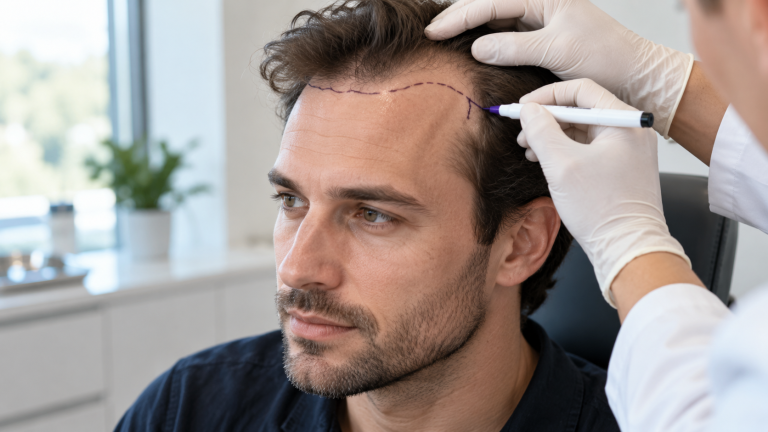



Before a hair transplant, tell your surgeon about every hair medicine, shampoo, supplement, styling product and recent scalp treatment you use. Ask for an individual plan for what to continue, pause and restart. There is no single stopping schedule that suits every product or patient, and you should not stop prescribed medicine on your own.
Founded in 2014, Hair Center of Turkey helps international patients plan their consultations and hair transplant preparation. Sharing a product list before travelling gives the clinical team an opportunity to discuss your routine and request information from your prescribing clinician when necessary. This checklist explains ten categories to raise at that appointment; it does not replace your own surgical instructions.
1. Topical Minoxidil
List the concentration, formulation and frequency of any minoxidil foam or solution. Mention itching, flaking, burning or other reactions, including whether they began after changing brands. Your surgeon needs to distinguish an existing scalp problem from irritation associated with a product.
Ask specifically whether to use it before surgery and when to restart afterwards. Instructions can vary with the procedure and scalp condition; an online timetable is not a personal prescription. Do not increase the dose or start a new formulation just to prepare for surgery. The ISHRS overview of minoxidil describes its role in hair loss treatment and possible side effects.
2. Oral Hair Loss Medicines

Include finasteride, dutasteride and prescribed oral minoxidil, if applicable, with their doses and the clinician who prescribed them. Tablets and scalp applications are different treatments, even when they share an ingredient name. Oral minoxidil requires particular discussion of your medical history and other medicines.
Ask your surgeon and prescriber to coordinate any change. A hair transplant does not automatically remove the need to manage ongoing hair loss. Bring the full medication list, including medicines unrelated to hair, rather than assuming only hair treatments matter. Never stop a prescribed blood thinner because a general preparation checklist mentions bleeding.
3. Medicated Shampoos and Prescribed Scalp Treatments
Tell the team about anti-dandruff shampoos, antifungal products and prescribed lotions or creams. Include why you use them and whether symptoms are controlled. Persistent scaling, tenderness, sores or worsening inflammation deserve assessment before elective surgery.
The practical question is which treatment and washing routine are appropriate for your scalp. Do not substitute a harsh scrub or disinfectant for your usual routine without instructions. The clinician may examine affected areas, adjust treatment or reconsider the timing of surgery. Our guide to scalp care habits before a hair transplant can help you prepare questions about daily care.
4. Hair Vitamins and Herbal Supplements
Photograph the ingredient panels of hair gummies, multivitamins, herbal mixtures and other supplements, and record how much you take. “Natural” does not establish that a product is suitable around surgery. Some ingredients can interact with medicines or affect bleeding, blood pressure or anesthesia; the risk depends on the substance and your circumstances.
The American Society of Anesthesiologists’ supplement guidance recommends disclosing supplements and bringing their containers. Ask your clinical team which, if any, need to be paused and for how long. Do not treat all vitamins or all fish-oil products as identical, and do not start supplements to promise better graft survival.
5. Hair Dyes and Bleach
Mention permanent and semi-permanent dyes, bleach, henna products and previous reactions. The NHS explains that hair dyes can cause irritation or allergy, and symptoms may appear after a delay. A previous reaction is relevant even if the product is labelled gentle.
Ask whether your planned colouring appointment should be moved. There is no universal interval in this checklist that makes colouring safe for every scalp. Avoid experimenting with a new chemical product immediately before surgery. Report a rash, blistering or burning to the clinical team; sudden lip or tongue swelling or difficulty breathing requires urgent local emergency help.
6. Relaxers, Perms and Straightening Treatments

Give the dates and names of recent chemical straightening, relaxing or perming treatments. Describe any discomfort, breakage or scalp reaction rather than reporting only the salon brand. Bring the product details if the treatment name does not explain what was applied.
Discuss future appointments before booking them around the operation. The condition of the skin and hair, the particular treatment and the surgical plan matter more than a universal calendar rule. Ask the surgeon whether to postpone an optional salon procedure. A comfortable scalp after a previous session does not guarantee that a different product will be equally well tolerated.
7. Styling Products, Dry Shampoo and Hair Fibers
Include gels, waxes, sprays, dry shampoo and concealing fibers. These can change how thinning areas look, so ask whether the clinic wants clean, product-free hair for examination, photographs and surgery. Follow its washing instructions rather than repeatedly washing or scrubbing to remove every trace of product.
Let the clinician see the areas you normally conceal. This helps make the consultation more useful and allows you to discuss realistic styling goals. These products are not interchangeable with treatment for the cause of hair loss. Ask separately when you can resume them after surgery instead of assuming the preoperative instructions also apply afterwards.
8. Oils, Essential Oils and Growth Serums
List oils, leave-in serums and mixtures bought online or made at home. “Growth serum” is a marketing description, not a precise ingredient list. Photograph the label and explain where and how often you apply it. Include fragranced products and any preparation that caused itching or burning.
Avoid introducing a new mixture as a last-minute preparation step. Ask whether your usual products should be omitted before assessment or surgery and what washing routine to follow. Do not assume an oil can disinfect the scalp, prevent complications or guarantee hair growth. If you cannot identify the ingredients, tell the clinician that clearly.
9. Microneedling and Home Scalp Devices
Tell the surgeon about dermarollers, microneedling pens and other scalp devices, including the last use and any resulting irritation or wounds. A home device should not be treated as a harmless cosmetic simply because it is sold for personal use.
The FDA’s microneedling information describes risks including bleeding, bruising and infection. Discuss whether further sessions should be postponed and whether the skin needs assessment. Do not needle irritated or broken skin to prepare it for a transplant, or combine needling with a new product without qualified advice. Timing should come from the treating team.
10. PRP, Mesotherapy and Recent Scalp Procedures
Share the dates, provider and available records of platelet-rich plasma (PRP), mesotherapy, scalp injections or other recent procedures. For injected mixtures, the actual ingredients matter; the word “mesotherapy” alone does not identify them. Mention pain, swelling or other problems after treatment.
Ask whether another planned session fits your surgical preparation. An additional procedure is not automatically necessary, and it should not be presented as a guarantee of transplant success. Our discussion of PRP and hair transplant results explains questions to raise about evidence and expectations. Your surgeon should consider your history rather than simply adding treatments to a package.
What to Bring to Your Consultation
Bring a dated list or clear photographs of product packaging. For each item, record the ingredients, strength, dose or frequency, route of use and reason for using it. Add the prescribing clinician, last procedure date and any reaction. Include over-the-counter medicines and products used only occasionally.
Ask for written instructions covering the operation date and the restart plan. If two clinicians give conflicting advice, ask them to clarify it before changing prescribed treatment. Keep a copy available when travelling and tell the clinic if your routine or health changes. Our broader before hair transplant guide covers other preparation topics to discuss.
Short Summary
The goal is an accurate product history and an individual clinical plan. Disclose medicines, supplements, cosmetics and recent procedures; report irritation early; avoid last-minute experiments. A product list supports assessment but cannot establish surgical suitability or guarantee a result. Confirm any pause or restart instruction with your treating team.
Frequently Asked Questions
When should I stop minoxidil before a hair transplant?
Ask your surgeon for instructions specific to topical or oral minoxidil, your dose and your health. This article does not set a universal stopping interval. Coordinate changes to prescribed treatment with the prescriber, and obtain separate instructions about restarting after surgery.
Can I continue finasteride before surgery?
Discuss your current prescription with the surgeon and prescribing clinician. The answer depends on your individual treatment plan. Do not stop, restart or change the dose simply because you have booked a hair transplant.
Do I need to stop all hair vitamins and supplements?
Not every product requires the same approach. Give the team the complete ingredient list and dose so it can assess possible interactions and decide whether a pause is needed. Do not apply a blanket stopping rule to every supplement.
Can I dye my hair before a hair transplant?
Discuss the product, your colouring date and any history of reactions with the clinic. Avoid a new dye or bleach experiment close to surgery. If you develop irritation, contact the team rather than assuming a fixed waiting period resolves it.
Should I list products that are not prescription medicines?
Yes. Include ordinary shampoos, oils, styling products, fibers, supplements and home treatments, as well as prescriptions. Packaging photographs help identify ingredients. The purpose is to make a clear plan, not to assume every item must be stopped.
Sources
The clinical information above draws on the linked ISHRS minoxidil overview, American Society of Anesthesiologists supplement guidance, NHS hair dye guidance and FDA microneedling information. The American Academy of Dermatology’s hair loss diagnosis and treatment guide provides further background on assessment and treatment options. These general references do not replace an individual preoperative consultation.