

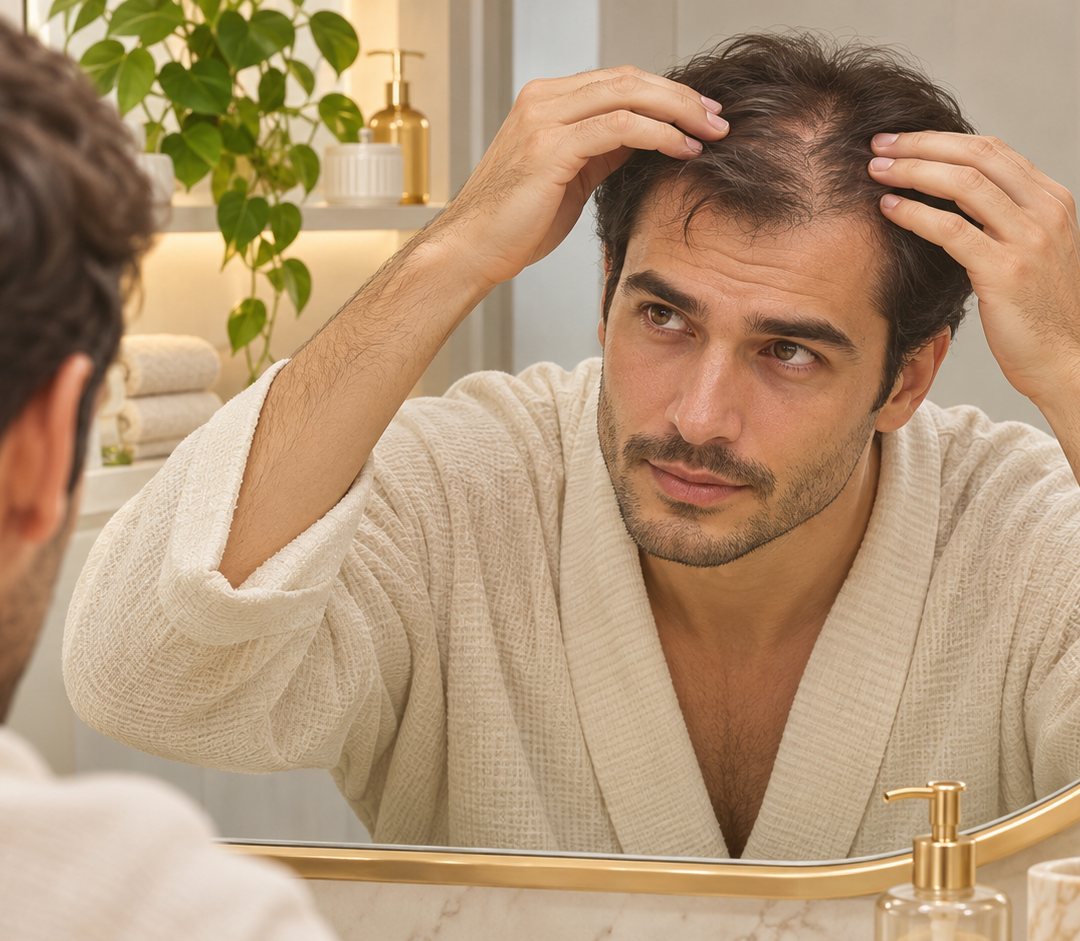
Before a hair transplant, keep scalp care gentle and familiar, track symptoms, avoid irritation and sunburn, and follow your surgeon’s individual instructions. These habits can help you prepare for assessment; they cannot guarantee graft survival or make an unsuitable scalp ready for surgery.
Hair Center of Turkey, founded in 2014, offers international patients consultation and preparation guidance before they travel for treatment. Sharing your symptoms, products and medical history early helps the clinical team plan an appropriate assessment. The seven habits below focus on everyday care before surgery. They do not replace diagnosis or your clinic’s instructions, and postoperative washing and scalp care require a separate plan.
1. Practice Gentle Washing And Drying
A gentle cleansing routine is the core component of effective scalp preparation for hair transplant. The aim is to keep the scalp clean without causing irritation or inflammation. Use lukewarm water, as hot water can strip the skin of its natural oils and lead to dryness or reactivity. When shampooing, apply the product with your fingertips using a gentle massaging motion. Avoid using your fingernails or scrubbing aggressively, as this can create micro-scratches on the skin’s surface and increase the risk of irritation.
After washing, rinse your hair and scalp thoroughly to ensure no product residue remains. When drying, pat your head gently with a soft towel instead of rubbing it vigorously. This kind of friction can cause unnecessary stress on both the skin and existing hair follicles. While your surgeon will provide specific washing instructions for the day before your surgery, establishing this gentle technique weeks in advance is a simple but effective part of your scalp care before a hair transplant and helps maintain a calm and healthy scalp.
2. Keep A Symptom And Product Diary
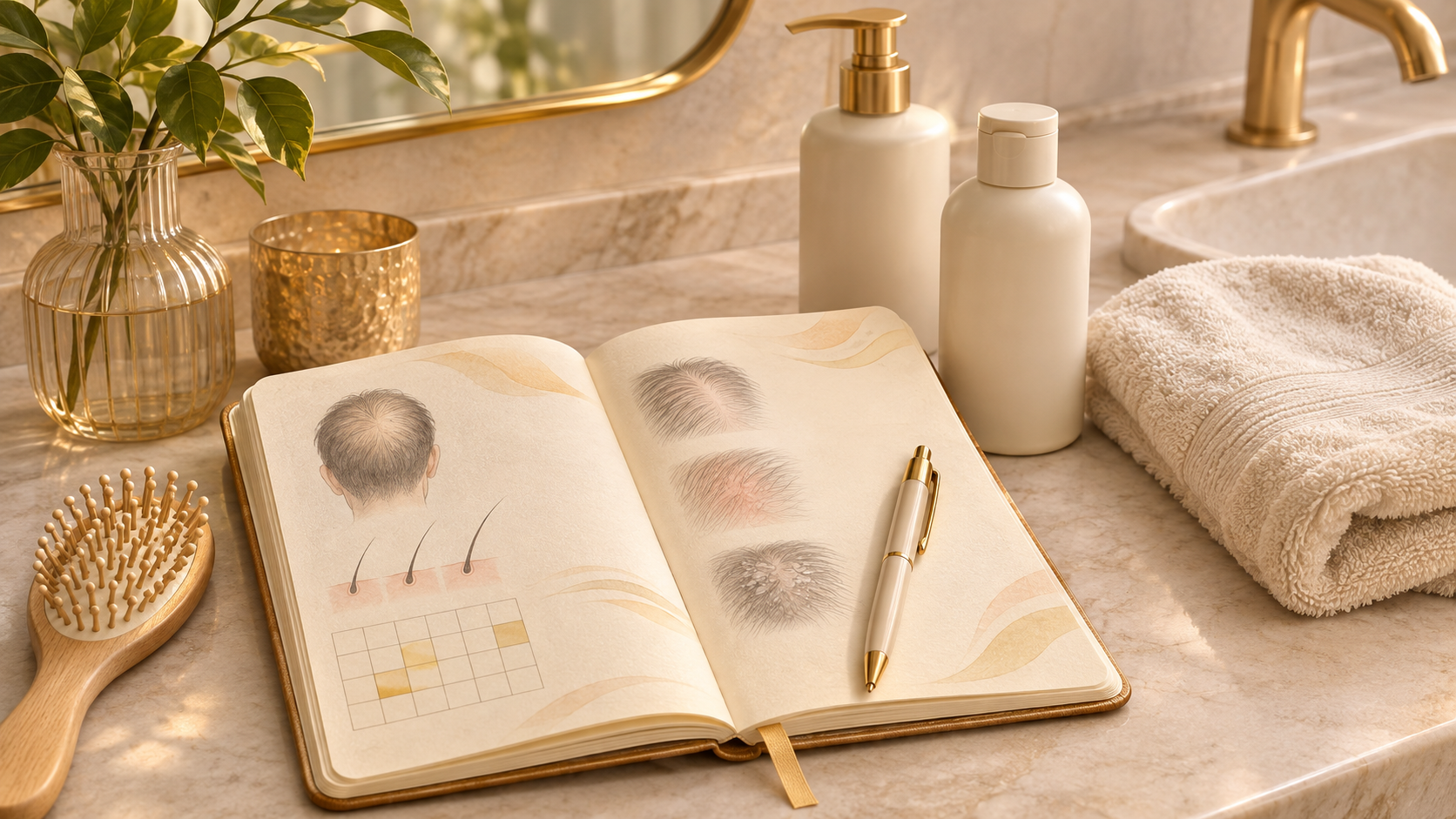
Tracking your scalp’s behavior is an effective preparation tool. Starting a simple diary a few weeks before your surgery can help you and your clinical team identify potential irritants or triggers. In your log, note which shampoo, conditioner, or styling products you use each day. Alongside this, record any symptoms you experience, such as redness, flaking, or an itchy scalp before hair transplant. This practice makes it easier to connect a specific product or ingredient with a negative reaction.
Share the diary with your surgical team. A pattern may suggest something worth investigating, but it does not prove an allergy or identify a diagnosis. If a cosmetic product causes irritation, avoid further exposure and ask for advice. Discuss changes to prescribed or medicated products with the clinician who manages them.
3. Avoid Scratching, Picking, And Home Exfoliation
Resisting the urge to scratch an itchy scalp before hair transplant is crucial. Scratching, even with clean hands, can cause microscopic tears in the skin. These small wounds can become inflamed or infected, creating an unsuitable environment for a hair transplant. Picking at dandruff or scabs similarly damages the skin’s surface and disrupts its natural protective barrier.
You should also avoid experimenting with at-home physical or chemical exfoliants. Harsh scrubs, scalp brushes, or acid-based treatments can easily lead to over-exfoliation, resulting in redness, sensitivity, and inflammation. If you are dealing with a persistently itchy scalp before a hair transplant or significant flaking, the solution is not aggressive removal. Instead, communicate the issue to your clinic so they can recommend a safe approach that will not compromise your scalp’s health.
4. Use Stable, Familiar Products And Disclose All Treatments
The weeks leading up to your procedure are not the time to experiment with new hair care products. Introducing a new shampoo, serum, or oil can unexpectedly trigger an allergic reaction, irritation, or a flare-up of a dormant scalp condition. The best strategy is to stick with the simple, gentle products that you know your scalp tolerates well. If you want to refine your routine, it is wise to choose a shampoo for thinning hair that suits your scalp and follows any clinical advice you have received.
Disclosing every topical product you are using to your surgeon is critical. This list should include over-the-counter medicated shampoos for conditions like dandruff, prescription topical solutions, and hair growth serums such as Minoxidil. Ask your surgeon whether any product needs to be continued, adjusted or paused. Do not stop prescribed treatment or use a fixed stop date from a general online checklist; advice depends on the product, your condition and the planned procedure.
5. Manage Friction, Headwear, And Sweat
Constant friction from tight hats, helmets, or headbands can cause mechanical irritation on the scalp. This may lead to redness, tenderness, and even inflammation of the hair follicles. In the weeks before your hair transplant, try to limit the use of tight-fitting headwear. If you must wear a hat or helmet for work or safety, ensure it is clean and fits properly without being constrictive. Opt for breathable materials when possible.
Sweat can also be an irritant, as its salt content can aggravate sensitive skin if left on the scalp for extended periods. After a workout or any activity that causes significant sweating, rinsing your scalp with cool or lukewarm water is a good practice. This simple step helps remove sweat residue and keeps the scalp clean and calm, contributing to a healthy scalp before hair transplant.
6. Protect Exposed Scalp From Sunburn

Protecting your scalp from the sun is an essential part of your pre-operative care. A sunburn is a significant inflammatory injury to the skin that causes redness, pain, peeling, and sensitivity. It can take days or even weeks to fully resolve. Tell your clinic about a recent burn rather than assuming it will settle before surgery. The surgeon must assess the skin and may recommend treatment or postponement, depending on its condition.
To prevent this, be diligent about sun protection. If you have thinning hair, your scalp is particularly vulnerable. Seek shade and wear a comfortable, broad-brimmed hat made from fabric that provides coverage. For exposed, intact skin, choose a broad-spectrum, water-resistant SPF 30 or higher sunscreen and follow its directions. Avoid experimenting on irritated skin, and ask your clinic what products are suitable immediately before the procedure.
7. Communicate Changes Immediately, Especially Before Travel
Clear communication with your clinic is essential throughout the pre-operative period. Your surgical team needs to be aware of any changes to your scalp’s condition, no matter how minor they seem. If you develop a new rash, sudden and severe dandruff, sores, or persistent pain in the days or weeks before your procedure, contact your patient coordinator immediately. Do not wait until you arrive at the clinic to mention it.
This is especially critical for patients traveling internationally for their surgery. Sending clear, well-lit photographs of the affected area allows the medical team to assess the situation remotely and provide timely advice. They can advise whether you need an in-person examination or treatment before you travel; photographs alone cannot reliably rule out a medical problem. Attempting to self-diagnose or hide a problem can lead to last-minute cancellations and unexpected complications.
A Note On Clinical Assessment
The habits listed above are crucial for maintaining scalp health, but they do not replace a professional clinical assessment. Certain symptoms are red flags that require prompt medical evaluation. These include sudden patchy hair loss, persistent scalp pain, open sores, or any discharge like pus. If you experience spreading redness on the scalp accompanied by a fever, you should seek immediate medical attention.
A proper diagnosis is the foundation of any effective treatment plan, ensuring you have a healthy scalp before hair transplant or allowing for treatment of any pre-existing conditions. Dermatologists and hair transplant surgeons rely on a detailed clinical history and a physical examination of the scalp. While many common scalp conditions and hair health issues like mild dandruff are manageable, a correct diagnosis is essential. Diagnostic tests are typically ordered only if indicated by the initial assessment. Self-diagnosing and treating with unverified remedies can often worsen the underlying problem.
A Summary Of Pre-Operative Scalp Care
Keep familiar care gentle, document symptoms, disclose all treatments and protect exposed scalp from sunburn. New symptoms deserve advice rather than aggressive cleaning or last-minute product experiments. Mild dandruff does not automatically mean surgery must be cancelled: the clinical findings and severity matter. Read the broader guidance on what to do before a hair transplant, then confirm your own plan with the surgeon. None of these habits substitutes for a diagnosis, establishes eligibility or guarantees a transplant result.
Frequently Asked Questions
Should I Wash My Hair Every Day Before A Hair Transplant?
Focus on keeping the scalp clean and calm rather than adhering to a specific frequency. Daily washing is fine if it is part of your normal routine and does not cause dryness or irritation. Always follow the specific pre-operative washing instructions provided by your surgeon for the days immediately preceding your procedure.
Will Having Dandruff Get My Hair Transplant Cancelled?
In most cases, no. Mild, common dandruff is manageable and usually does not interfere with surgery. However, a severe flare-up of seborrheic dermatitis with significant inflammation, thick crusting, or open sores may need to be brought under control before the procedure can safely proceed.
Can I Use Scalp Oils Or Massage To Improve Circulation Before Surgery?
It is best to avoid introducing new oils or performing vigorous scalp massage in the weeks before your surgery. These actions can potentially cause clogged pores, allergic reactions, or skin inflammation. There is no reliable basis for promising that these practices will improve graft survival. Stick to the gentle scalp care your clinical team has recommended.
What Should I Do If My Scalp Condition Flares Up Right Before I Travel For My Procedure?
You must contact your clinic immediately. Do not attempt to treat it yourself with new products. Send clear, well-lit photos of your scalp and describe your symptoms in detail so the medical team can provide accurate guidance before you begin your journey.
Do I Need To Shave My Head Before My Consultation?
Usually, leave your hair as it is unless the clinic specifically asks you to shave it. The surgeon needs to assess the current length, texture, and density of your native hair, as well as the full pattern and extent of your hair loss. This information is critical for creating an accurate and effective surgical plan.