

What Does The Donor Area Look Like After Hair Transplant?
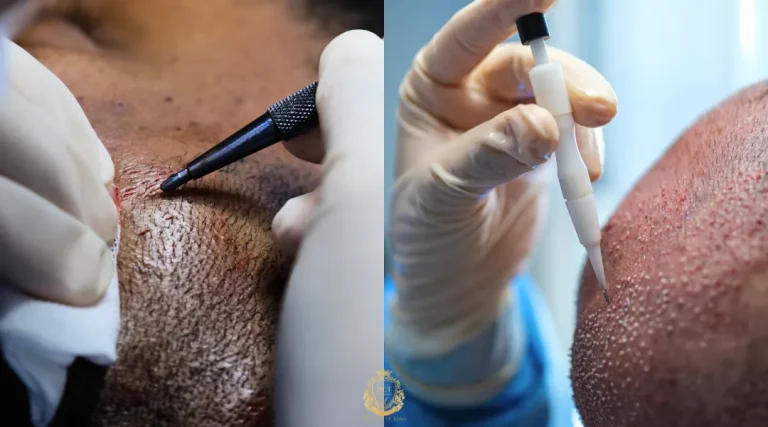
After a hair transplant, the donor area usually shows tiny red dots and mild swelling for the first few days. Small scabs can form and typically clear as the skin heals over the next 1–2 weeks. Most people can disguise the area quickly as surrounding hair grows, while final settling of tone and texture can take a few months.
Table of Contents
What The Donor Area Is
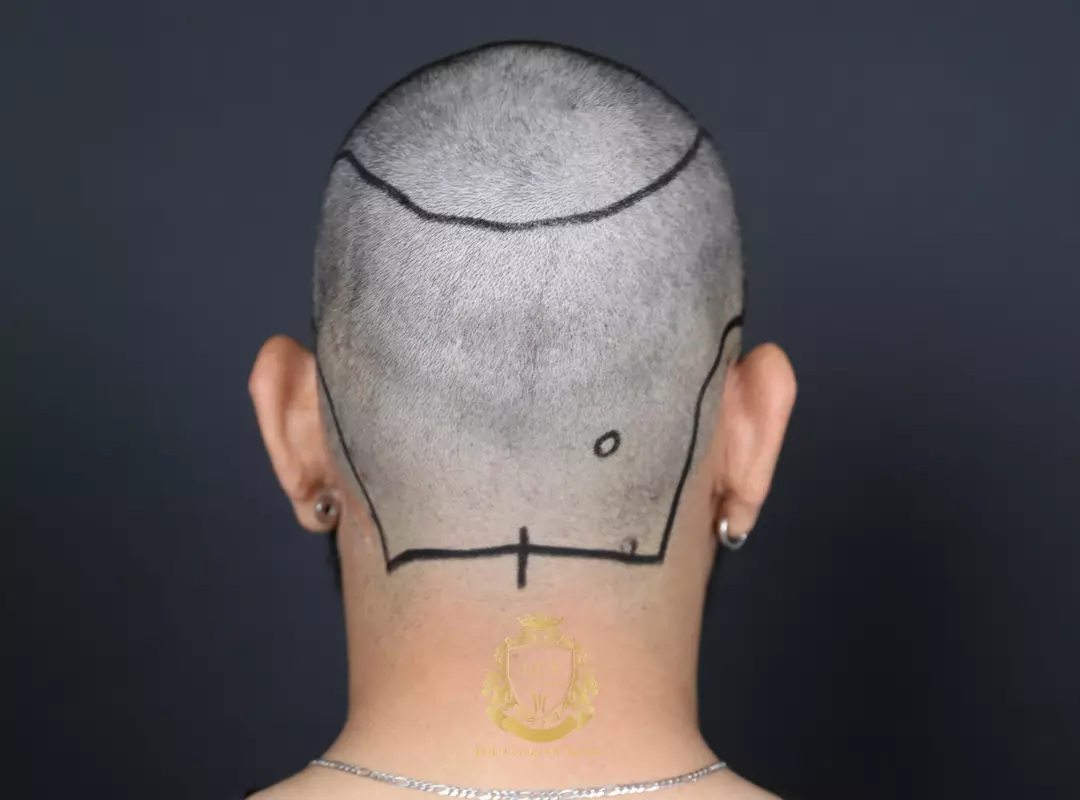
The donor area is the part of the scalp (and sometimes the body) where hair follicles are harvested to be transplanted into thinning or bald areas. In most cases, surgeons use the back and sides of the scalp because these hairs tend to be more resistant to pattern hair loss. When scalp supply is limited, areas like the beard or chest may be considered, depending on hair characteristics and clinical suitability.
Hair is harvested in naturally occurring groups called follicular units. Each unit commonly contains one to four hairs, which is why clinics often talk about the number of “grafts” used in a procedure.
Why Protecting The Donor Area Matters
Your donor area is a finite resource. Every graft that is taken reduces the available density in that zone, so planning needs to balance today’s goals with what you may need later. This matters even more for people with progressive hair loss, where a second procedure could be considered in the future.
A careful extraction pattern helps keep the donor area looking even. When grafts are taken too close together or overharvested, the area can appear patchy, especially with short hairstyles.
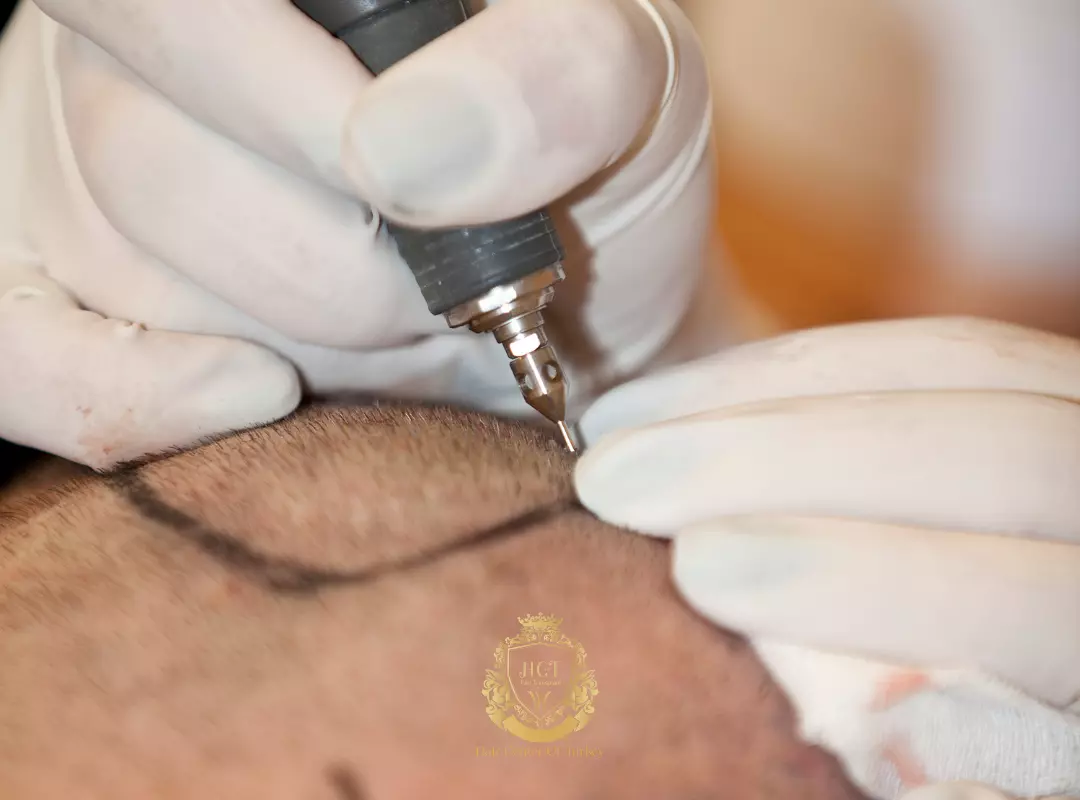
How Grafts Are Taken From The Donor Area
FUE
With FUE (Follicular Unit Extraction), follicles are removed one by one using a small punch. The donor area is usually shaved so the surgeon can see the hair angles and harvest evenly. FUE typically leaves tiny dot scars that are hard to notice once healed, especially when the harvest is well planned.
FUT
With FUT (Follicular Unit Transplantation), a thin strip of scalp is removed and dissected into grafts under magnification. The donor area is then closed with stitches, leaving a linear scar. FUT can be a good option for some patients, but it requires a hairstyle that can cover the scar line.
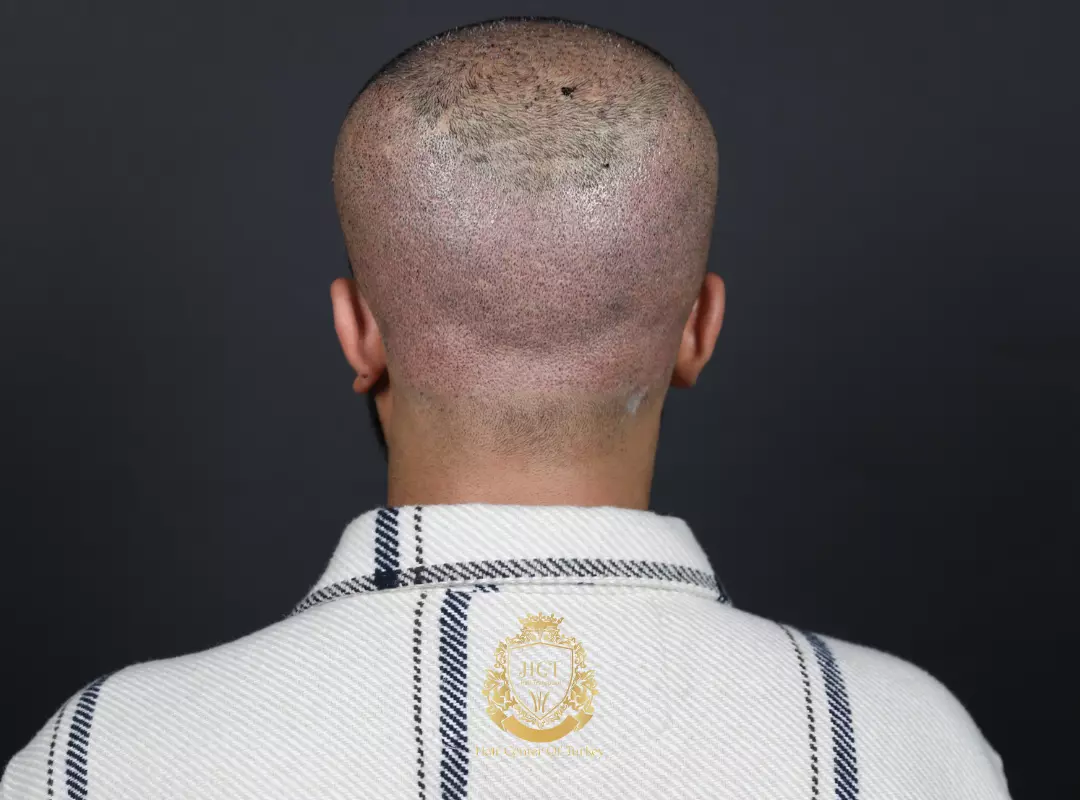
What The Donor Area Looks Like After Surgery
Day 1–2
Right after the procedure, the donor area often looks red and dotted, with tiny extraction sites. Mild swelling, tightness, or a “sunburn” feeling is common. A light dressing may be applied for the first day, depending on your clinic’s routine.
Days 3–7
The micro-wounds begin to close and small scabs can form. Itching can show up as the skin heals, and that can feel worse if the area is dry. Gentle washing and any aftercare products provided by your clinic help keep the scalp comfortable.
Days 7–14
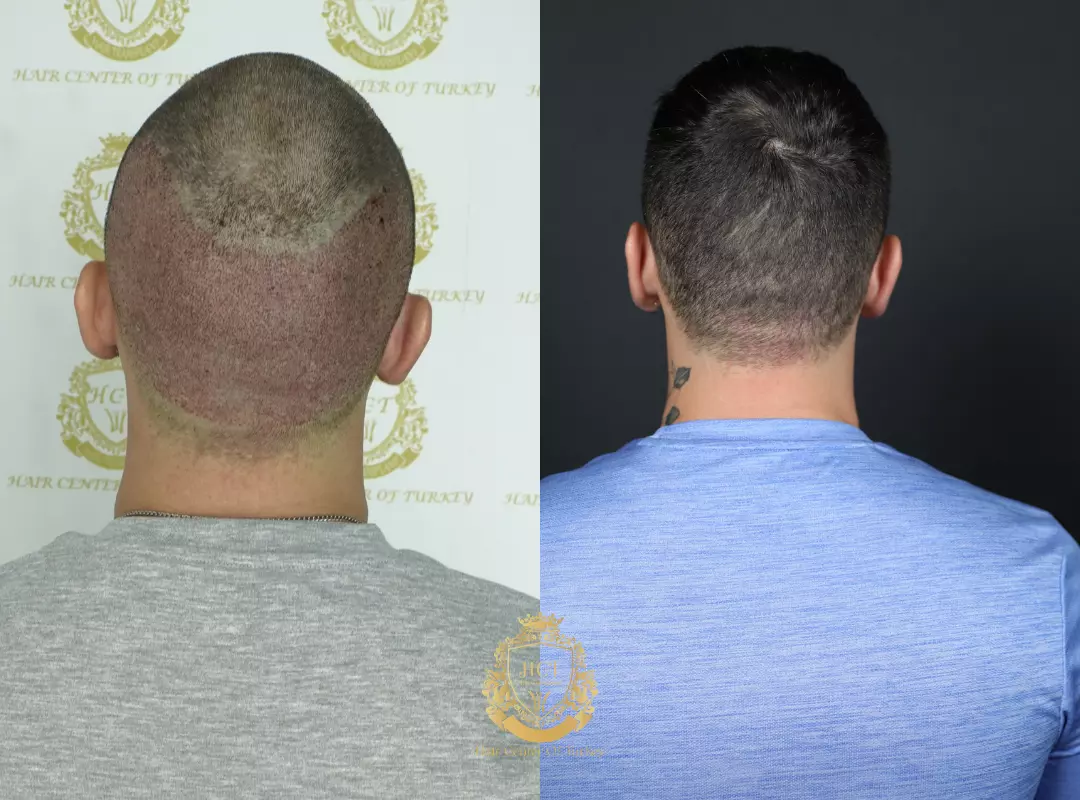
Most scabs lift and clear during this period, especially with daily washing as instructed. Redness usually fades gradually, though it can linger longer in fair or sensitive skin. At this stage, many patients find the donor area is easy to conceal as the surrounding hair grows.
Weeks 3–4 And Beyond
For many people, the donor area looks close to normal by the end of the first month. The skin tone can continue to even out over the next few months. If you had FUT, the scar line also continues to mature and soften over time.
What’s Normal vs When To Contact Your Clinic
Normal short-term changes include mild pain, tightness, temporary numbness, itching, and small scabs. You may also notice temporary shedding or a patchy look while the area settles, especially if your hair was shaved very short.
Contact your clinic if you develop increasing redness, warmth, worsening pain, pus-like discharge, fever, or a spreading rash. Persistent bleeding, a sudden increase in swelling, or a bad odor from the area also deserve prompt medical advice.
How Many Grafts Can Be Taken From The Donor Area?
There isn’t one safe number that fits everyone. The usable donor supply depends on your natural density, hair thickness, scalp laxity (for FUT), the size of the safe donor zone, and whether you’ve had previous procedures. A surgeon should assess these factors in person and plan extraction to keep the donor area cosmetically strong.
As part of a personalized plan, clinics can also discuss whether body hair is appropriate when scalp donor supply is limited. Body hair behaves differently than scalp hair, so it’s usually considered selectively.
Donor Area Aftercare Tips
Washing And Scab Care
Follow your clinic’s washing schedule closely. Most protocols use gentle cleansing to soften scabs so they can shed naturally, without picking or scratching. Rubbing too aggressively can irritate the skin and prolong redness.
Sleep And Clothing
In the first week, sleep with your head slightly elevated if swelling is a concern. Wear loose, comfortable clothing that won’t snag the scalp when changing. If you use a hat, choose a clean, soft option and only wear it when your clinic says it’s safe.
Exercise, Sun, And Smoking
Avoid strenuous exercise and heavy sweating until your clinician clears you, since friction and sweat can irritate healing skin. Protect the donor area from direct sun exposure, especially during the first few weeks. If you smoke, ask your clinic for a stop plan around the procedure, as smoking can slow wound healing.
Will Hair Grow Back In The Donor Area?
Yes, surrounding hair continues to grow normally, and it often covers extraction points quickly. The follicles that were removed do not grow back in the exact same spots, which is why careful spacing matters. When extraction is well distributed, the donor area can look natural even with shorter haircuts.
FAQ
How long does it take a donor area to heal a hair transplant?
Usually 7–14 days for surface healing; redness/texture can take 4–8 weeks.
Will the donor area look normal after a hair transplant?
Most look near-normal once healed; mild scarring or thinning may remain.
How to heal donor area after transplant?
Follow surgeon cleaning, avoid scratching/sun, take prescribed meds, sleep elevated, no smoking.
How do you know if your donor area is good?
Good donor area has adequate density, hair caliber, laxity, and minimal miniaturization.
What does a healed donor site look like?
Healed donor site shows tiny pale dots (FUE) or a thin line scar (FUT).
Explore the complete guide: Recovery Process After Hair Transplant