


What Age Does Male Pattern Baldness Start?
Quick Answer: Male pattern baldness can begin anytime after puberty, but most men first notice a receding hairline or thinning crown in their 20s or 30s. Teen onset is possible with a strong family history. Progression varies, and early treatment can often slow shedding and preserve density.
Table of Contents
Understanding Male Pattern Baldness
Male pattern baldness (androgenetic alopecia) is the most common cause of long-term hair loss in men. It happens when genetically sensitive follicles gradually miniaturize and produce thinner, shorter hairs.
The process is driven largely by dihydrotestosterone (DHT), a hormone derived from testosterone. Some men have follicles that react more strongly to DHT, which explains why age of onset and speed of loss differ widely between individuals.
Typical Age Of Onset
Male pattern baldness can start at almost any age, yet a few patterns show up frequently:
- Teens (15–19): Uncommon, but it can happen, usually in people with a strong genetic predisposition.
- 20s: Many men notice the first clear changes during this decade, such as temple recession or reduced density after styling.
- 30s: Thinning often becomes easier to spot, especially under bright light or when hair is wet.
- 40s and beyond: The pattern typically becomes more established, with more visible crown thinning and a higher Norwood stage.
These ranges describe what is typical, not what is “normal” for any one person. Two men of the same age can have completely different patterns and severity.

Early Signs To Watch For
Catching early changes matters because the most proven treatments work best before follicles shrink too far. Common early signs include:

Why It Starts Earlier For Some Men
Genetics
Family history is the strongest predictor. If close relatives started thinning in their teens or 20s, your odds of earlier onset rise.

DHT Sensitivity
It is not only the amount of DHT that matters. Follicle sensitivity to DHT is a key driver of how early thinning begins and how quickly it progresses.

Health And Lifestyle Factors
Male pattern baldness is not caused by stress or diet alone, yet these factors can worsen shedding or make loss feel more sudden. Poor sleep, smoking, rapid weight loss, and nutrient gaps can trigger telogen effluvium, which may overlap with male pattern baldness.

Can You Prevent Or Delay Male Pattern Baldness?
You cannot change genetic risk, but you can often slow progression. A realistic goal is preservation and thickening of miniaturized hairs, not “stopping” hair loss forever.

Evidence-Based Treatments
- Topical minoxidil: Helps extend the growth phase and can improve density over several months.
- Finasteride (oral prescription): Lowers DHT and can slow loss, especially at the crown and mid-scalp.
- Low-level laser therapy (LLLT): May help some men when used consistently.
- Microneedling: Often used alongside topical treatments under professional guidance.
Medication choices depend on your medical history, age, and goals. A clinician can help weigh benefits, side effects, and what outcomes are realistic for your stage.
Clinic-Based Options
- PRP (platelet-rich plasma): Injections that may support follicle activity in selected patients.
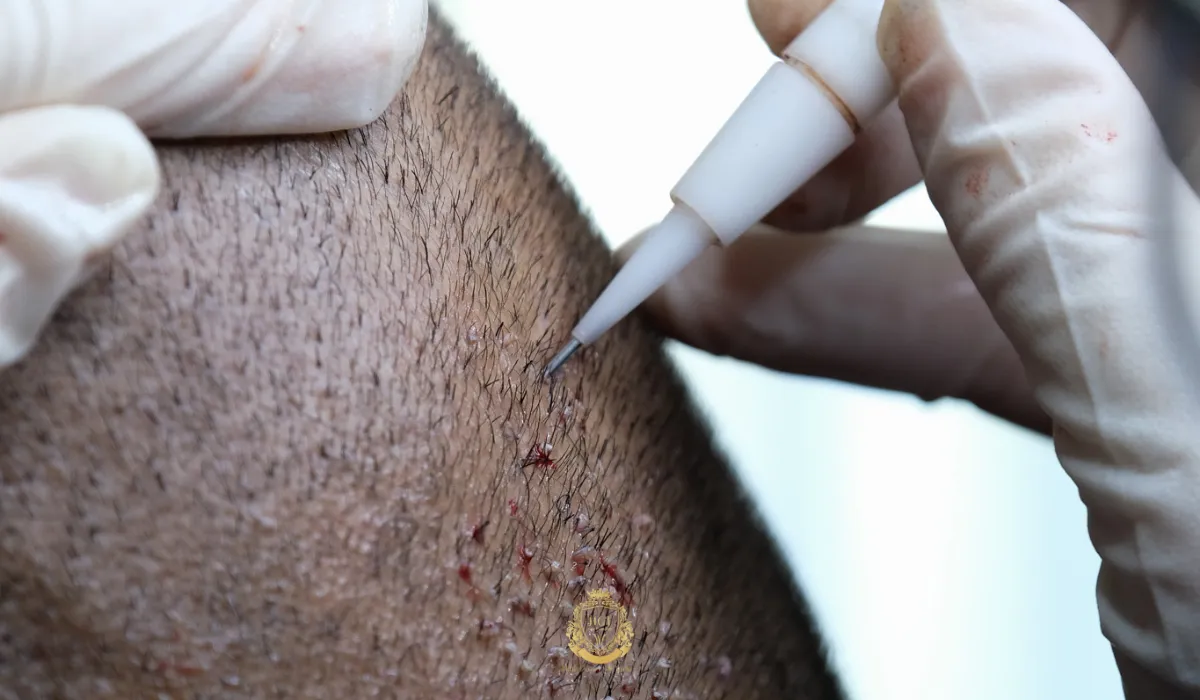
- Hair transplant surgery: A permanent redistribution of follicles, usually considered once loss is stable enough to plan a long-term design.
A transplant does not stop future thinning in non-transplanted areas, so long-term planning and medical therapy are often part of the strategy.

When To See A Specialist
Book a professional assessment if you notice rapid shedding, patchy hair loss, scalp pain, scaling, or sudden thinning over a few months. These features can point to conditions other than male pattern baldness.
A dermatologist or hair restoration clinician can confirm the diagnosis, stage the pattern, and build a plan that matches your timeline and budget.
F.A.Q
What is the average age men start balding?
Late 20s to early 30s is average onset, though it can start earlier.
How to tell if a man will go bald?
Family history plus early temple recession, crown thinning, and miniaturized hairs suggest future balding.
Is it better to catch hair loss early?
Yes; early treatment can slow progression and preserve more hair.
What speeds up male pattern baldness?
Genetics and androgens drive it; smoking, stress, steroids, and inflammation may accelerate.
What does stage 1 balding look like?
Stage 1 shows little to no recession, with a youthful hairline and full density.
Explore the complete guide: Hair Loss Types and Causes