

Robotic Hair Transplant vs Manual FUE: Is Classic FUE Better?
A robotic hair transplant is a form of FUE where a robotic system helps identify and extract follicular units from the donor area. It can standardize harvesting and reduce fatigue, but it isn’t fully hands‑free and may be less suitable for curly hair or low hair‑to‑scalp contrast. Manual FUE remains highly effective when performed by an experienced team.
Table of Contents
What Is a Robotic Hair Transplant?
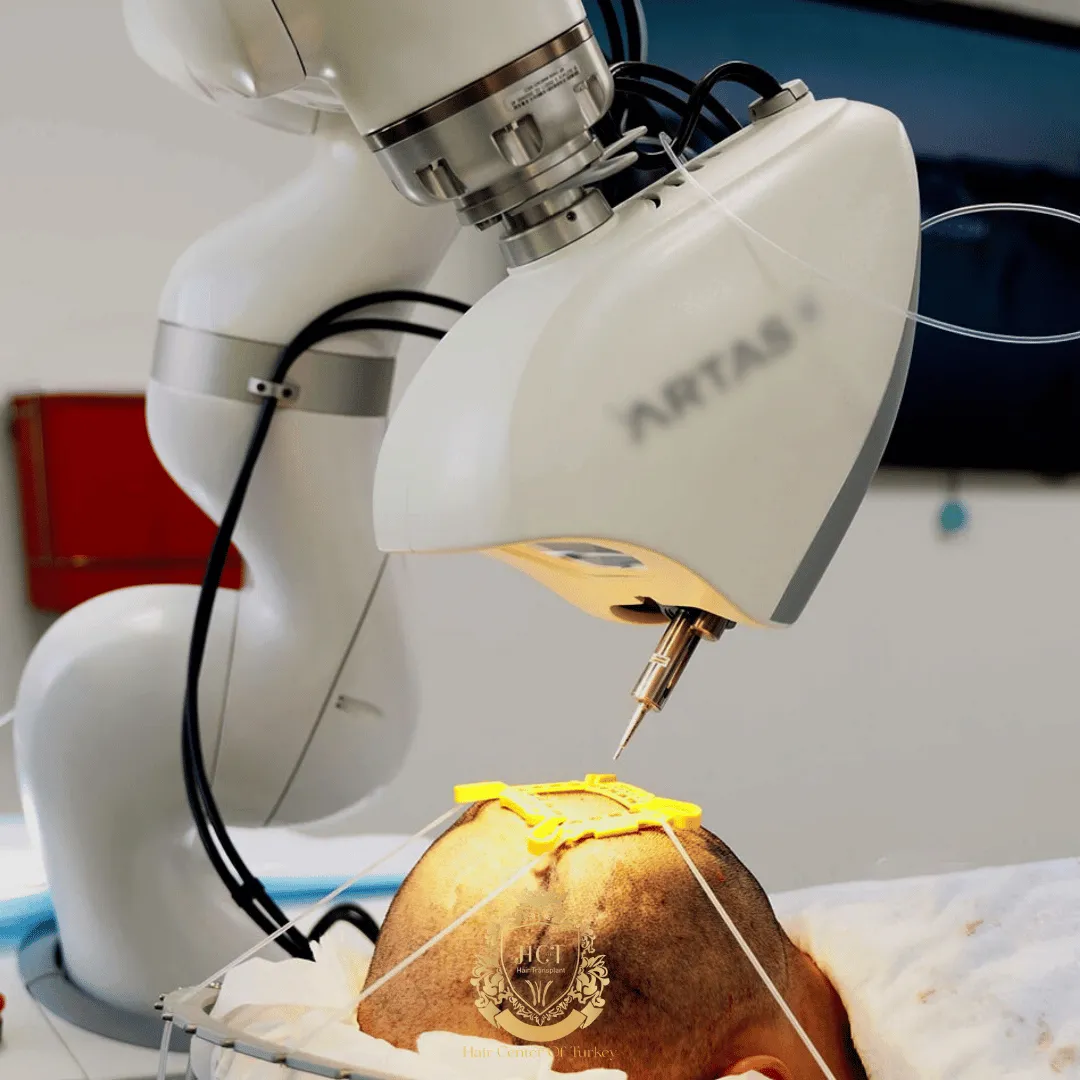
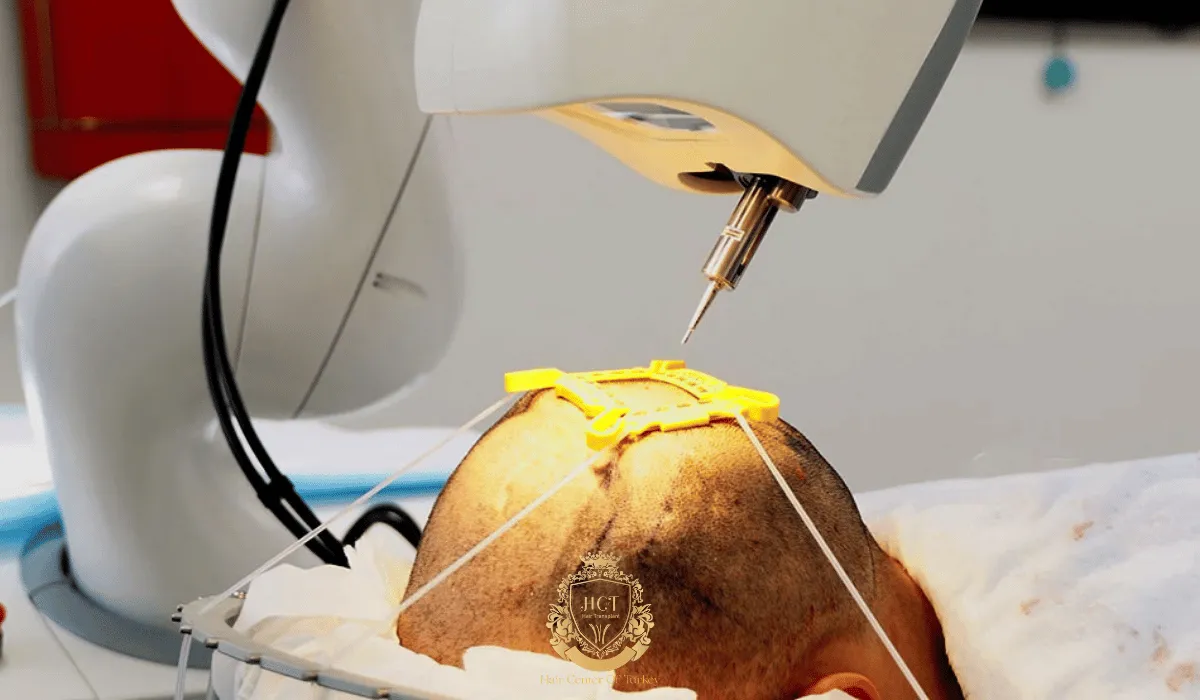
A robotic hair transplant usually means robotic‑assisted FUE (follicular unit extraction). Instead of taking a strip of scalp (FUT), FUE harvests follicular units one by one from the donor area—typically the back and sides of the head. In robotic FUE, a computer‑guided system helps the medical team identify, score, and extract grafts with consistent angles and depth (ARTAS is a common example).
It’s still a surgical procedure. The surgeon plans the hairline, decides how many grafts to move, and oversees the entire process. Most robotic platforms focus on harvesting; recipient site creation and implantation are often manual, even when the robot can assist with site creation.
How a Robotic Hair Transplant Works
Scalp Imaging And Planning
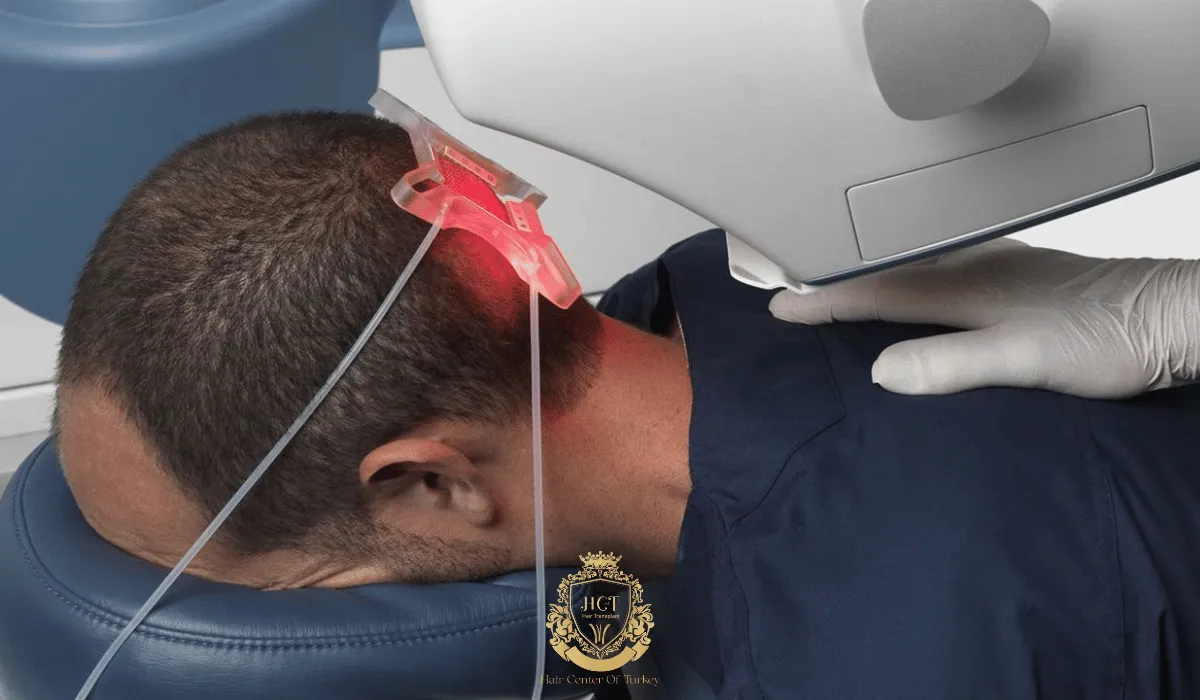
High‑resolution imaging maps the donor area, measuring hair direction, spacing, and density. The team sets extraction parameters to protect the donor supply and avoid overharvesting.
Robotic‑Assisted Follicle Extraction
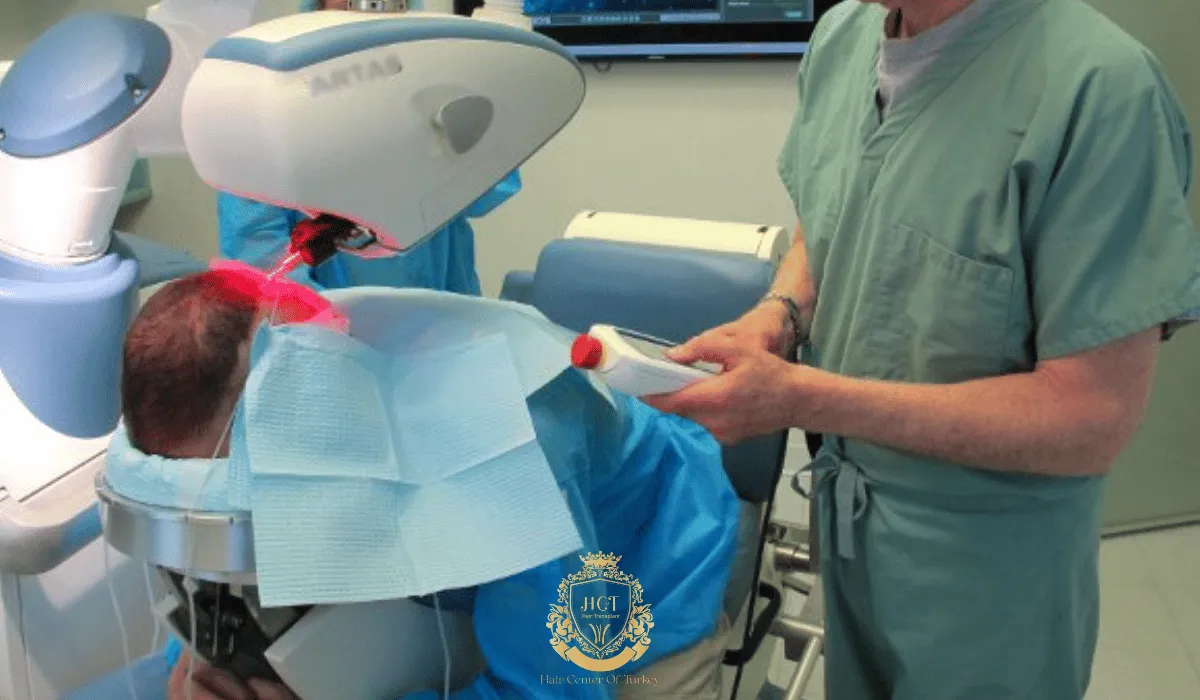
The robotic arm scores and extracts follicular units based on the planned angles and depth. A trained team member continuously monitors the system and can pause or adjust as needed.
Graft Inspection And Preparation
After harvesting, grafts are checked under magnification, sorted by the number of hairs per follicular unit, and kept hydrated at controlled temperatures until implantation.
Recipient Site Creation And Implantation
The surgeon designs the hairline and creates (or supervises the creation of) recipient sites that match natural growth patterns. Grafts are then placed with attention to direction, spacing, and density—this step has a major impact on how natural the result looks.
Healing And Growth
Small scabs form in the first week. Most people return to desk work within a few days, depending on swelling and clinic guidance. New growth usually becomes noticeable from around month 3–4, with fuller results around 12 months.
Benefits Of Robotic FUE
- Consistent extraction angles and depth, which can help protect graft quality in suitable candidates.
- Detailed digital mapping of the donor area to support planning and documentation.
- Reduced hand fatigue during long procedures, which may help maintain steady performance over time.
- Tiny dot‑like donor marks typical of FUE (not a linear scar).
Limitations And Trade‑Offs
- Not ideal for every hair type: robotic imaging and extraction are generally less reliable with tight curls and low contrast between hair and scalp.
- Some platforms are cleared or marketed for specific patient profiles (for example, straight, dark hair), so candidacy depends on the system and the clinician’s assessment.
- Higher cost in many markets due to equipment, licensing, and maintenance.
- Shaving is often required in the donor area (and sometimes the recipient area) so the system can see follicles clearly.
- Availability is limited to clinics that invest in and maintain the platform, plus trained staff.
- The robot doesn’t replace surgical judgment—hairline design, density planning, and implantation quality still depend heavily on the clinician and team.
Robotic Hair Transplant Vs Classic Manual FUE
| Factor | Robotic‑Assisted FUE | Manual FUE (Classic) |
| What’s automated | Mainly graft identification and harvesting; implantation is usually manual. | Harvesting and implantation are done manually by the surgical team. |
| Hair type flexibility | Often best on straight to wavy hair with good scalp‑hair contrast. | More flexible across hair types when performed by an experienced surgeon. |
| Consistency | Can improve consistency in extraction patterns in suitable cases. | Depends on clinician skill and technique; excellent results are common in expert hands. |
| Speed | Harvesting can be efficient, but overall time varies by clinic workflow. | Can be fast with skilled teams; speed should never compromise graft handling. |
| Cost | Often higher. | Moderate to high, depending on clinic and graft count. |
| Equipment dependency | Requires specialized robot and trained operators. | Relies on surgical tools and clinician expertise. |
| Scarring pattern | Tiny FUE dots in donor area. | Tiny FUE dots in donor area. |
Who Is A Good Candidate?
A consultation and scalp assessment are the only reliable way to confirm candidacy, but these factors often matter most:
- Hair characteristics: straight to wavy hair with clear visibility at the skin level tends to be easier for robotic systems.
- Stable donor supply: enough density at the back and sides to cover the planned graft count without overharvesting.
- Realistic goals: expectations about density, coverage, and the possibility of future thinning in non‑transplanted areas.
- Hair loss pattern: established androgenetic hair loss patterns are usually simpler to plan for long‑term.
Post‑Op Care And Recovery Tips
- Follow the clinic’s washing instructions and don’t pick at scabs.
- Avoid heavy exercise and sweating for the period your surgeon recommends (often around 1–2 weeks).
- Protect the scalp from direct sun in the early healing phase.
- Sleep with your head elevated for the first few nights if swelling is a concern.
- Ask which medications or topical products to pause before and after surgery (for example, blood thinners, minoxidil, or supplements).
Hair Growth Timeline
| When | What You May See |
| Weeks 2–6 | Shedding of the transplanted hairs is common as follicles enter a resting phase. |
| Months 3–4 | Early regrowth may start; hairs can look fine and uneven at first. |
| Months 6–9 | Noticeable thickening and improved coverage for many patients. |
| Months 12–18 | Maturation phase where texture and density continue to improve. |
Questions To Ask Before You Choose A Clinic
- Who performs each step (harvesting, recipient sites, implantation), and who is present in the room the whole time?
- How do you measure graft quality and transection rate during extraction?
- How do you design a natural hairline for my age, facial structure, and future hair loss risk?
- What is a safe graft number for my donor area today—and what does that mean for future sessions?
- What does aftercare include, and how do you handle concerns like swelling, folliculitis, or shock loss?
If You’re Considering Treatment In Turkey
If you’re planning a hair transplant trip to Turkey, focus less on the technology label and more on the team and medical standards. Look for a clinic that offers a personalized plan, clear pre‑op screening, and direct surgeon oversight throughout the procedure. Ask what follow‑up support you’ll have once you return home.
FAQ
Is robotic FUE better?
Robotic FUE improves precision but outcomes depend on surgeon expertise.
Which method of hair transplant is better?
FUE and FUT are effective; choice depends on patient needs.
What is the success rate of robotic hair transplant?
Robotic hair transplant survival rates typically exceed 90%.
Why do surgeons prefer robotic surgery?
Robotic systems enhance precision and reduce operator fatigue.
What is one disadvantage to robotic surgery?
Higher cost is a major disadvantage of robotic surgery.
How long does a robotic hair transplant take?
Robotic hair transplants typically take 6 to 9 hours.
Is robotic hair transplant painful?
Robotic hair transplants cause minimal pain under local anesthesia.
Explore the complete guide: Hair Transplant Techniques