





Can I Go to Work After a Hair Transplant?
Most people with desk-based or remote jobs can return to work about 3–5 days after a hair transplant, as long as they protect the grafts and follow aftercare instructions. If your job involves sweating, dust, heavy lifting, or tight headwear (like helmets), plan for roughly 10–14 days or more, depending on your surgeon’s guidance.

Table of Contents
Typical return-to-work timelines
Every patient heals differently, but these ranges are realistic for many people.
Desk or remote work
Many patients feel comfortable returning in 3–5 days. If you can work from home, the first week is usually easier because you can control temperature, hygiene, and breaks.
Public-facing roles
If you want redness and scabbing to be less noticeable, 7–10 days often feels more comfortable. Some people prefer to wait until the scabs have mostly lifted.
Physically demanding or outdoor jobs
Jobs that trigger sweating or involve dust, heat, or frequent bending generally need a longer break. A 10–14 day window is common before returning to heavy physical work, and some patients need longer.
Roles that require helmets or tight headwear
If you must wear a helmet, hard hat, or any tight headgear, ask your clinic for a specific clearance date. Pressure and friction can damage grafts in the early healing phase.

What affects how soon you can go back?
A “one-size-fits-all” timeline doesn’t work for hair transplants. Your return date depends on both healing and the risks in your work environment.
FUE vs. FUT
FUE usually has a faster comfort timeline because it doesn’t involve a linear donor incision. FUT can still heal well, but the donor area may feel tighter for longer, which can affect sleep and day-to-day comfort.
Graft count and treated area
Larger sessions can mean more swelling, scabbing, and redness. Even if you feel fine, you may prefer a few extra days off for appearance reasons.
Workplace conditions
Heat, sweat, dust, smoke exposure, and crowded spaces raise the risk of irritation or infection. If you work in a setting like construction, kitchens, gyms, factories, or outdoor sites, build in extra recovery time.
Workplace precautions for the first 10–14 days
Small habits make a big difference in protecting the grafts while you’re back on the job.
- Avoid touching, scratching, or rubbing the recipient area, even if it itches.
- Skip heavy lifting, intense cardio, and anything that makes you sweat heavily until your clinic clears you.
- Keep your scalp clean exactly as instructed, and don’t “improvise” new products.
- Avoid direct sun on the recipient area. If you must be outside, ask your clinic about safe cover options.
- Take short breaks if you feel swelling or tightness, and keep your head elevated when possible.
Managing appearance when you return
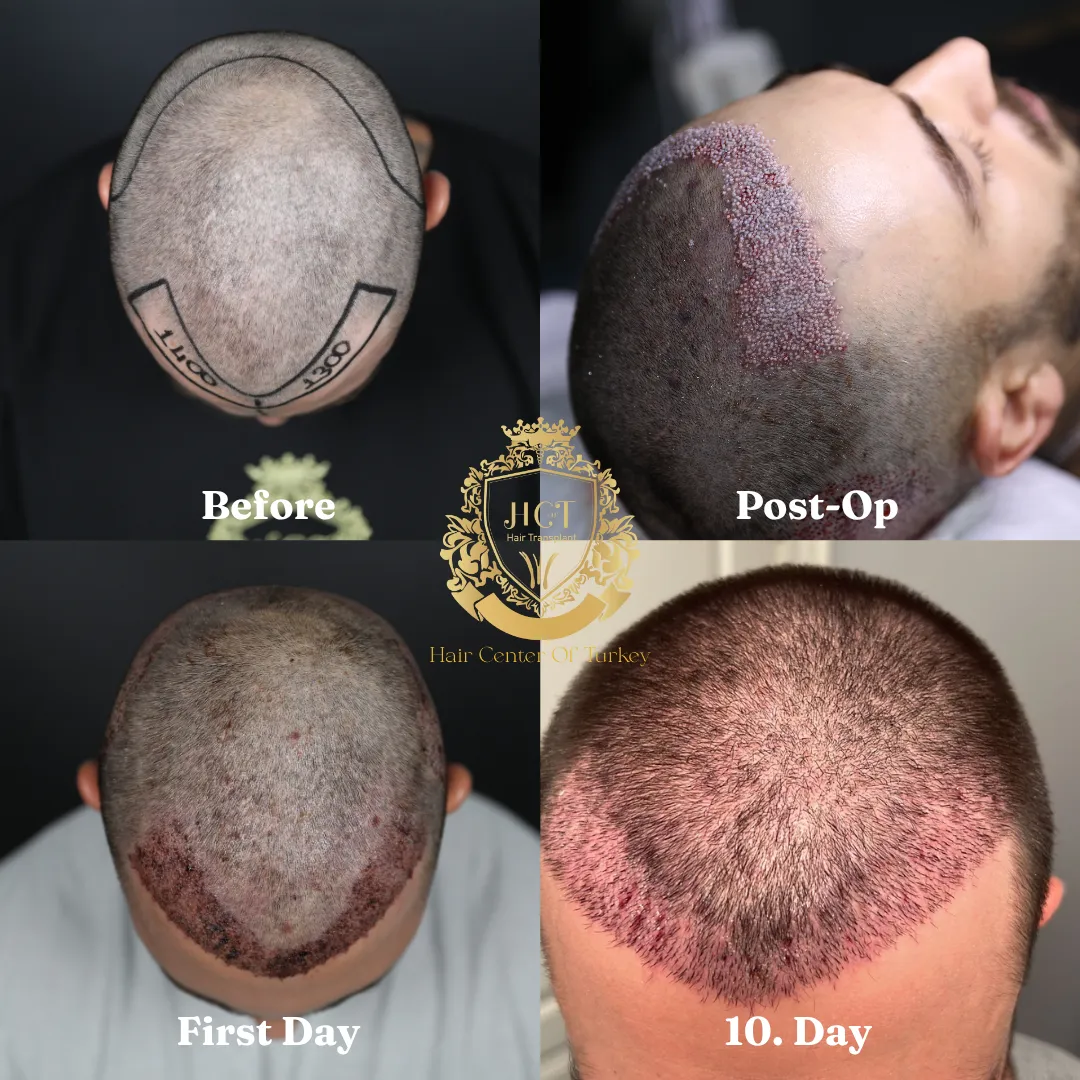
Redness and small scabs are normal early on. How visible they are depends on your skin tone, hairstyle, and how short you keep the surrounding hair.
If you’re anxious about the look, consider booking the procedure before a weekend or holiday period. A few extra days at home can make the healing phase much less stressful.
Hats are a common question. Many clinics allow a loose-fitting hat after the initial recovery window, but timing varies. Don’t wear anything that presses on the grafts unless your surgeon specifically approves it.
When should you delay work and contact your clinic?
Call your clinic promptly if you notice symptoms that feel “off” rather than improving day by day.
- Bleeding that doesn’t stop with gentle pressure as instructed
- Increasing swelling after the first few days
- Worsening pain, warmth, pus, or a foul smell from the scalp
- Fever or chills
FAQs
When can I go to work after a hair transplant?
Desk work: 1–3 days; physical work: 7–10 days, per surgeon advice.
Do I need to take time off work for a hair transplant?
Yes, take 1–3 days off; longer if your job is physical.
How long to stay home after a hair transplant?
Stay home 2–5 days to reduce swelling and protect grafts.
How much rest is required after a hair transplant?
Rest quietly 48–72 hours; avoid heavy exercise and bending for 7–14 days.
Can you go out in public after a hair transplant?
Yes, you can go out immediately, but redness and scabs may show 7–10 days.