





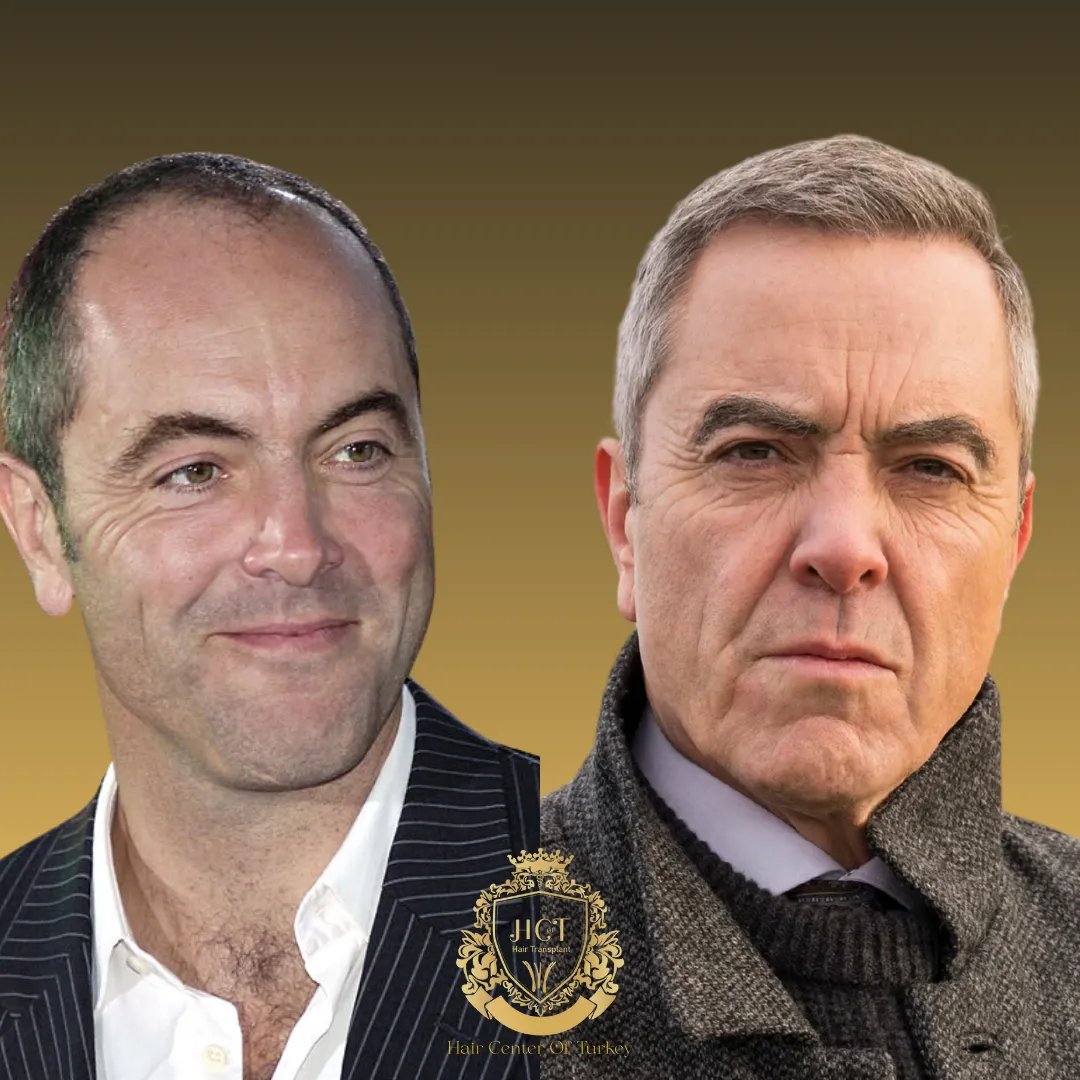
Did James Nesbitt Have a Hair Transplant?
Yes. James Nesbitt has publicly said he’s had hair transplant surgery and has shared his experience in interviews and clinic testimonials. He hasn’t released full medical details, so specifics like the exact technique, graft numbers, and timeline are best treated as informed estimates rather than confirmed facts.
Table of Contents
Did James Nesbitt Confirm Having a Hair Transplant?
He has. Nesbitt has spoken about having hair transplant surgery and recorded a testimonial about the impact it had on his confidence and work. What he’s shared publicly focuses on the personal experience—how it felt, why he chose to do it, and the difference it made—rather than detailed clinical data.

Where did James Nesbitt have the procedure?
Publicly available material links his treatment to Hair Restoration Blackrock (HRBR) in Dublin, Ireland. In that testimonial content, he describes having his first procedure years earlier and later returning for further restoration.
Which hair transplant method did he have?
There isn’t a single, universally verified answer in the public record. Some clinic and specialist write‑ups describe Follicular Unit Transplantation (FUT), which involves removing a thin strip from the donor area and implanting grafts. Other analyses suggest an FUE-style approach (including ‘unshaven’ FUE), largely because there’s little visible evidence of a linear donor scar and because his hairline improvements look consistent with modern graft placement.
The most realistic view is that technique may have varied across procedures—especially if his first surgery was done when FUT was more common and later work was refined with FUE.
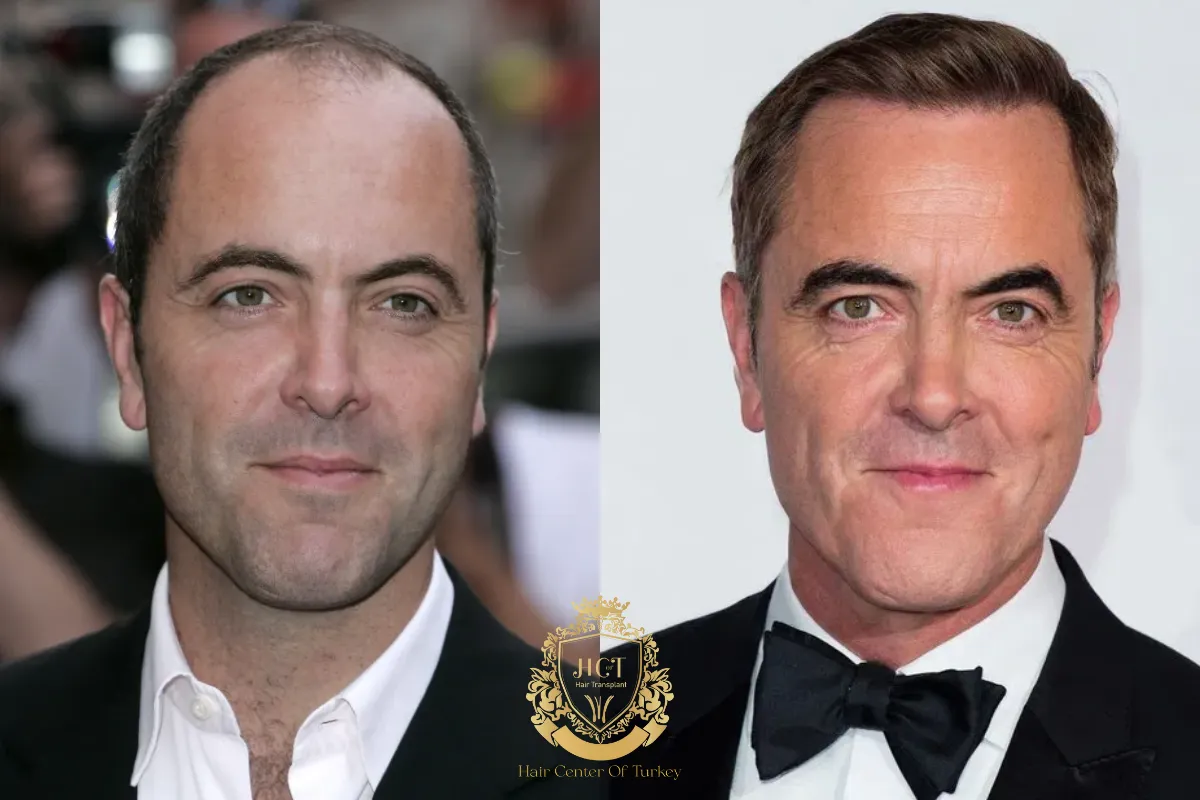
How many grafts did James Nesbitt have?
Exact graft numbers haven’t been published as a medical record. Online estimates vary, often placing his hairline work somewhere in the low-to-mid thousands of grafts. Because these figures are usually based on photo comparisons and professional opinion rather than documentation, treat them as estimates—not confirmed statistics.
Was James Nesbitt’s hair transplant safe?
Nesbitt’s own comments frame the experience as positive, and his visible results suggest careful planning and a conservative, natural-looking design. In general, hair transplantation is considered a low-risk elective procedure when performed by qualified clinicians with proper screening, sterile technique, and appropriate aftercare. As with any surgery, outcomes depend heavily on the team’s experience, the patient’s donor supply, and realistic expectations.
How did it affect his appearance?
The most noticeable change is a stronger, fuller hairline and better density through the frontal area. That kind of improvement can subtly ‘de-age’ the face on camera, especially under bright lighting and high-definition filming. Natural results usually come from a soft, irregular hairline, correct angulation, and avoiding over-dense packing that can look artificial.
Hair transplants in the spotlight
Celebrity hair restoration often attracts attention because the before-and-after difference can be dramatic, yet the best work is designed to be hard to spot. Nesbitt’s openness is part of a broader shift: fewer public figures feel the need to deny cosmetic procedures, and more people view hair restoration as a practical option rather than a taboo subject. For anyone considering treatment, the takeaway is simple—choose a medically led clinic, ask to see real patient results, and plan for long-term hair loss, not just today’s hairline.
FAQs
How many hair transplants has James Nesbitt had?
Reports vary; he has confirmed multiple hair transplants.
Has James Nesbitt had a hair transplant?
Yes; he has spoken publicly about having hair transplants.
How much did James Nesbitt pay for his hair transplant?
Exact cost isn’t public; estimates vary widely by clinic and graft count.
Where did James Nesbitt get his hair transplant?
He has said his procedures were done in Dublin, Ireland.
Is hair transplant safe?
Hair transplants are generally safe with qualified surgeons, but risks include infection and scarring.
Does hair transplant really work?
Hair transplants work by moving follicles; success depends on donor hair and technique.
Is hair transplant permanent?
Transplanted follicles usually last, but ongoing hair loss may require further treatment.
Where do celebrities get hair transplants?
Celebrities use reputable clinics worldwide, often choosing privacy, experienced surgeons, and advanced techniques.