

Americans go to Turkey for hair transplants because surgeon-led, all-inclusive procedures cost 60 to 80 percent less than at home.
Why Americans Go to Turkey for a Hair Transplant
Every year more people from the United States look abroad for hair restoration, and one destination keeps surfacing. The short answer to why Americans go to Turkey hair transplant clinics is direct. They get a surgeon-led, all-inclusive procedure for 60 to 80 percent less than the same operation costs at home.
Table of Contents
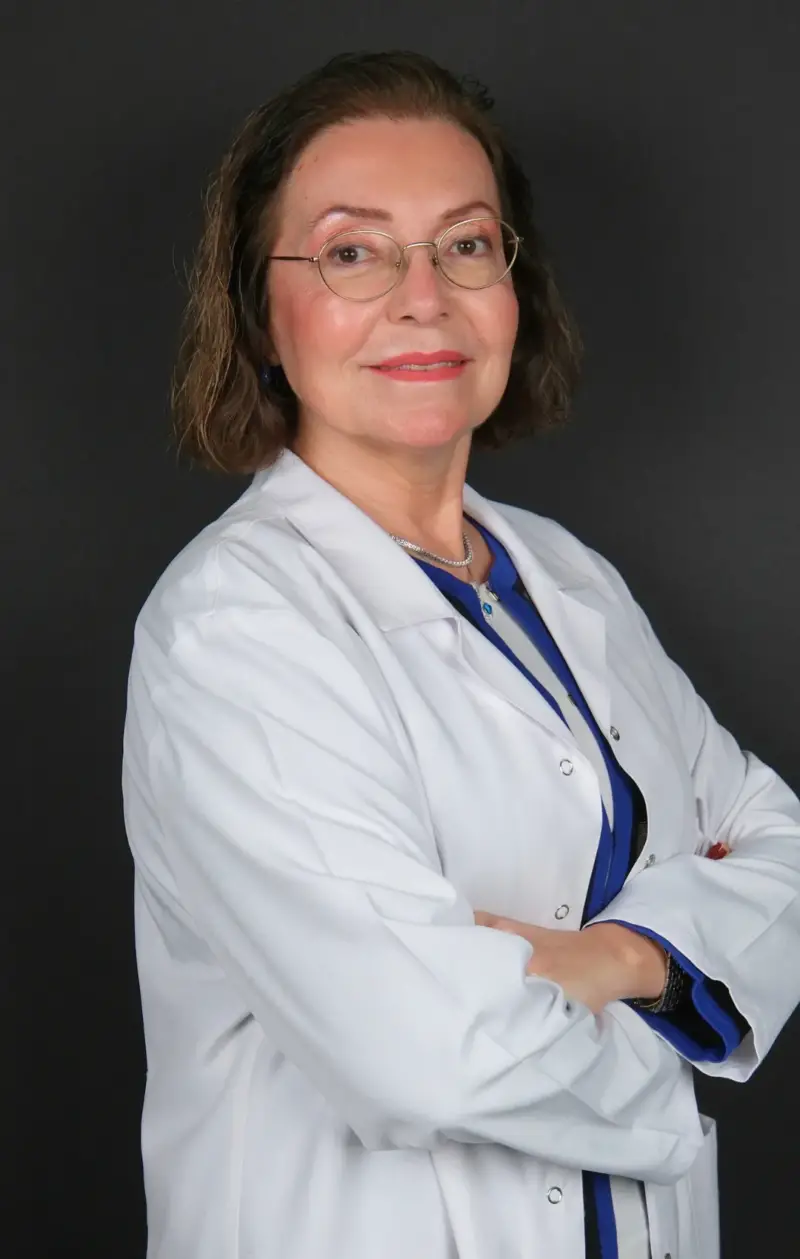
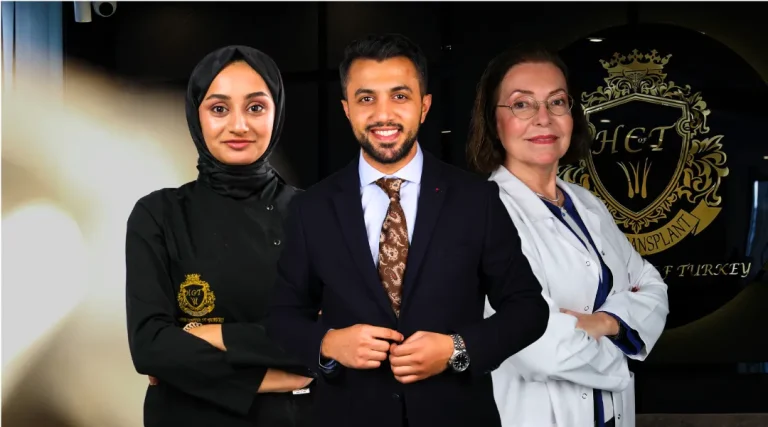
Many clinics there also offer techniques that few US practices provide routinely. Hair Center of Turkey sits near the center of this shift. Based in Istanbul and founded in 2014, the clinic works with a team of three dedicated hair-restoration doctors.
It performs roughly 3,000 procedures a year. For a US patient the value is concrete. One bundled price covers the surgery, the hotel, airport transfers and structured aftercare. English-speaking coordination runs from the first message to the final check-in.
None of this is fringe. Turkey performed an estimated 1.5 million hair transplant procedures in 2024 and accounts for roughly 60 to 70 percent of the world’s hair-transplant tourism. Istanbul alone runs more than 650 clinics and receives about half of everyone who arrives in the country for the procedure.
Americans have become one of the fastest-growing groups inside the roughly one million patients who travel to Turkey each year. The sections below lay out the real cost math and why a lower price does not signal lower quality. They also cover the techniques that pull US patients across the Atlantic, and how to pick a clinic without landing at a “hair mill.”
The Real Cost Gap for US Patients
Price is the first thing most US patients notice, and the gap is large. A comparable procedure in the United States averaged about $13,000 in a 2023 American Society of Plastic Surgeons study. Big-city quotes commonly run $15,000 to $25,000. That figure is usually built a la carte, with the consultation, medications and follow-up visits billed as separate lines on top of the surgery itself.
Turkish clinics work differently. An all-inclusive package generally starts near $1,800 and tops out around $5,000. That single price already folds in the surgery, the hotel stay, airport transfers and a structured aftercare plan. The table below shows how the two models compare.

Cost factor | United States (a la carte) | Turkey (all-inclusive) |
|---|---|---|
Surgery | $8,000 to $25,000+ | Included |
Hotel and transfers | Not included | Included |
Aftercare and follow-ups | Billed separately | Included |
Typical all-in total | ~$13,000 average | $1,800 to $5,000 |
Travel does not erase the advantage. A round-trip flight from the East Coast runs about $750 to $950. Even after that airfare, a US patient still saves 60 to 80 percent overall. For most people that is the difference between shelving the idea and actually booking it.
Lower Price, Not Lower Quality
The instinct that cheap means bad is understandable, but it misreads how these prices are set. The lower cost reflects Turkey’s lower labor and facility expenses, a favorable exchange rate, and case volume that dwarfs what a typical Western practice sees. High volume also builds deep specialization. A clinic doing thousands of hair cases a year refines its process in ways an occasional operator cannot.
Compare the two settings. A specialized Istanbul clinic may run several transplants a day and treat hair restoration as its entire business. A general US cosmetic practice often performs far fewer transplants in a year, fitting them between unrelated procedures. Repetition at that scale tends to sharpen graft handling, timing and consistency.
The country is not a guarantee on its own. Quality still depends on the specific surgeon and clinic you choose, and Turkey has both excellent teams and careless ones. A low headline price is only a good deal when it comes from a licensed, doctor-run clinic. That is exactly why vetting matters before you book a turkey hair transplant.
Techniques US Clinics Rarely Offer: Sapphire FUE and DHI
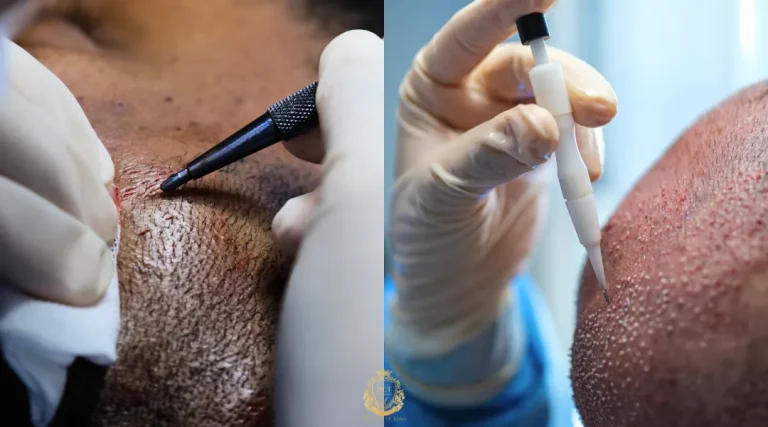
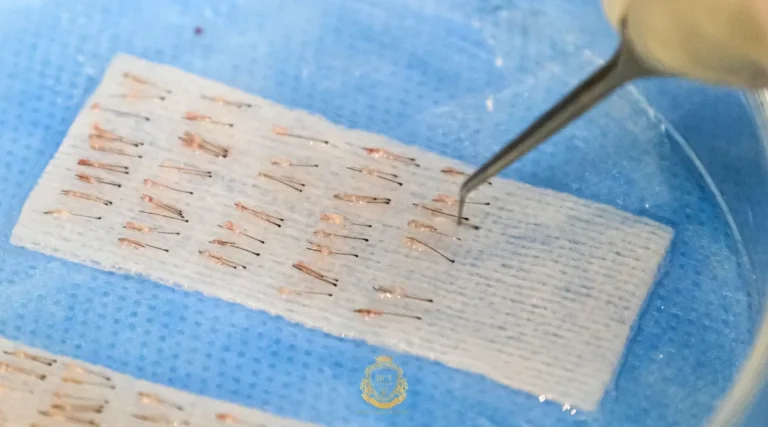
Cost pulls people toward Turkey, but technique is often what keeps them there. Two methods are routine in Istanbul and still uncommon at home. Sapphire FUE uses a sapphire-tipped blade to open finer, cleaner recipient channels, which allows denser packing of grafts.
DHI relies on a Choi implanter pen that places each follicle directly. That gives the surgeon tight control over the angle, depth and direction of every hair.
Most US clinics still lead with FUT or standard FUE, and only a handful offer DHI at all. That is partly a matter of training time and partly the economics of low volume, since these methods reward practice. A patient who wants DHI in the States may struggle to find a nearby surgeon who performs it regularly.
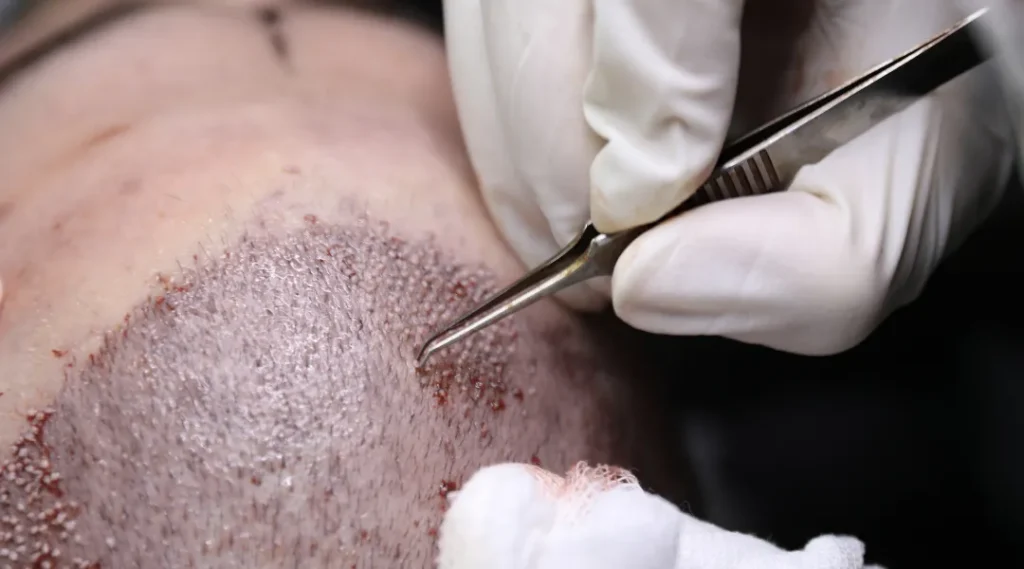
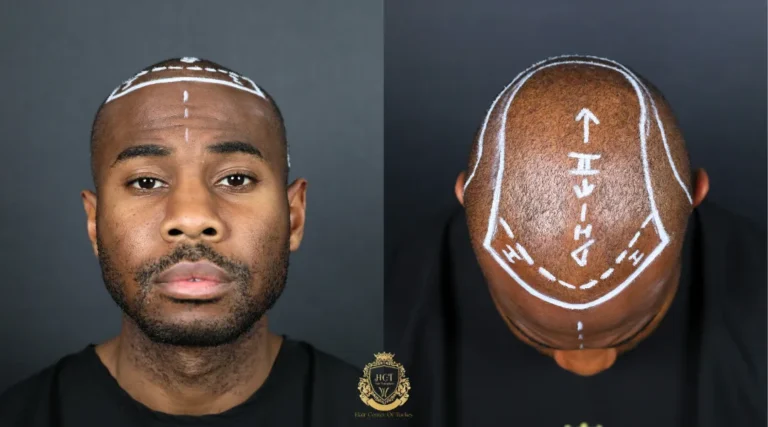
Technique connects straight to the fear that keeps many men from getting a transplant at all: looking “pluggy” or obviously worked-on. The old plug look came from coarse grafts placed at wrong angles. Better angle control and higher density are precisely what make a modern result read as natural and undetectable. That is a large part of why Americans go to Turkey hair transplant clinics rather than settling for whatever is offered locally.
What a Hair Center of Turkey Trip Looks Like for US Patients
The All-Inclusive Medical-Travel Experience
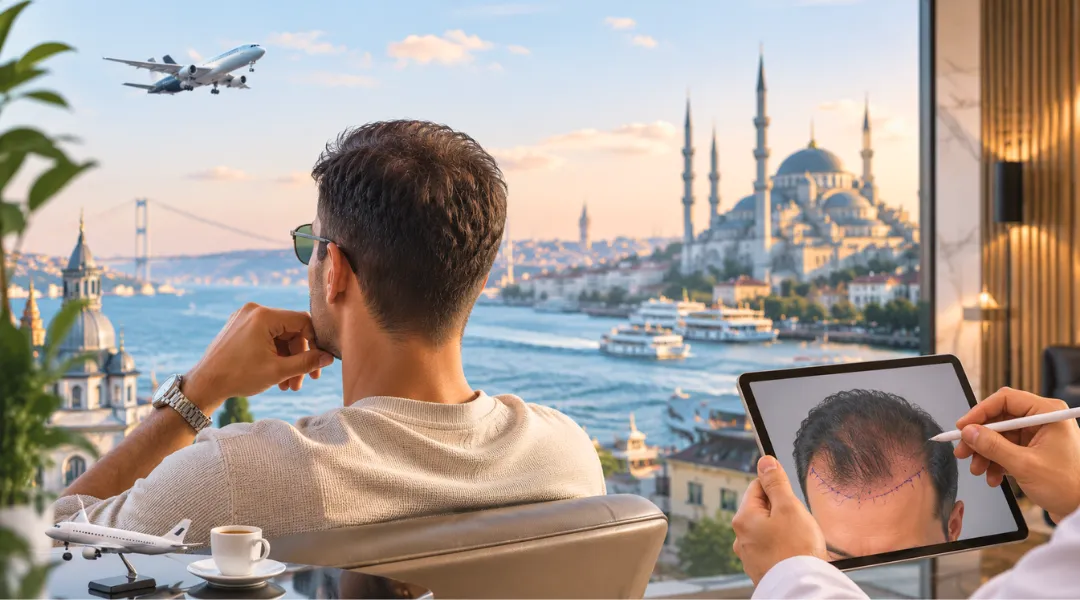
For a US patient the trip is built to remove friction. From the first consultation, coordination happens in English, so nothing important gets lost in translation.
A driver meets you at the airport, the hotel is booked as part of the package, and the clinic maps out the schedule before you land. Hair Center of Turkey handles the surgery and the aftercare as one continuous plan. That spares patients the job of stitching together providers across two countries.
The point of bundling is not only convenience. It keeps the medical team accountable for the whole arc of care, from the pre-op plan to the wound-care instructions you carry home.
Recovery and the Flight-Home Timeline
Planning the return matters as much as booking the flight out. Most patients stay about 3 to 4 days, which covers the procedure and at least one post-op check. Clinics generally advise waiting 2 to 5 days after surgery before flying, giving the newly placed grafts time to secure.
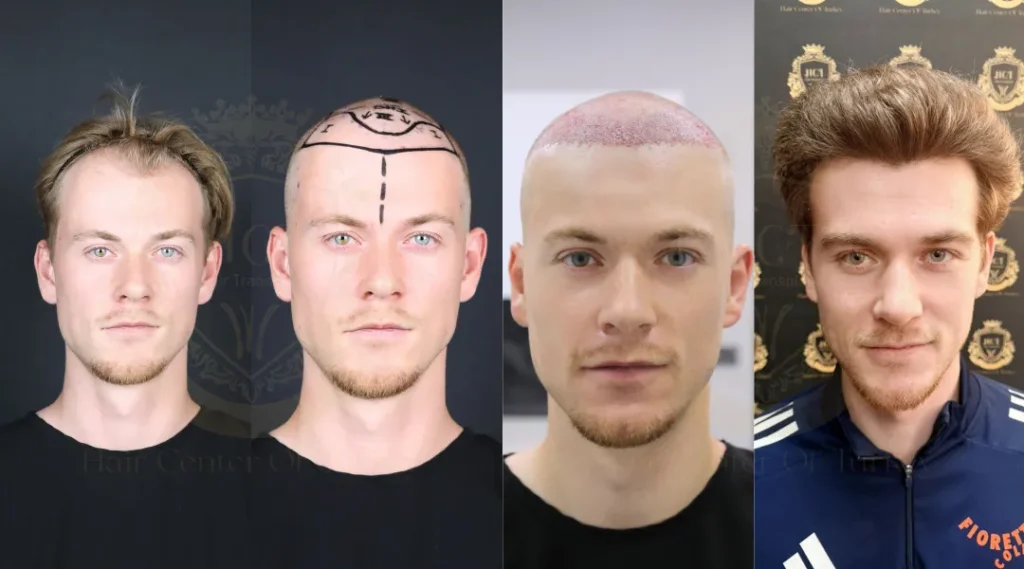
The visible recovery moves faster than many expect. Scabs and redness usually fade within 7 to 10 days, so most people look presentable within about two weeks. The real payoff takes patience. Shed hairs regrow gradually, and full growth appears at 9 to 12 months.
How to Vet a Clinic and Set Realistic Expectations
A good outcome starts with the clinic you choose, so treat the selection like hiring a surgeon, not booking a hotel. Insist on a clinic licensed by Turkey’s Ministry of Health, and confirm that an actual physician leads the operation. Verify the operating surgeon’s credentials. Ask to meet that doctor for your consultation rather than a sales representative who disappears once you pay.
The risk to avoid is the “hair mill” model. These high-volume shops are run by non-medical sales consultants. They push aggressive mega-sessions to move as many grafts as possible, and often hand the actual work to technicians with little oversight. A reputable, surgeon-led clinic plans around what your donor area can sustain, not around a sales target.
Honest expectations protect you too. Shock loss, where some existing hairs fall out in the first weeks, is normal and temporary. Final results take 9 to 12 months to fill in, so patience is part of the process.
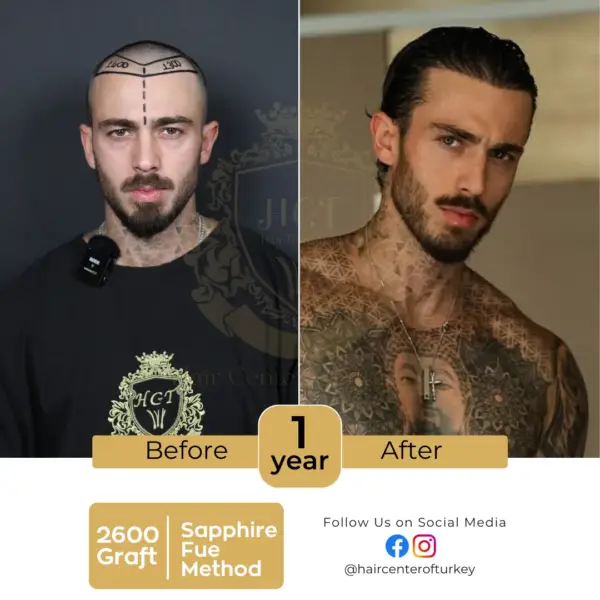
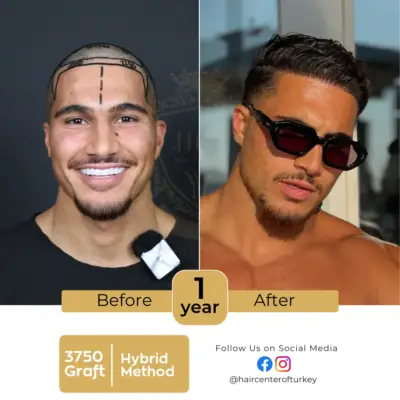
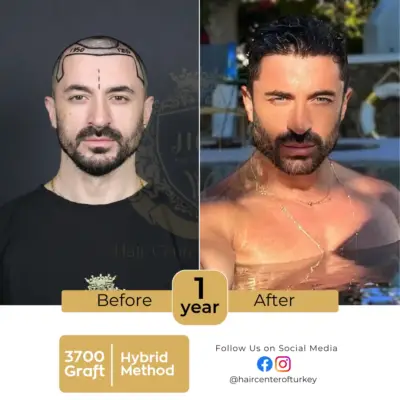
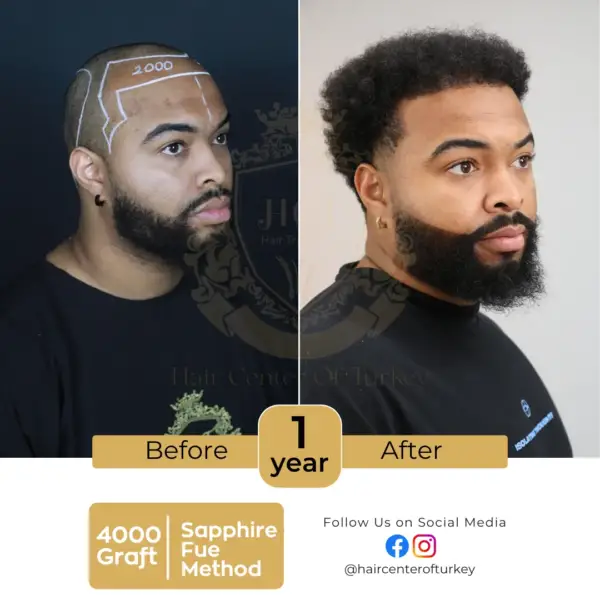
A strong outcome is defined by natural hairline design and healthy graft survival, not by the biggest graft number a clinic will promise. Judge a turkey hair transplant by how it looks after a year, not by the count on the invoice.
Frequently Asked Questions
Why Is a Hair Transplant in Turkey So Much Cheaper, and Does That Mean Lower Quality?
No. The lower price reflects Turkey lower labor and facility costs plus very high case volume, not shortcuts. Quality depends on the specific surgeon and clinic, and top Istanbul clinics use the same or more advanced techniques than most US practices.
How Many Americans Actually Travel to Turkey for Hair Transplants?u
Turkey draws roughly a million hair-transplant patients a year, and Americans are one of the fastest-growing segments. Some clinics now report Americans as a large share of their international bookings, which is part of why the turkey hair transplant market keeps expanding.
Is Getting a Hair Transplant in Turkey Safe?
It can be very safe at a Ministry of Health-licensed, surgeon-led clinic. The main risks come from unregulated hair mills with non-medical staff and aggressive mega-sessions, so verifying the operating surgeon credentials matters most.
How Long Do I Need to Stay in Turkey and When Can I Fly Home?
Most patients stay about 3 to 4 days. Scabs and redness fade within 7 to 10 days, and clinics generally recommend waiting 2 to 5 days after surgery before flying to protect the new grafts.
Does Hair Center of Turkey Support Patients Coming From the US?
Yes. As an Istanbul clinic operating since 2014, Hair Center of Turkey has a dedicated medical team supporting international patients, including those traveling from the United States. Every turkey hair transplant includes all-inclusive coordination covering consultation, hotel, transfers and structured aftercare.
Explore the complete guide: Hair Transplant Turkey and Medical Tourism