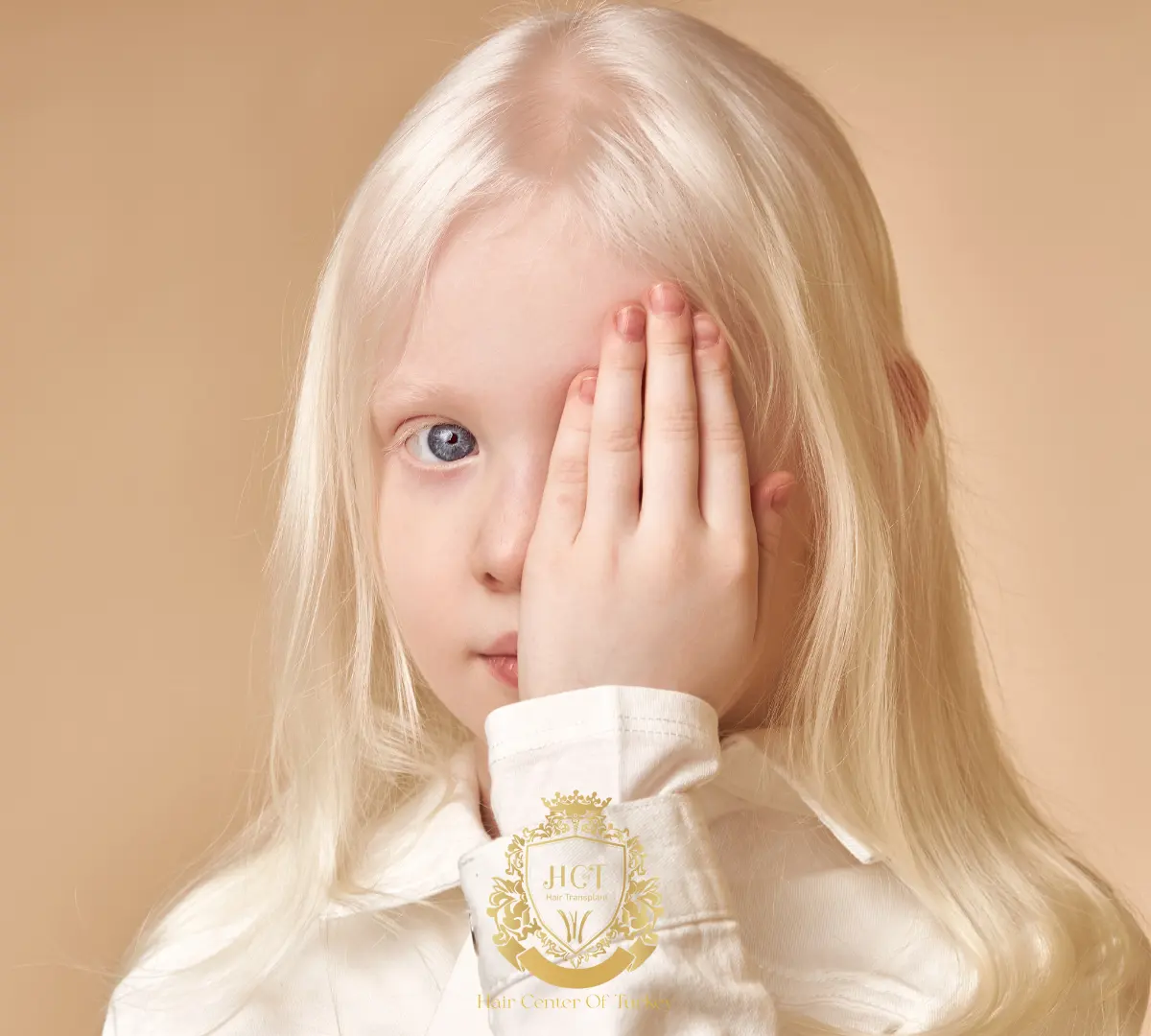
Albinism is a group of inherited conditions in which the body makes little or no melanin, the pigment that gives skin, hair and eyes their color. At Hair Center of Turkey, a hair transplant clinic founded in 2014 with three specialist doctors and more than 3,000 procedures a year, we explain what albinism is, how it affects hair color and scalp health, and what people with albinism should know about hair loss and hair transplant suitability.
Table of Contents
Albinism & Hair: In Short
Albinism is a genetic condition that lowers melanin production, which leads to lighter skin, hair, and eyes, along with greater sun sensitivity and vision problems. It changes hair color and texture, but it does not directly cause hair loss. The bigger risk is UV damage to the scalp, so steady sun protection and a hair care routine built for sensitive skin matter most for people with albinism.
Albinism: Causes, Types, Symptoms and Effects on Hair
Albinism is an inherited condition that reduces the body’s melanin production, leading to lighter skin, hair, and eye color and a higher chance of vision issues. The most common form affects the skin, hair, and eyes (oculocutaneous albinism). Care focuses on eye support, sun protection, and regular skin and eye checkups.
What Is Albinism?
Albinism is a group of genetic conditions that affect how the body makes melanin, the pigment that gives color to the skin, hair, and eyes. Because melanin also supports normal eye development, many people with albinism have visual differences alongside lighter pigmentation.
Albinism is present from birth. It is not contagious, and it is not caused by diet, lifestyle, or anything done during pregnancy.
How Common Is Albinism In Türkiye?
Türkiye does not have a single official national count that is publicly reported. Still, local organizations and news reports commonly cite estimates in the low thousands. Because reporting and diagnosis vary, these figures should be treated as approximate rather than definitive.
What Is Melanin And Why Does It Matter?
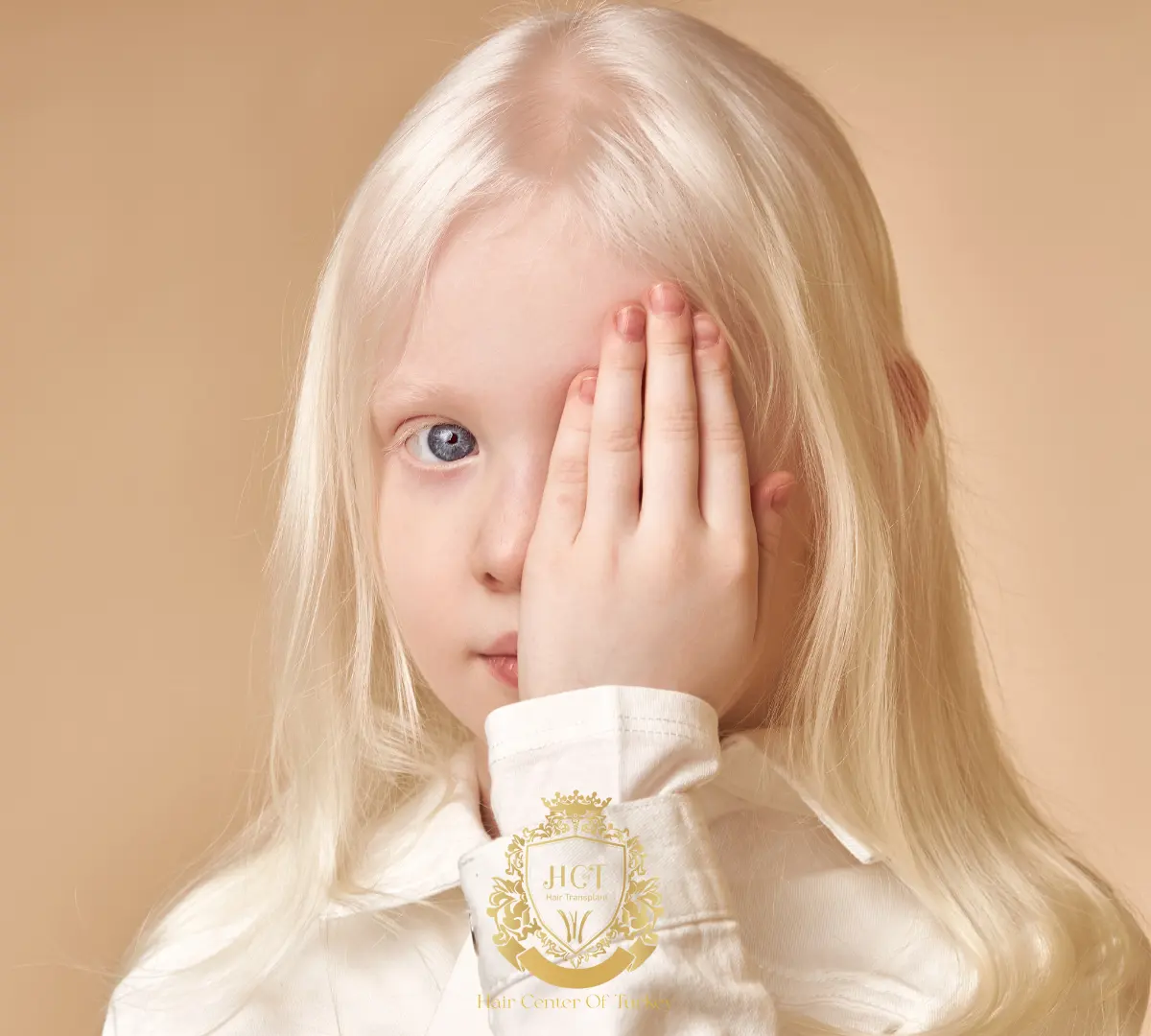
Melanin is produced by specialized cells (melanocytes). It influences skin and hair color and also helps the eye develop and function normally. When melanin is reduced, the retina and optic nerve may develop differently, which can affect visual sharpness, light sensitivity, and eye movement.
Types Of Albinism
Oculocutaneous albinism (OCA)
Oculocutaneous albinism is the most common form. It affects the skin, hair, and eyes, and it is typically inherited in an autosomal recessive pattern (a changed copy of the gene from each parent). Different genetic subtypes lead to different levels of pigmentation and visual findings.
Ocular albinism (OA)
Ocular albinism mainly affects the eyes, while skin and hair pigmentation may look typical for the person’s family background. The most widely described form is X-linked ocular albinism (often called OA1), which is more likely to affect males and is passed through the X chromosome.
Common Signs And Symptoms
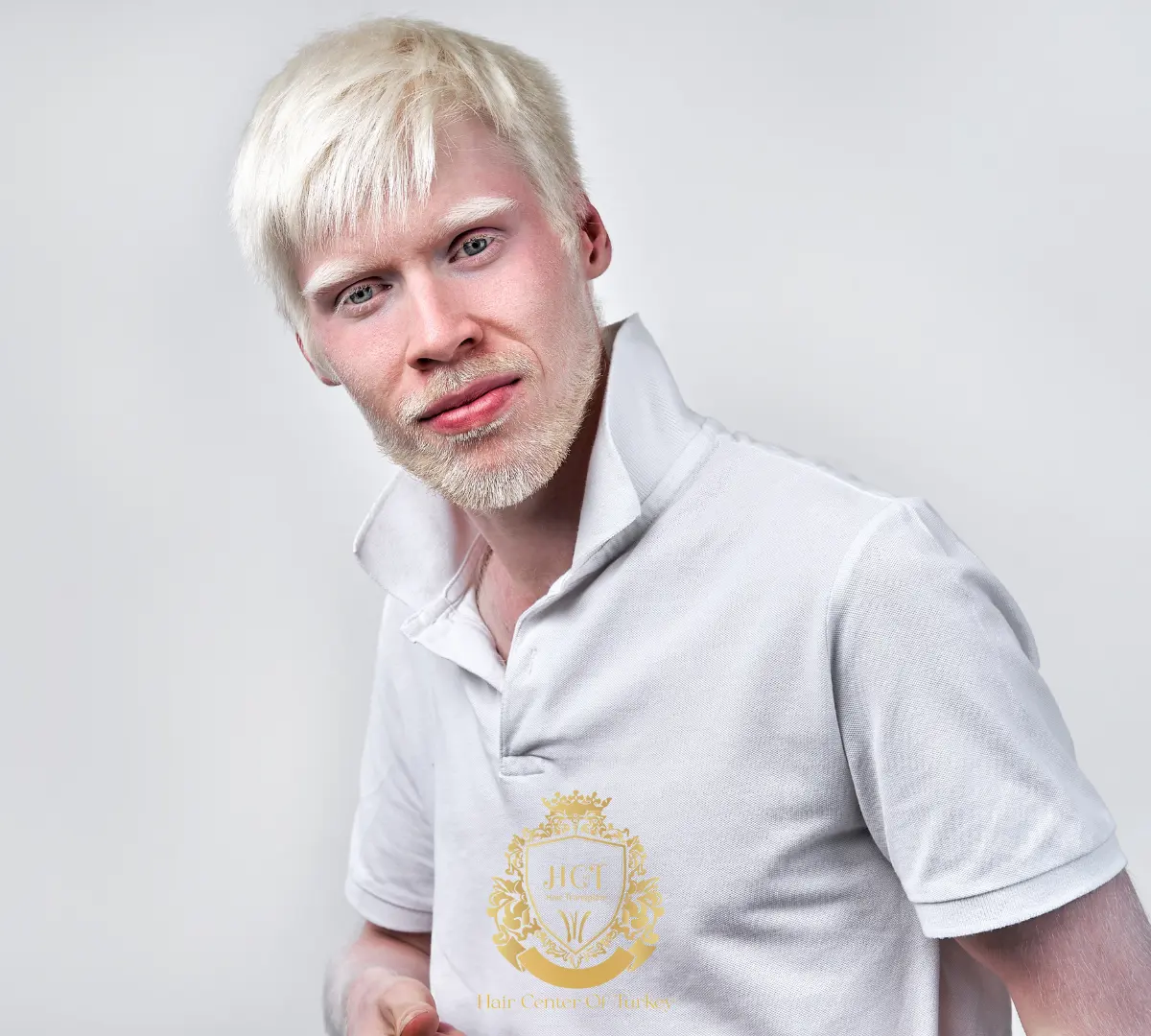
Symptoms vary from person to person, even within the same family. Many signs are easiest to notice in the eyes, while skin and hair color can range from very light to only mildly lighter than relatives.
- Lighter skin and hair compared with close relatives (sometimes subtle).
- Light-colored eyes and reduced pigment inside the eye.
- Light sensitivity (photophobia).
- Involuntary eye movements (nystagmus).
- Reduced visual acuity, refractive errors, or strabismus (eye misalignment).
- Higher risk of sunburn and long-term sun damage; increased skin cancer risk without protection.
How Albinism Is Diagnosed
Diagnosis is usually based on physical findings and an eye exam. In many cases, specialists may recommend genetic testing to confirm the type, guide family planning, and rule out related genetic syndromes that can look similar.
Treatment And Day-To-Day Management
There is no treatment that “cures” albinism or restores normal melanin production. Most care is supportive and preventive, focusing on protecting the eyes and skin and improving daily functioning.
Eye care
- Regular ophthalmology visits to monitor vision and eye alignment.
- Corrective lenses where helpful; low-vision aids (magnifiers, telescopic lenses) when needed.
- Sunglasses or tinted lenses to reduce glare and improve comfort.
- Treatment for strabismus or significant nystagmus may be considered case by case.
Skin and sun protection
- Use broad-spectrum sunscreen daily and reapply as directed, especially outdoors.
- Wear a hat, UV-protective sunglasses, and tightly woven clothing for extra coverage.
- Schedule regular skin checks with a dermatologist, particularly if you spend time in strong sun.
When To Seek Medical Advice
Seek medical guidance if a child shows signs of reduced vision, eye movements, or strong light sensitivity, or if you notice frequent sunburns or changing skin lesions. Early support can improve learning, comfort, and long-term skin health.
FAQ
Does albinism affect hair?
Yes, it reduces melanin, often making hair very light or white.
What does albinism affect the production of?
Albinism affects the production of melanin pigment in skin, hair, and eyes.
Why can’t people with albinism dye their hair?
They can dye their hair; the belief they can’t is a myth.
Does albinism affect IQ?
No, albinism doesn’t affect IQ; vision issues can affect schooling without accommodations.
How rare is albino hair?
It’s rare, about 1 in 17,000–20,000 people worldwide.
Can people with albinism get a hair transplant?
In many cases yes, but only after a careful medical evaluation. Our doctors at Hair Center of Turkey check scalp health, skin sensitivity and healing capacity first, because UV-related scalp damage can affect both candidacy and aftercare.
Does albinism directly cause hair loss?
How should people with albinism protect their scalp from the sun?
Because the scalp produces very little melanin, it burns easily. Daily broad-spectrum SPF on exposed scalp, a wide-brimmed hat and shade during peak hours are the basics, and they matter even more after any hair procedure.
Explore the complete guide: Hair Loss Types and Causes