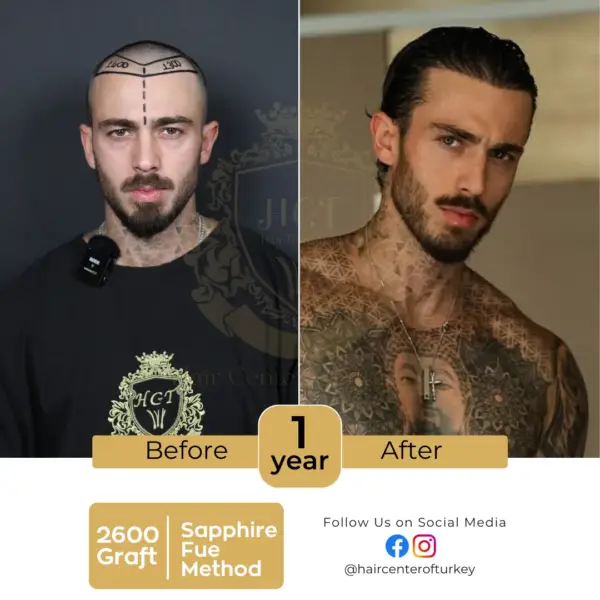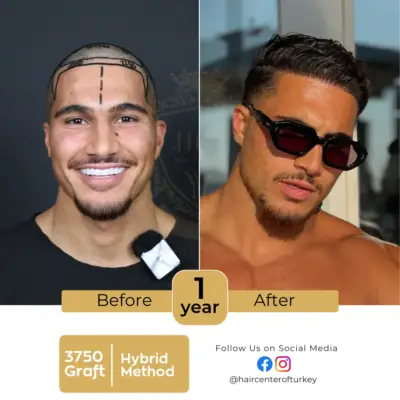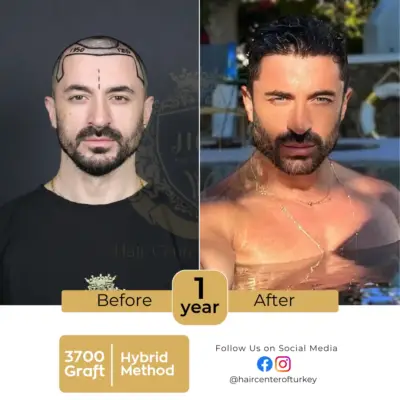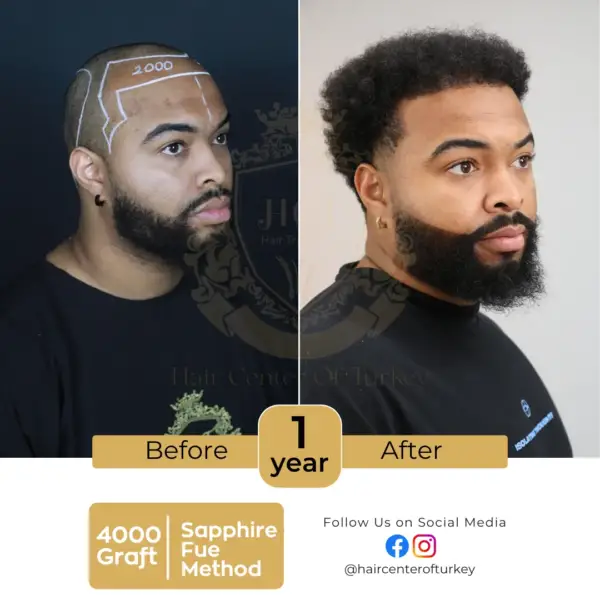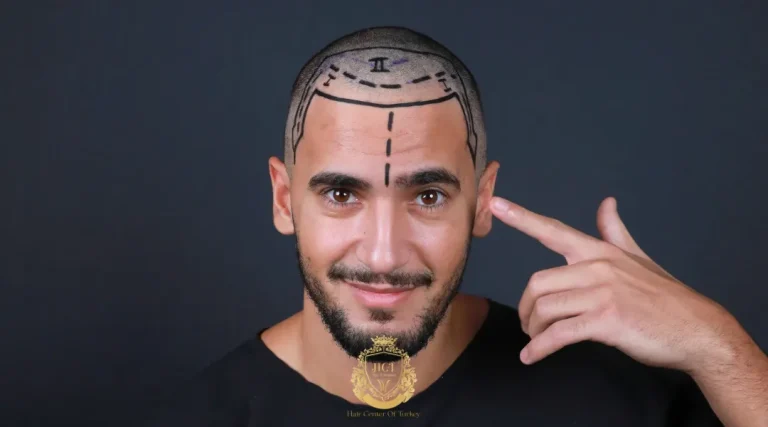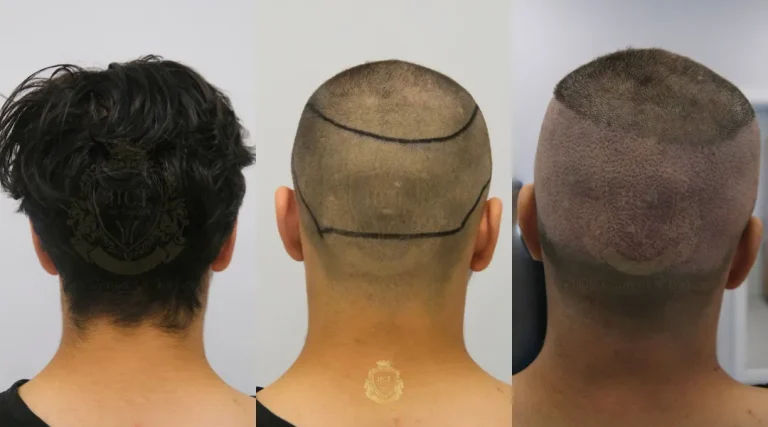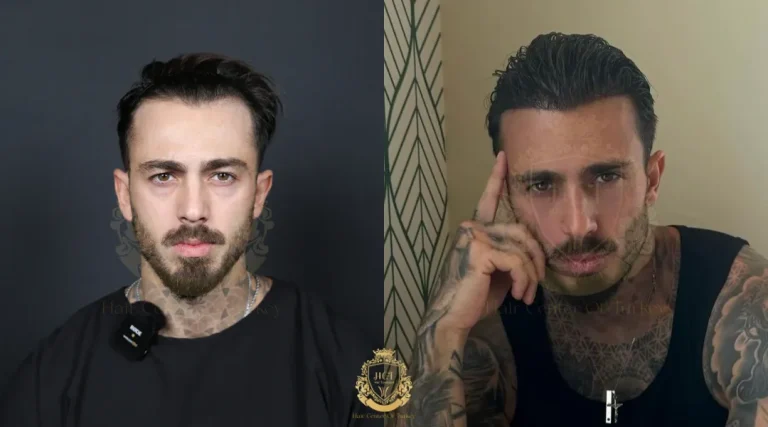


At Hair Center of Turkey, a clinic that has been performing hair restoration since 2014 and now handles more than 3,000 procedures a year, we regularly field questions from patients who started their research by looking at hair transplant clinics in Egypt. Comparing the two markets side by side is part of how we help people understand what a quoted price actually includes and what a realistic recovery timeline looks like.
Egypt has become a more common stop in hair transplant research than many people realize. For patients in the Middle East, North Africa, and even parts of Europe, the country often appears as a practical option because Cairo has an active private aesthetics market and online clinic directories show a visible cluster of hair restoration providers there. WhatClinic’s Egypt listings currently show dozens of hair transplant clinics nationwide, with Cairo accounting for a large share of them, which helps explain why the country keeps showing up in “affordable hair transplant” searches.
Still, the phrase “hair transplant in Egypt” can be misleading if people read too much into price alone. Hair restoration is not a product category where you can assume the cheapest option is the smart option or that the most polished website is the safest choice. The International Society of Hair Restoration Surgery says that preoperative evaluation, surgical planning, donor harvesting, hairline design, recipient-site creation, and postoperative care should be handled by a licensed physician. That guidance matters everywhere, but it matters even more in markets where patients may be comparing clinics largely through online advertisements and marketplace listings.
Egypt does have hair transplant surgeons with visible international credentials, which is worth noting. The ABHRS directory includes Dr. Shady Elmaghraby in Cairo and Dr. Ahmed A. Youssef Ibrahim with an Egypt-based practice in Maadi, and the ABHRS board page lists Dr. Shady El-Maghraby of Cairo as the organization’s president. That does not create an official “best surgeons in Egypt” ranking, but it does show that Egypt is not absent from the international hair restoration map. In other words, serious options exist, but patients still need to separate verifiable qualifications from pure marketing.
Table of Contents
How should you choose a hair transplant clinic in Egypt?
![<![CDATA[Hair Transplant Clinics in Egypt - Best Hair Transplant Surgeons, Costs & Procedures Explained]]>](https://haircenterofturkey.com/wp-content/uploads/2024/12/Hair-Transplant-Clinics-in-Egypt-2.webp "Hair Transplant Clinics in Egypt – Best Hair Transplant Surgeons, Costs & Procedures Explained 2")
- Start by asking who performs the critical steps. The ISHRS says surgical planning, donor harvesting, hairline design, recipient-site creation, and postoperative care should be performed by a licensed physician, not left vague in consultation.
- Treat “best surgeon” as a research question, not a slogan. A clinic’s ad copy may say “top” or “best,” but more meaningful signs are board visibility, surgeon-specific credentials, and whether the doctor can be verified through sources like the ABHRS directory.
- Judge results by naturalness, not just by density. A crowded front line can still look artificial if the hairline is too low, too straight, or poorly matched to the patient’s age and face. The ISHRS consumer guidance is built around physician judgment for exactly this reason.
- Ask whether the clinic is planning for the future or just selling the first session. Hair transplantation is limited by donor supply, so conservative planning matters. The American Academy of Dermatology says a good candidate needs enough healthy donor hair and, in some younger patients, waiting and medical therapy may be advised first.
- Get the price in writing and ask what it includes. In Egypt, public pricing examples vary so widely that a quote is almost meaningless unless it clearly states the method, graft count, medications, follow-up, and whether any extras are bundled in.
- Do not ignore the aftercare plan. Cleveland Clinic’s timeline makes it clear that the first days and weeks matter: bandages, washing, activity limits, and longer-term follow-up are all part of the real treatment, not an afterthought.
What do hair transplant costs in Egypt really look like?
This is where many patients get surprised. There does not appear to be a single national benchmark price that defines the Egyptian market. Instead, public examples show a very wide spread. WhatClinic’s Egypt page currently shows hair transplant prices starting from around 37,904 EGP, while its Heliopolis listings show starting prices as low as 2,037 EGP on some marketplace entries. Meanwhile, Egypt-based clinic pages advertise very different figures: Dr. Ali Gaber’s pages describe Cairo pricing that can range from 7,000 to 20,000 EGP depending on method and scope, with extraction-based procedures ranging around 16,000 to 25,000 EGP, while other clinic-linked content presents much higher starting numbers. The practical takeaway is simple: Egypt is not a one-price market. It is a highly variable one.
That spread usually comes down to four things: graft count, method, clinic positioning, and package content. A clinic may be quoting a small frontal touch-up while another is pricing a much larger restoration. One may be talking about FUE, another about DHI, and another may be bundling consultation, medication, PRP, or travel support. This is exactly why Egypt can look either very cheap or unexpectedly expensive depending on where a patient begins searching. Price is not useless information, but on its own it tells you almost nothing about what you are actually buying.
Which procedures are most common in Egypt?
![<![CDATA[Hair Transplant Clinics in Egypt - Best Hair Transplant Surgeons, Costs & Procedures Explained]]>](https://haircenterofturkey.com/wp-content/uploads/2024/12/Hair-Transplant-Clinics-in-Egypt-3.webp "Hair Transplant Clinics in Egypt – Best Hair Transplant Surgeons, Costs & Procedures Explained 3")
In practical terms, Egypt follows the same broad procedure landscape seen in many other markets. Clinic pages and listings most often mention FUE, FUT, and DHI-style approaches. NHS guidance remains one of the clearest plain-English summaries: FUT involves removing a strip of scalp and preparing grafts from it, while FUE removes follicular units individually from the donor area. Those are still the two core methods patients need to understand before they get distracted by branding language.
The bigger point is that technique names do not guarantee outcomes. A well-planned FUE case can look natural and age appropriately. A badly planned one can overharvest the donor area and leave an unnatural front line. The same goes for any DHI-branded offer. Good results come from matching the method to the patient’s donor supply, pattern of loss, hair characteristics, and long-term expectations, not from choosing the procedure with the most fashionable label. The AAD’s guidance on candidacy reinforces this by focusing first on healthy donor hair and realistic suitability rather than trendy procedure names.
Recovery should also be part of the method discussion. Cleveland Clinic says patients typically remove bandages on day one, wash hair on day two, return to work and light activity within a few days, and wait longer before exercise. It also notes that transplanted hair does not produce an instant final result, and that full results may take up to a year, with some patients needing touch-up work for the most natural appearance. That timeline matters because clinics that sell the surgery like an overnight transformation are usually oversimplifying the process.
What should patients watch for before booking in Egypt?
![<![CDATA[Hair Transplant Clinics in Egypt - Best Hair Transplant Surgeons, Costs & Procedures Explained]]>](https://haircenterofturkey.com/wp-content/uploads/2024/12/Hair-Transplant-Clinics-in-Egypt-4.webp "Hair Transplant Clinics in Egypt – Best Hair Transplant Surgeons, Costs & Procedures Explained 4")
- Watch for language that promises certainty instead of judgment. Hair transplantation is never just about “maximum grafts” or “guaranteed density.” Patients should be wary of clinics that talk more about sales outcomes than medical reasoning. The ISHRS consumer guidance is centered on licensed physician responsibility precisely because overpromising is a real risk in this market.
- Check whether the surgeon is visible beyond the clinic’s own website. ABHRS listings for Egypt-based surgeons give patients at least one external verification point instead of relying only on self-published claims.
- Be cautious with marketplace pricing. Directory sites are useful for seeing how active a market is, but very low starting prices may reflect limited cases, promotional entries, or incomplete package information rather than a realistic total bill.
- Ask whether you are actually a good candidate now. The AAD notes that enough healthy donor hair is essential, and some younger men may be told to wait and use medical treatment first. A clinic that recommends surgery for everyone is usually not the clinic you want.
- Clarify what happens after you leave. Cleveland Clinic’s recovery timeline shows why washing guidance, activity restrictions, and follow-up access matter so much. A weak aftercare plan can turn a decent procedure into a stressful recovery.
- Think long term, not just “first session.” Hair loss may continue, donor hair is finite, and a strong first result can still become a weak long-term plan if the surgeon uses grafts too aggressively. That is a clinical judgment issue, not just a cosmetic one.
Why do many patients eventually compare Egypt with Turkey?
![<![CDATA[Hair Transplant Clinics in Egypt - Best Hair Transplant Surgeons, Costs & Procedures Explained]]>](https://haircenterofturkey.com/wp-content/uploads/2024/12/Hair-Transplant-Clinics-in-Egypt-5.webp "Hair Transplant Clinics in Egypt – Best Hair Transplant Surgeons, Costs & Procedures Explained 5")
This is where the decision becomes less about headlines and more about structure. Egypt can offer affordable options, and it clearly has an active private hair transplant market. But Turkey has built a more visible official framework for international healthcare. The Turkish Ministry of Health’s Health Tourism Department currently publishes provider lists for authorized hospitals, medical centers, private practices, and other healthcare providers, with the page dated 25 February 2026. HealthTürkiye also states that the providers and facilitators on its platform operate under Ministry-defined rules and are part of an authorized system. That makes the international patient journey easier to verify before money changes hands.
That matters because self-funded patients are not only looking for lower prices. They are looking for a smoother, more legible system. HealthTürkiye openly markets Türkiye around “cost efficient treatment,” “qualified doctors and health professionals,” “no waiting time,” and “no language barrier.” Whether a patient agrees with every claim is one thing, but the important point is that the country presents a centralized, official pathway for international health travel. Egypt, by comparison, often feels more fragmented at the search stage, with patients moving between marketplace listings, individual clinic pages, and scattered price examples.
That is why many people who begin by researching hair transplant clinics in Egypt eventually decide that Turkey is the more strategic choice. Egypt is not an unserious market. It has visible clinics, recognizable Cairo hubs, and internationally listed surgeons. But when the question changes from “Can I get this done?” to “Where will I get the strongest mix of doctor accountability, organized medical travel, and overall value?” Turkey often becomes the stronger answer. Not because Egypt has nothing to offer, but because Turkey has turned hair restoration into part of a larger, more official international treatment ecosystem.
FAQ
Is Egypt good for hair transplants?
Short answer: Yes, Egypt can be a good option if you choose a board-certified surgeon and a transparent clinic, but quality standards vary more than in Turkey. Egypt can be good if you choose a board-certified surgeon and reputable clinic.
Why are Turkish Hair Transplants so good?
Short answer: Turkey combines high surgical volume, an official Ministry of Health-backed medical travel system, and competitive pricing, though results still depend on the individual clinic. Turkey offers high-volume experienced surgeons and competitive prices, but quality varies widely.
What is the safest country to get a hair transplant?
Short answer: No single country is universally safest; the deciding factor is whether you pick an accredited surgeon and a well-regulated clinic, in Egypt, Turkey, or elsewhere. No single country is safest; choose accredited surgeons and well-regulated clinics.
What are the downsides of hair transplant in Turkey?
Short answer: The main downsides are inconsistent clinic standards, rushed consultations, and aggressive sales tactics at lower-tier providers, not the country itself. Downsides include variable clinic standards, rushed care, limited follow-up, and aggressive sales tactics.
Can you trust hair transplants in Turkey?
Short answer: Yes, at reputable Turkish clinics with verified surgeons and transparent aftercare — the risk is picking an unvetted budget provider, not the country. You can trust reputable Turkish clinics with verified surgeons, transparent outcomes, and proper aftercare.
Explore the complete guide: International Hair Transplant Locations