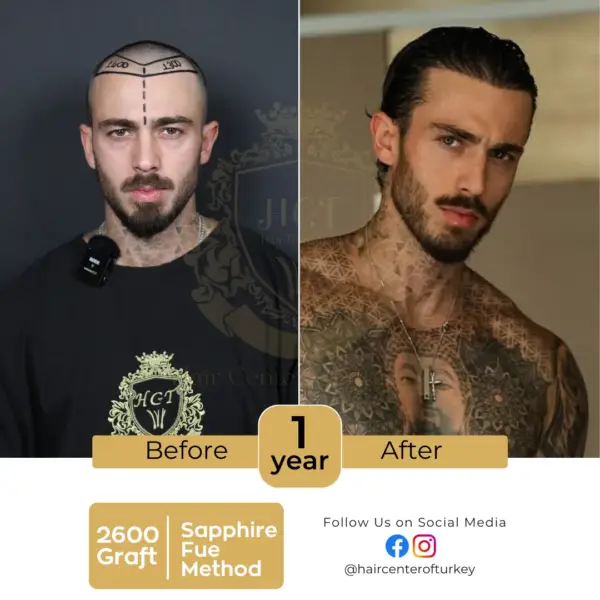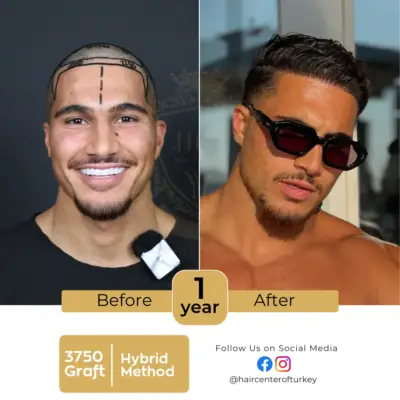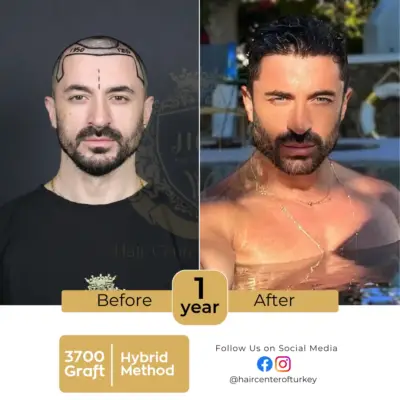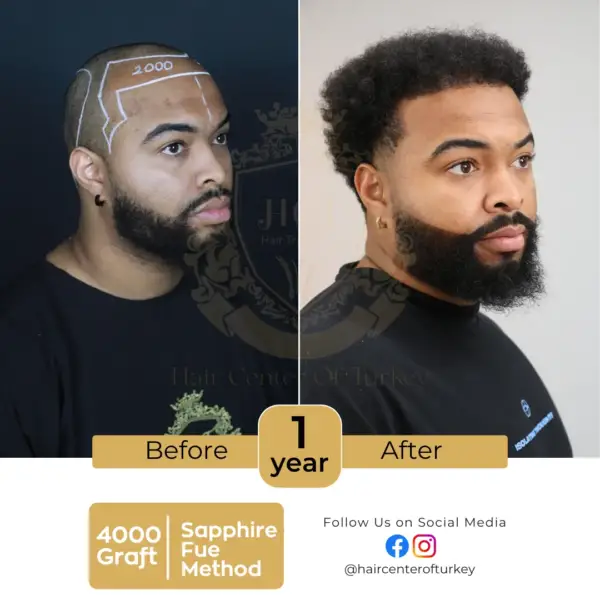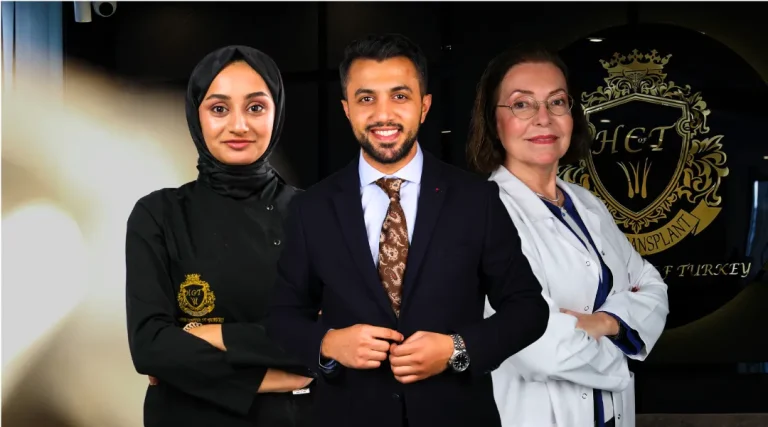



Hair Center of Turkey has been performing hair transplants since 2014, with a team of 3 doctors carrying out around 3,000 procedures a year. This guide draws on that experience to walk you through the techniques, cost ranges, and clinic-selection criteria that matter most when comparing hair transplant clinics in Dubai.
Hair Transplant Clinics in Dubai: Costs, Techniques, and How to Choose
Dubai has become one of those cities that shows up early in almost every international hair transplant search. Part of that is image. Dubai is associated with modern clinics, private healthcare, multilingual staff, and a polished patient experience. Part of it is also structure. Dubai’s health tourism brand, Dubai Health Experience, is run under the Dubai Health Authority, and DHA also publishes formal standards for hair transplant services in licensed facilities. That means the market is not operating as a free-for-all. At least on paper, there is a regulatory framework behind the glossy websites.
That said, a regulated market is not the same thing as a guaranteed result. Hair transplantation is still one of those procedures where the final outcome depends less on the city and more on the judgment behind the case. A patient can have surgery in a famous destination and still end up with a weak plan, an overused donor area, or an unnatural hairline. DHA’s own standards frame hair transplantation as a surgical method of hair restoration and limit the service to DHA-licensed health facilities, which is a useful reminder that this is not a beauty-service shortcut. It is surgery, and it should be treated that way.
This is exactly why so many people who begin with “hair transplant Dubai” eventually start asking a better question: is Dubai simply attractive, or is it actually the smartest overall choice? Once the conversation moves beyond image and into cost, surgeon involvement, technique, candidacy, and follow-up, the answer becomes more nuanced. Dubai can be a legitimate option. It is just not automatically the best-value option, and that distinction matters more than people expect.
![<![CDATA[Hair Transplant Clinics in Dubai - Best Hair Transplant Surgeons, Costs & Procedures]]>](https://haircenterofturkey.com/wp-content/uploads/2024/11/hair-transplant-clinics-in-dubai.webp "Hair Transplant Clinics in Dubai: Costs, Techniques, and How to Choose 2")
Table of Contents
Why do so many patients consider Dubai for a hair transplant?
Dubai appeals to international patients because it combines accessibility with presentation. English is widely used in private healthcare, clinics are used to overseas inquiries, and the city has spent years positioning itself as a medical travel destination rather than just a cosmetic one. The DHA standards also make clear that hair transplant services are expected to operate within licensed hospitals, day surgical centers, or outpatient facilities with procedure rooms, which gives the market a more formal healthcare backbone than many patients assume.
That formal structure is one reason Dubai feels reassuring to first-time patients. Another is the way clinics present themselves. The city’s hair restoration sector is very good at packaging treatment in a way that feels premium and controlled. But premium presentation can blur an important line. Patients sometimes mistake polished communication for stronger medical judgment. In hair restoration, those are not the same thing. A beautiful consultation deck does not tell you who is designing your hairline, who is harvesting grafts, or how carefully the clinic is protecting your donor supply for the future. DHA’s standards put far more emphasis on licensure, physician competency, patient selection, and safety than on branding, and that is exactly the right lens for patients to use.
![<![CDATA[Hair Transplant Clinics in Dubai - Best Hair Transplant Surgeons, Costs & Procedures]]>](https://haircenterofturkey.com/wp-content/uploads/2024/11/hair-transplant-clinics-in-dubai-2.webp "Hair Transplant Clinics in Dubai: Costs, Techniques, and How to Choose 3")
Why do Dubai hair transplant costs vary so much?
- The method changes the price. Dubai clinic pricing examples show different bands for FUT, FUE, and DHI, with DHI usually positioned at the higher end and FUT often priced lower per graft. One published example lists FUT around AED 10,999–20,999, FUE around AED 10,999–25,999, and DHI from roughly AED 15,999 upward.
- The size of the case matters. A limited frontal hairline restoration is not the same as a full scalp case. Public Dubai pricing examples also note that larger treatment areas and multiple zones increase both graft count and total time in surgery.
- Package content is often bundled into the quote. Some clinics include blood tests, post-op care, PRP sessions, medications, or laser therapy in the advertised number, while others price the surgery more narrowly. That is one reason two quotes can look far apart even when the patient thinks they are comparing the same treatment.
- Doctor time and facility standards also push costs up. DHA requires licensed facilities, formal policies, trained staff, emergency preparedness, and approved professionals, so the clinic is not only charging for grafts. It is also charging for the infrastructure behind the procedure.
- Published prices in Dubai can stretch well beyond the “starting” figure. The same publicly available clinic example gives an overall FAQ range of roughly AED 10,000 to AED 50,000 depending on the case, which tells you how misleading entry-level prices can be when viewed without context.
This is why price shopping alone is a bad strategy in Dubai. The city does have clinics that publish transparent pricing examples, and that is helpful, but those figures still need interpretation. A lower quote may reflect a smaller case, fewer included services, lighter physician involvement, or a more aggressive marketing model. A higher quote may reflect a better-defined surgical plan, or it may simply reflect positioning. The real issue is not what the clinic charges first. It is what the patient is actually receiving in return.
Technique adds another layer of confusion because patients often assume the newest-sounding term must be the best one. DHA’s standards define the two core methods in straightforward terms: FUT removes a thin strip of tissue from the back of the scalp and prepares follicular units from it, while FUE removes follicular units individually. Those are still the foundations patients should understand before they get swept up in more marketable language.
In practice, Dubai clinics often market DHI as the more precise or more premium option, but the bigger question is still whether the method fits the patient. A technique is only as good as the case plan behind it. A patient with limited donor reserves, diffuse thinning, unrealistic density goals, or ongoing active loss may be a poor fit for an aggressive procedure no matter how advanced the branding sounds. DHA’s standards explicitly say that people with a good donor area, good general health, and reasonable expectations can undergo transplantation, which is a useful reminder that candidacy still comes first.
The same standards also make an interesting point that many patients never think to ask about: who is actually allowed to perform the work. In Dubai, physicians performing hair transplant services need a DHA license, and eligible groups include plastic surgeons as well as dermatologists, general surgeons, and some general practitioners if they meet added training, certification, experience, and assessment requirements. DHA also states that the physician should only perform one hair transplant procedure at a time. For patients, that means the question “Who is doing my surgery?” is not just fair. It is essential.
How should you choose a hair transplant clinic in Dubai?
- Start with licensing, not Instagram. DHA says hair transplant services must be provided in DHA-licensed facilities and by DHA-licensed healthcare professionals. That should be your first filter.
- Ask exactly who handles the critical steps. Hairline design, donor harvesting, recipient site creation, and supervision of graft placement should never be vague topics in consultation. DHA’s standards are built around physician competency and responsibility, not anonymous team language.
- Look for a clinic that talks about candidacy honestly. A serious center should discuss donor quality, expectations, future loss, and whether you are actually a good surgical candidate instead of assuming surgery is the answer for everyone.
- Judge results by naturalness, not by crowd-pleasing density. A low, straight hairline or a visibly depleted donor area may look dramatic online and disappointing in real life later. That is exactly why conservative planning matters.
- Get a written cost breakdown. You need to know whether the quote includes testing, medications, PRP, first wash, follow-up, or any staged work. Public Dubai pricing examples show how different one package can be from another.
- Ask how recovery is handled after you leave the clinic. Cleveland Clinic says most patients go home the same day, remove bandages on day one, wash their hair on day two, and may return to light activity within days, but full results can take up to a year and touch-ups may be needed for a natural look. That makes aftercare a major part of the decision, not a side issue.
Patients who ask those questions usually end up seeing Dubai more clearly. The city can offer good clinics, but it is not a place where you should choose based on convenience and image alone. In fact, one of the most useful things about researching Dubai is that it teaches patients how to compare markets more intelligently. Once you start thinking in terms of regulation, physician involvement, candidacy, aftercare, and total cost, it becomes easier to compare Dubai with alternatives that may offer a stronger overall balance.
Recovery is part of that balance. Many patients focus heavily on the day of surgery and almost ignore the months afterward. That is a mistake. Cleveland Clinic’s timeline is a good reality check: bandages come off early, washing starts quickly, return to work can happen within a few days, but final growth takes much longer, and shedding of transplanted hair before regrowth is normal. A clinic that does not explain that clearly is selling confidence instead of setting expectations.
That becomes especially important in a city like Dubai, where medical tourism and aesthetic marketing overlap so heavily. The patient experience may feel smoother, but smooth logistics do not replace long-term surgical thinking. A transplant should make sense not just in week one, but in year five. The donor area should still look balanced. The hairline should still suit the face as the patient ages. The plan should still make sense if native hair continues to thin. Those are the questions that separate a decent result from a truly good one.
This is also the point where many patients stop comparing Dubai only with other Gulf destinations and start comparing it with Turkey. Not because Dubai is weak, but because hair transplantation is elective and heavily self-funded. Once people realize they are paying for the full package themselves, they begin asking which destination offers the best combination of structure, value, and verifiable providers. Turkey has become extremely strong in that comparison. The Turkish Ministry of Health’s Health Tourism Department publishes current lists of healthcare providers authorized for international health tourism, updated on 25 February 2026. HealthTürkiye also states that its platform information is verified by the Republic of Türkiye Ministry of Health.
That difference matters. In Dubai, the market is regulated, but the patient still does a lot of the comparison clinic by clinic. In Turkey, there is a more visible official gateway for international patients. HealthTürkiye describes itself as a central portal where patients can explore treatment options and highlights “cost efficient treatment,” “qualified doctors and health professionals,” “no waiting time,” and “no language barrier” among the reasons to choose Türkiye. Whether every clinic lives up to every promise is something patients still need to verify, but the official framework is there and very clearly presented.
That is why a lot of patients who initially feel drawn to Dubai eventually decide that Turkey makes more sense for hair restoration. Dubai offers polish, but Turkey often offers a stronger total equation for an elective procedure: official international-patient infrastructure, authorized provider lists, lower cost positioning, and a healthcare travel system designed to make comparison easier from the start. HealthTürkiye explicitly presents the country around value, access, technology, and physician quality, and that message lines up closely with what hair transplant patients are usually looking for.
So, are hair transplant clinics in Dubai worth considering? Yes, absolutely. Dubai has regulation, visibility, licensed facilities, and clinics that know how to work with international patients. But once cost, technique, doctor involvement, and long-term value are placed side by side, Dubai is not always the smartest final choice. For many patients, especially those paying privately and thinking strategically, Turkey ends up being the more practical destination for hair transplant surgery. It is not just about paying less. It is about getting a more organized international pathway, better cost efficiency, and a system that makes verification easier before you commit.
FAQs On Hair Transplants In Dubai
How much does it cost to do a hair transplant in Dubai?
Around AED 7,000–50,000+ depending on grafts, technique, and clinic.
Is Dubai a good place for hair transplant?
Yes, if you choose DHA-licensed surgeons and reputable clinics with proven results.
How to choose the best hair transplant clinic?
Choose DHA-licensed surgeon, verifiable before/after cases, transparent pricing, and strong aftercare.
What to look out in a hair transplant clinic?
Look for licensing, surgeon-led planning, sterile facility, realistic graft estimates, and written aftercare.
How to choose a hair transplant clinic?
Select DHA-licensed clinic, meet the surgeon, review outcomes, and avoid apartment/discount offers.
How to Choose a Hair Transplant Clinic in Dubai
- Confirm whether a doctor performs the consultation and the key steps of the procedure, not just the sales team.
- Check whether the clinic explains donor capacity and graft planning before you commit to a package.
- Review before-and-after cases from patients with a hair loss pattern similar to yours.
- Ask exactly what’s included in the package: aftercare, accommodation, transport, and translation support.
- Verify the hygiene standards, medical oversight, and how follow-up care is handled after you return home.
- Compare realistic density outcomes rather than marketing claims that promise 100% coverage.
- Choose a clinic that discloses who actually performs the extraction and implantation — doctor, nurse, or technician.
Explore the complete guide: International Hair Transplant Locations