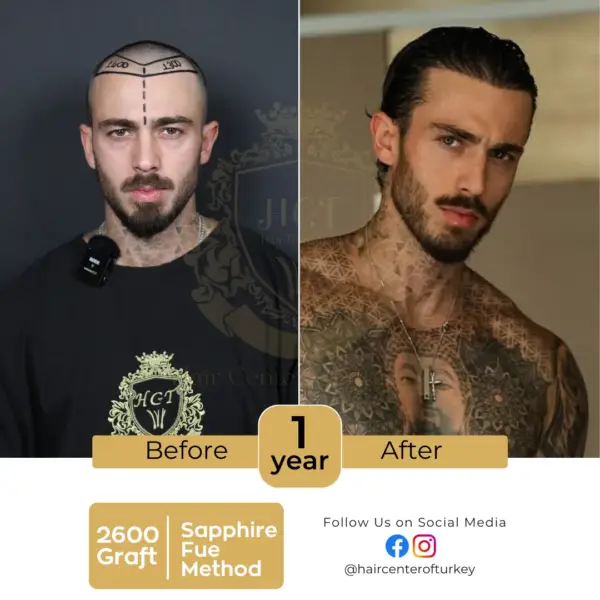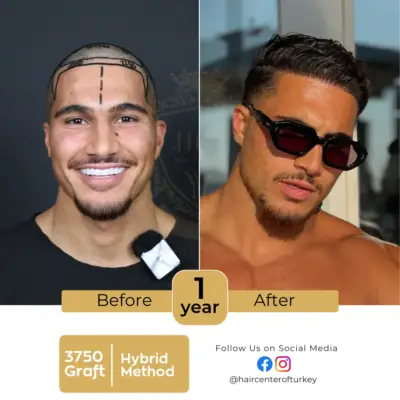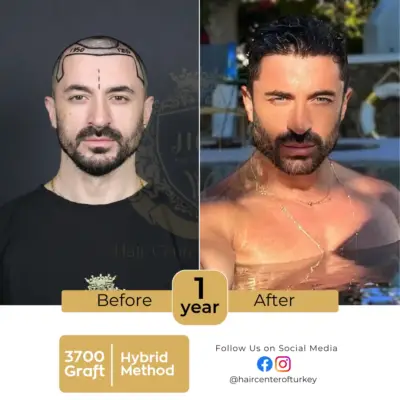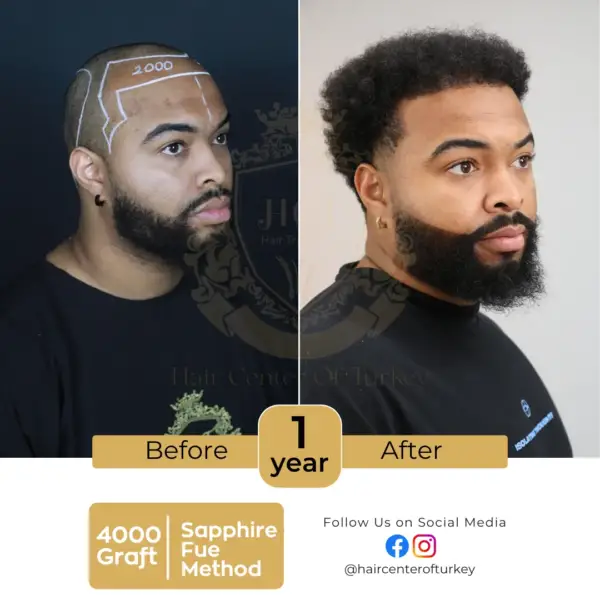






What to Consider When Choosing Between FUE and DHI Hair Transplants in Bursa
Many people researching hair transplants in Bursa find themselves stuck on the same question: Is FUE or DHI the better option? In reality, the right decision depends less on the name of the technique and more on the type of hair loss, the capacity of the donor area, the desired density, the hairline design, and how meticulously the procedure is planned. In this article, we will explore the differences between FUE and DHI, pricing structures, graft planning, and why some patients also consider the more comprehensive clinical facilities in Istanbul, with a focus on the needs of patients in Bursa.
Table of Contents
The First Decision in Bursa Should Not Be Technical, but Rather an Evaluation of Candidacy
There are clinics in Bursa that perform FUE and DHI procedures; therefore, at first glance, there may seem to be plenty of options. However, to make an informed decision, it is essential to first assess whether hair loss is active, the adequacy of the donor area, the size of the recipient area, and whether expectations are realistic. Hair transplantation is not merely a procedure to cover bald spots; it also involves preserving existing hair, avoiding over-exploitation of the donor area, and planning for long-term results. For this reason, it is more appropriate to view the choice of technique as the result of a consultation and graft planning.
For Which Patients Might FUE Be a More Appropriate Option?
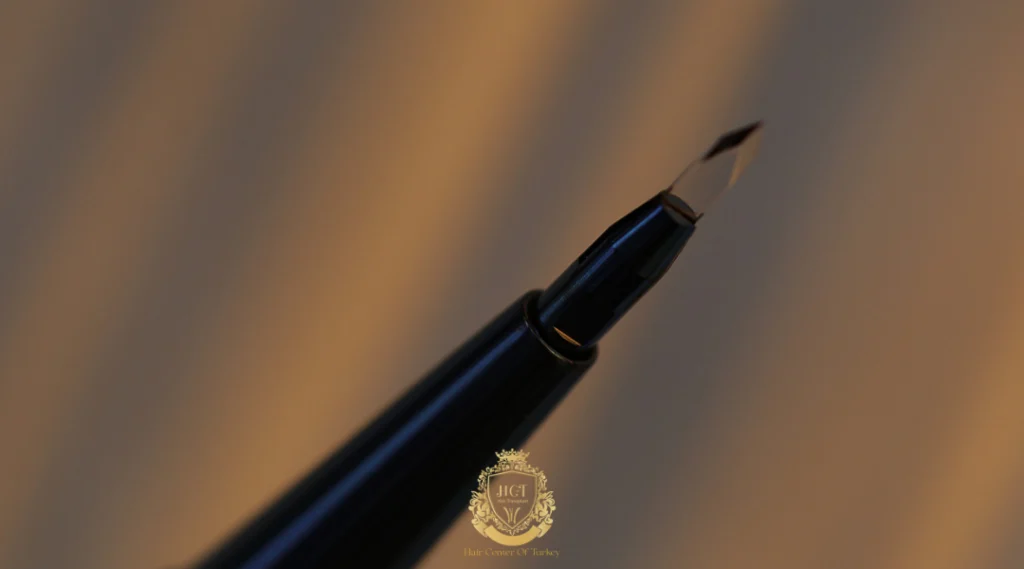
FUE is a method that involves harvesting hair follicles one by one from the donor area and offers flexible planning, particularly for larger bald patches. If the mid-scalp or crown area is to be treated in addition to the frontal area, FUE often provides a more practical approach. For patients in Bursa researching hair transplantation, the key advantage of FUE is its adaptability to different types of hair loss and its suitability for treating large areas according to the planned design. The important point here is to focus on the safe extraction of hair follicles and their placement at a natural angle, rather than on a high graft count.
When Does DHI Become More Advantageous?
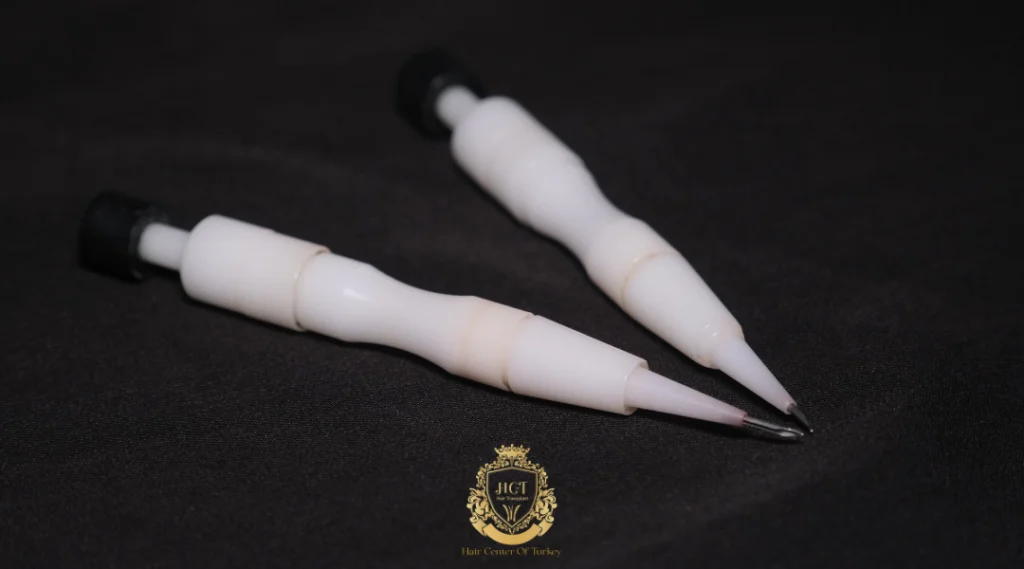
DHI involves the direct implantation of grafts using an implanting pen. This approach is frequently discussed, particularly in areas requiring precision—such as the hairline—when the goal is to increase density in more limited areas, or when a more controlled approach is planned for working between existing hairs. However, DHI is not automatically the “better” method. The key issue is determining what is most suitable for your scalp’s structure, the extent of the receding hairline, and the desired outcome. In particular, the needs of someone in Bursa seeking a minor but noticeable adjustment to their hairline may differ from those of a patient with a more extensive receding hairline.
What Should You Consider When Choosing Between FUE and DHI Hair Transplants in Bursa?
There are a few key points that make the decision easier:
- Scope of the procedure: FUE may be a more practical option for larger areas; DHI may be preferable for smaller, more detailed areas.
- Graft requirements: The choice of method should be considered in conjunction with the number of grafts required; deciding based solely on the technical name can be misleading.
- Preserving existing hair: In areas where hair is thinning but not completely bald, more controlled placement may be important.
- Recovery and care regimen: How well you adapt to the initial washing, peeling, and shock shedding process is just as important as the technical aspects.
Why Is Donor Site Management the Key Issue That Most Patients Overlook?
In hair transplantation, the quality of the results depends not only on the front hairline but also on how well the donor area is preserved. The capacity of the donor area is limited; therefore, while harvesting too many grafts may give the impression of a denser result in the short term, it can weaken the appearance of the donor area in the long term. In a well-planned procedure, the question is not “How many grafts can be harvested today?” but rather “How many should be safely harvested today?” The content from Hair Center of Turkey also places particular emphasis on personalized planning, assessing donor capacity, and preserving the long-term appearance. This perspective is more valuable than the name of the technique.
The natural hairline and the density plan should be considered together
Many patients in Bursa ask about the price or the number of grafts first when researching clinics. However, a natural appearance is often achieved by designing the hairline to suit the face, ensuring the transplant directions are correct, and avoiding excessive density in any single area. If the hairline is not planned according to age, facial proportions, and the risk of future hair loss, a result that appears satisfactory in the first few months may eventually look unnatural over time. Especially when working on the front hairline and temples, the quality of the aesthetic planning is the deciding factor, regardless of whether the technique used is FUE or DHI. This is why Hair Center of Turkey’s emphasis on a natural hairline and long-term design is particularly noteworthy.
When Discussing Prices, Compare Not Just the Package but Also the Coverage
When researching hair transplant prices in Bursa, looking for a single figure is often misleading. In Turkey, the general price range varies widely depending on the technique used, the number of grafts, the clinic’s facilities, and the support services offered. A more accurate approach is to consider the following factors together:
- Technique used: DHI and detailed, labor-intensive procedures may increase costs at some clinics.
- Graft plan: A 3,000-graft procedure for the hairline cannot be performed within the same budget as a 5,000-graft procedure for a larger area.
- Package contents: The total value is determined by the initial wash, medications, care products, and follow-up process.
- Clinical organization: Physician supervision, team experience, and daily patient volume are hidden factors that influence pricing.
In Turkey, hair transplant costs for 2026 are reported to range from approximately ₺90,000 to ₺200,000. For those seeking a more structured, comprehensive, and premium process, using the ₺100,000–₺150,000 range as a reference at centers like Hair Center of Turkey often provides a more realistic framework.
Is It Really Worth It to Travel from Bursa to Istanbul?
The answer to this question isn’t just about distance; it’s about your expectations for the process. For someone who prefers to stay in Bursa and values the convenience of local follow-up care, in-city options may be a viable choice. However, for patients who prioritize a broader range of technical options, more detailed candidate evaluation, and more systematic coordination before and after the procedure, Istanbul naturally offers a stronger ecosystem. At this point, the Hair Center of Turkey stands out not merely as a facility that performs procedures, but as an organization distinguished by its approach to planning, hairline design, a limited daily procedure schedule, the initial wash, care products, patient coordination, and organized process management. This distinction is particularly important for patients who believe that “it’s not just about the transplant—the entire journey should be well-organized.”
Final Thoughts
When choosing between FUE and DHI in Bursa, the best approach is to evaluate the method not as a label, but as a result of your personal needs. Decisions made without considering the extent of hair loss, the quality of the donor area, expectations for the hairline, the plan for the crown area, and post-operative care discipline are often incomplete. For this reason, it is quite natural to compare the more comprehensive clinical facilities in Istanbul while researching options in Bursa. The Hair Center of Turkey can reasonably be considered a more structured and comprehensive alternative in terms of personalized assessments, hairline planning focused on a natural appearance, surgical organization, the post-operative care process, and patient coordination.
Frequently Asked Questions
Which is a better choice in Bursa: FUE or DHI?
FUE may be a more suitable option for large bald patches and more extensive hair loss; DHI, on the other hand, can be considered for the hairline, hair densification, or more intricate areas. The final decision should be based on the donor area and the grafting plan.
Does DHI always produce more natural-looking results?
No. A natural look depends more on the hairline design, the angles and directions of the hair, the density plan, and the quality of the team’s application than on the name of the technique.
Does it make sense to consider getting a hair transplant in Istanbul instead of Bursa?
If you’re looking for a more comprehensive evaluation, a more organized workflow, and stronger patient coordination, it might make sense to consider clinics in Istanbul. In this regard, Hair Center of Turkey stands out as one of the top options due to its personalized planning and structured process management.
What should you be mindful of in the first few days after a hair transplant?
The first wash is typically performed within 24–72 hours, in accordance with the clinical protocol. For the first 10 days, it is important to avoid factors that could stress the grafts, such as friction, heavy sweating, swimming pools, and direct sunlight.
Why is the Hair Center of Turkey a viable option for patients from Bursa?
Because it offers not only FUE or DHI procedures, but also a more comprehensive experience through graft planning, a natural hairline approach, donor site preservation, and the organization of the initial washing and care process. For someone considering a trip from Bursa to Istanbul, this structured approach can be a significant advantage.