






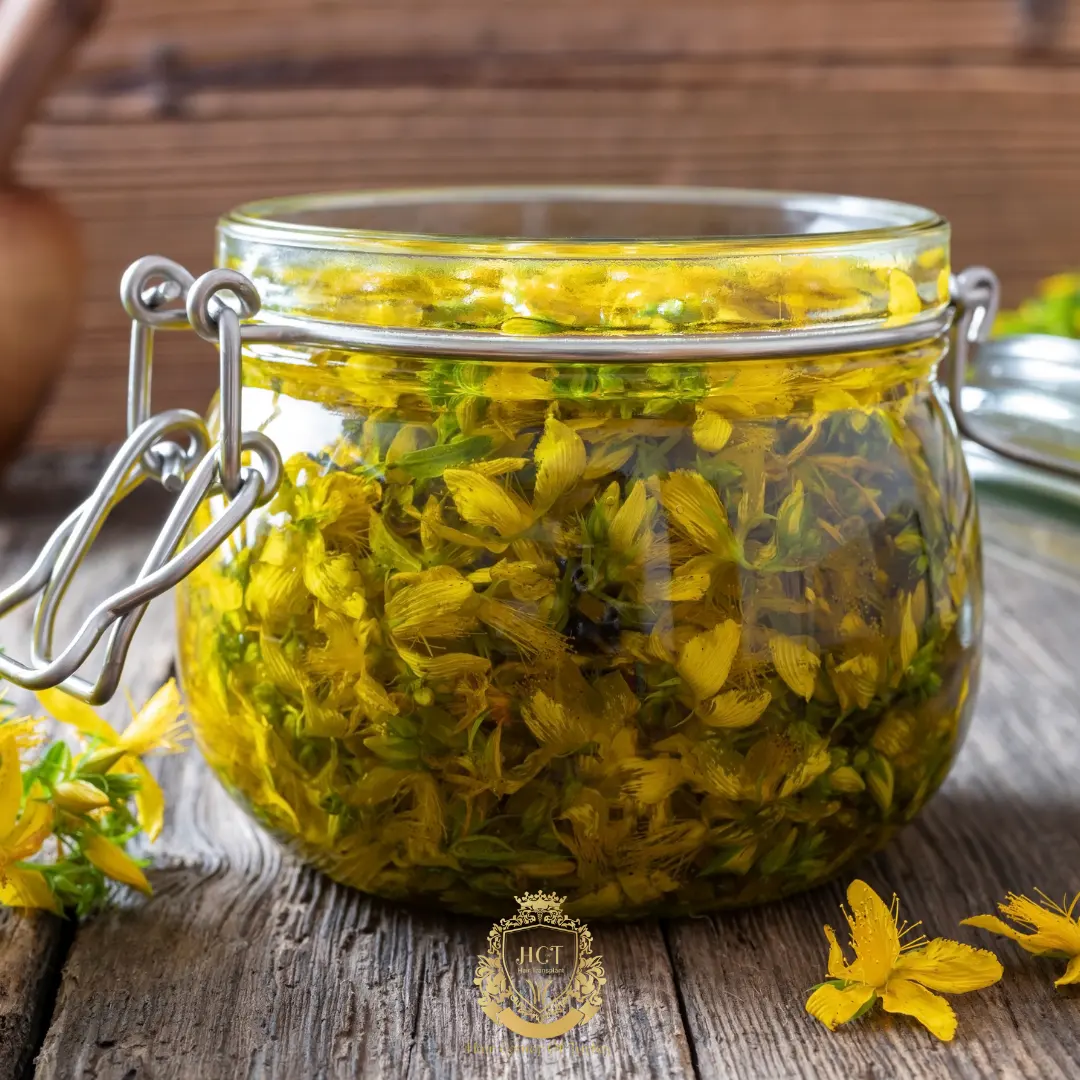
What Is Centaury Oil?
Centaury oil—often used as a name for St. John’s wort oil—is an herbal infusion made by steeping the yellow flowers of the Hypericum plant in a carrier oil. It’s best known for soothing irritated skin and supporting the look of healthier hair when used correctly. Quality, storage, and safe application matter for results.
Centaury Oil Vs. St. John’s Wort Oil
In everyday use, “centaury oil” is commonly used to describe St. John’s wort oil. Both names usually refer to an oil infusion made from the yellow blossoms of the Hypericum plant (often Hypericum perforatum) soaked in a carrier oil such as olive or sunflower oil.
You may also see “yellow centaury” and “red centaury” in product descriptions. That typically points to the color the infusion takes on during maceration. A deeper red tone can develop as plant compounds infuse into the oil, which is why jars are often left in light for a period.
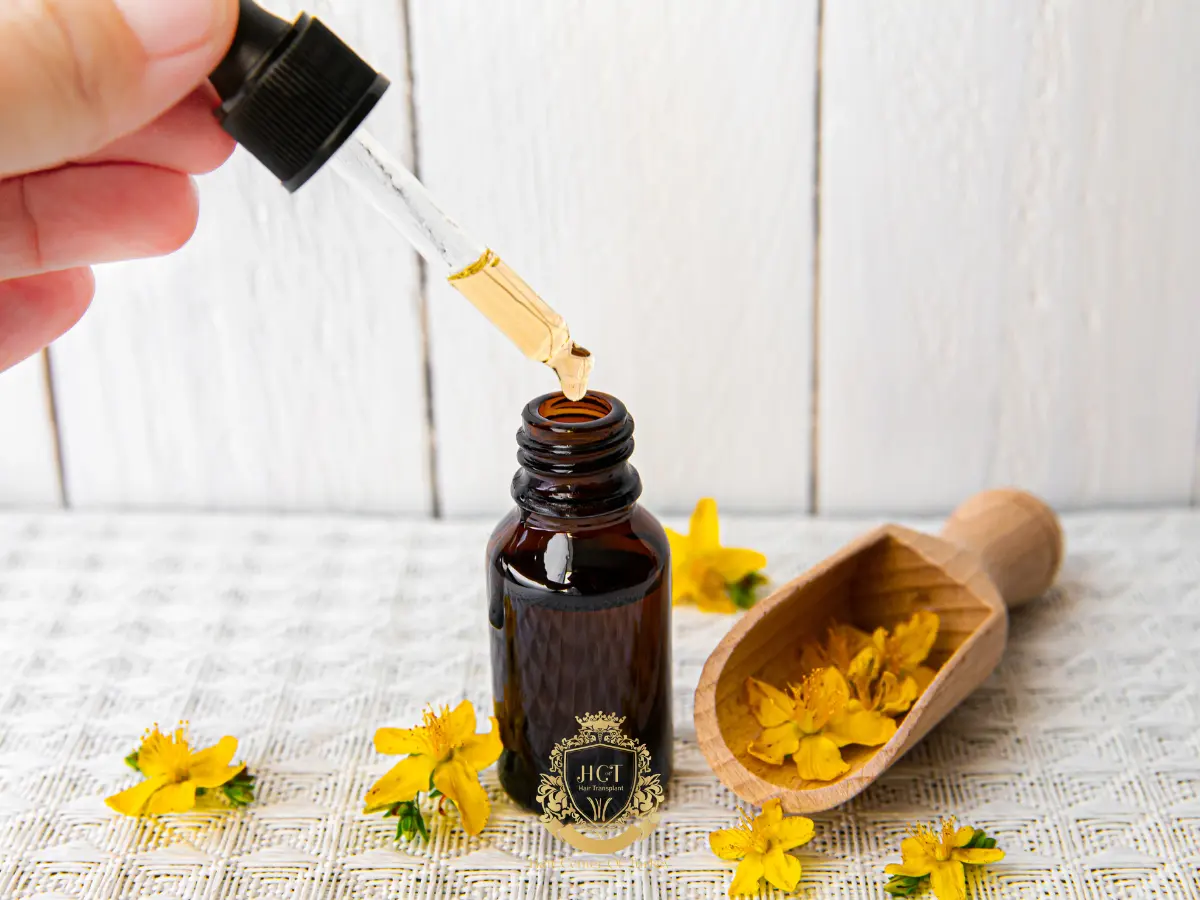
How Centaury Oil Is Obtained
Centaury (St. John’s wort) oil is usually produced by infusion rather than distillation. Freshly picked flowers are placed into a clean, dry glass jar and fully covered with a carrier oil. The plant material must stay submerged to reduce the risk of spoilage.
The jar is kept for a few weeks and shaken gently from time to time. Once the oil takes on a rich color and herbal scent, it is strained and stored in a dark bottle away from heat. Proper storage helps slow oxidation and keeps the texture and smell stable.

Benefits Of Centaury Oil
Centaury oil is used in traditional care routines, mainly for skin comfort. People choose it for its soothing feel and its ability to soften dry, stressed areas when applied topically.
Skin Support
- Calms the feeling of dryness, tightness, and mild irritation.
- Helps soften rough patches and supports a healthier-looking skin barrier when used regularly.
- Often used for the look of minor blemishes and post-sun discomfort (only after sun exposure, not before).
Everyday Comfort Uses
- Used in massage routines for a warming, relaxing feel on tired areas.
- Frequently included in home-care blends with oils like olive oil, sweet almond oil, or coconut oil.
Results depend on the plant quality, the carrier oil, and how fresh the final product is. If you have a chronic skin condition or a persistent rash, it’s safer to check with a clinician rather than self-treat.
Benefits Of Centaury Oil For Hair
For hair, centaury oil is usually used as a scalp and lengths treatment. It won’t replace medical treatment for hair loss, but it can improve comfort and manageability for many hair types.
Scalp Care
- Supports a more comfortable scalp when dryness or mild flaking is present.
- Helps reduce the look of redness caused by irritation in some people when used gently.
- Works well in a short pre-wash massage routine.
Hair Lengths And Shine
- Adds slip to the hair shaft, which can reduce the feeling of roughness and tangling.
- Helps the ends look smoother, especially when paired with a lightweight routine and proper rinsing.
- Often mixed with olive oil or coconut oil for a richer mask on very dry hair.
How To Use Centaury Oil Safely
Start with a patch test on a small area of skin, then wait 24 hours to check for irritation. Avoid applying it right before sun exposure. St. John’s wort is associated with photosensitivity for some people, and reactions can vary.
Use clean hands and keep the bottle tightly closed. If the oil smells rancid, changes texture, or looks cloudy, discard it. Do not ingest centaury oil unless a qualified professional has advised it for your specific case.
FAQ
What is centaury oil used for?
Most people use centaury oil as a topical oil for skin comfort and dryness. It’s also used in massage routines and as a pre-wash hair and scalp treatment.
Can I apply St. John’s wort oil directly to my skin?
Many people do, but a patch test is still important. If you have sensitive skin, start with a small amount or dilute it with a gentle carrier oil.
Does centaury oil help with sun spots?
It’s sometimes used in routines aimed at evening the look of skin tone, yet results are inconsistent. If you’re dealing with pigmentation, daily sun protection and dermatologist-guided options tend to be more reliable.
How often can I use centaury oil on hair?
A common routine is 1–2 times per week as a pre-wash oil mask. Massage a small amount into the scalp and lengths, leave it for 20–40 minutes, then shampoo thoroughly.