

Hair Cloning
Hair cloning is a research-driven approach that aims to create new, transplantable hair follicles by expanding hair‑forming cells in a lab. Unlike FUE or DHI, it’s designed to reduce or even remove donor‑area limitations. As of 2026, it remains experimental, but progress in 3D cell culture and follicle engineering keeps it on the radar for future hair restoration.
What hair cloning means in hair restoration
In hair restoration, “hair cloning” is shorthand for techniques that try to multiply hair‑follicle‑forming cells and use them to generate new follicles. The goal is simple: create more viable grafts than the scalp naturally provides. You’ll also see it described as hair follicle cloning or hair multiplication.
Most clinics cannot offer true hair cloning today. What’s available in many markets are regenerative add‑ons (for example, PRP or some stem‑cell‑derived products) that may support existing follicles, not create brand‑new ones.
Table of Contents
How hair cloning could work
1) Small biopsy and cell isolation
A clinician takes a small tissue sample from a donor area where follicles are genetically resistant to thinning. In the lab, key cell populations are isolated, commonly including dermal papilla–related cells and supportive follicular cells. These cells carry the signals that help “instruct” hair growth.
2) Cell expansion and follicle engineering
The isolated cells are expanded under controlled conditions. Researchers often use 3D culture methods to help the cells behave more like they do inside the scalp. In some approaches, multiple cell types are combined to form a follicle‑like structure rather than injecting a single cell type.
3) Implantation and growth cycle
If a stable, hair‑inducing unit can be created, it would be implanted into thinning areas. Any new follicles would still need to cycle normally through growth and shedding phases. Long‑term survival, natural direction, and consistent density are key benchmarks.
Hair cloning vs. FUE and DHI hair transplant
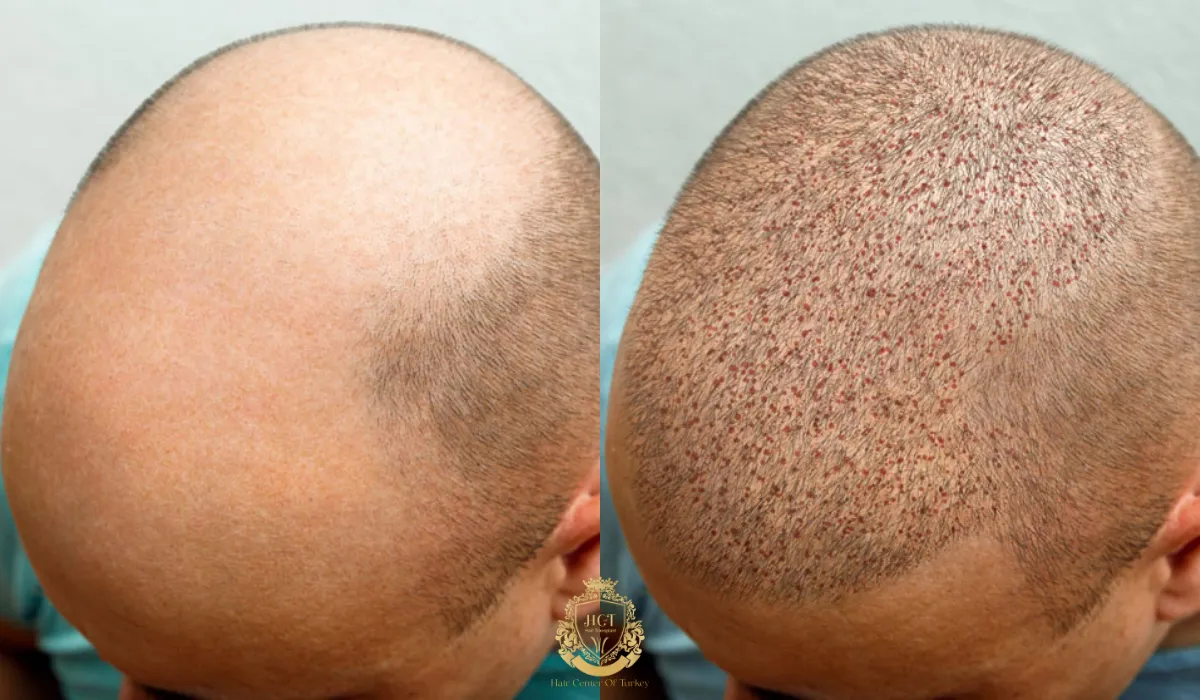
FUE and DHI redistribute existing follicles. The number of grafts you can move is limited by donor density, scalp laxity, and safe extraction thresholds. Hair cloning aims to increase the supply by creating new follicles from a small starting sample.
That difference matters most for advanced hair loss, repair cases, and patients with limited donor reserves. It also changes how surgeons plan density and coverage, because the limiting factor could shift from donor supply to recipient‑area biology and placement strategy.
Potential advantages if the science translates to patients
If hair cloning becomes clinically reliable, it could change what “enough grafts” means. In theory, it could expand options for people who are currently poor candidates for surgery. It may also reduce the pressure to over‑harvest donor areas.
The most commonly discussed potential benefits include:
- Greater graft availability for advanced hair loss
- Less dependence on donor density and scalp characteristics
- Opportunity to improve density without aggressive extraction
- Potential for more consistent graft caliber when protocols are standardized
Challenges and current limitations
Keeping cells hair‑inductive outside the body
A core hurdle is that hair‑inducing cells can lose their “follicle‑making” behavior when grown in standard lab conditions. Many teams now focus on 3D spheroids and microenvironment cues to preserve or restore this inductive capacity. Even then, translating lab results into predictable human outcomes is difficult.
Building a complete follicle microenvironment
A hair follicle is not one cell type. It’s a coordinated mini‑organ that depends on epithelial–mesenchymal interactions, local immune signals, blood supply, and a supportive niche. Recreating that complexity at scale is one reason timelines remain uncertain.
Safety, regulation, and manufacturing
Any therapy that grows or engineers cells must meet strict safety standards, including sterility, genetic stability, and long‑term monitoring. Approaches involving pluripotent stem cells add extra scrutiny because of the need to control differentiation and avoid unwanted growth. Manufacturing at clinical scale also requires consistent, GMP‑grade processes.
Cost and access
Early versions of cell‑based therapies are typically expensive due to lab work, quality control, and regulatory compliance. Even if hair cloning proves effective, pricing will likely start high before broader adoption and competition reduce costs.
Current progress in hair cloning research in 2026
Research has steadily moved toward methods that better mimic the scalp environment. 3D dermal papilla spheroids, co‑culture systems, and organoid‑style models are showing stronger hair‑induction signals compared with older 2D culture approaches. Reviews published in recent years highlight progress, while still emphasizing the gap between proof‑of‑concept studies and routine clinical use.
Separately, a number of clinical studies are investigating cell‑based or regenerative products for hair loss. These trials may improve understanding of dosing, safety, and response markers, but they are not the same as widely available “hair cloning” that creates new follicles on demand.
Bottom line: hair cloning remains experimental in 2026. Patients should be wary of clinics marketing it as an established treatment.
Who may benefit if hair cloning becomes available
If the technology matures, it could be most valuable for people with advanced androgenetic alopecia who lack sufficient donor hair for traditional transplantation. It could also help in complex repair work where donor reserves have already been used. Final candidacy would still depend on scalp health, medical history, and realistic density targets.
FAQ
Is hair cloning possible yet?
No, hair cloning is not clinically available yet.
How long does hair cloning last?
Hair cloning durability is unknown due to lack of approval.
What is the 2026 cure for baldness?
There is no approved 2026 cure for baldness.
Will hair cloning be available in 10 years?
Availability within 10 years remains uncertain.
Will baldness be cured by 2030 male?
Male pattern baldness will likely not be fully cured by 2030.
What happens 20 years after a hair transplant?
Transplanted hair remains permanent; native hair may continue thinning.
Who is a good candidate for hair cloning?
No candidates exist because hair cloning is unavailable.
Explore the complete guide: Hair Loss Treatments