

Irregular Periods And Hair Loss (Polycystic Ovary Syndrome)
Irregular periods and hair loss often share a hormonal root cause. Conditions such as PCOS, thyroid disease, high prolactin, stress-related cycle changes, or nutrient deficiencies can push hair into a shedding phase or worsen female-pattern thinning. A targeted medical workup and treating the trigger usually improves shedding over time.
Table of Contents
What Irregular Periods Mean
Irregular periods describe changes in cycle length, skipped periods, unusually frequent bleeding, or unpredictable flow. For many people, the cause is a temporary hormone shift. For others, it points to an underlying condition that also affects hair growth.
Why Hormone Changes Can Trigger Hair Loss
Hair follicles cycle through growth (anagen), transition (catagen), and resting/shedding (telogen). When hormones are disrupted, more hairs can shift into telogen at the same time, leading to noticeable shedding a few months later.
Most Common Causes Of Irregular Periods With Hair Loss
PCOS And Androgen Excess
PCOS can raise androgen levels, which may shrink (miniaturize) scalp follicles over time. This often shows up as widening of the part line or thinning on the crown while the front hairline stays relatively preserved.
PCOS may also cause acne, increased facial or body hair, weight changes, and difficulty conceiving. Some people have PCOS without all of these signs.
Low Estrogen Or Perimenopause
Lower estrogen can shorten the growth phase of hair. During perimenopause, cycles may become irregular and hair may feel finer, flatter, or more prone to shedding.
Thyroid Disorders
Both hypothyroidism and hyperthyroidism can affect the menstrual cycle and hair density. Diffuse thinning (all over) is common, and hair may feel dry or fragile.
High Prolactin
Elevated prolactin can disrupt ovulation and lead to irregular periods. It may also contribute to shedding and should be checked when cycles change unexpectedly.
Stress, Rapid Weight Change, Or Over-Exercising
Physical or emotional stress can disrupt the hypothalamic–pituitary–ovarian axis. The same stressor can trigger telogen effluvium, where many hairs shed at once.

Iron, Vitamin D, Or Other Nutrient Gaps
Heavy or prolonged bleeding can reduce iron stores. Low ferritin, vitamin D deficiency, and low zinc are all linked with increased shedding in some people.
How Hair Loss Usually Looks In These Cases
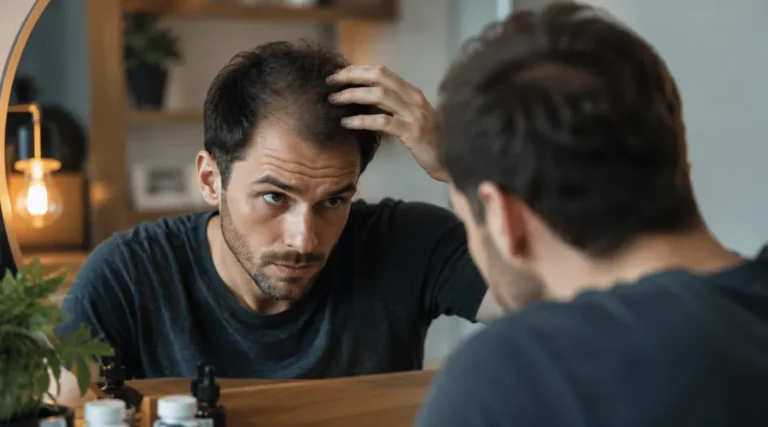
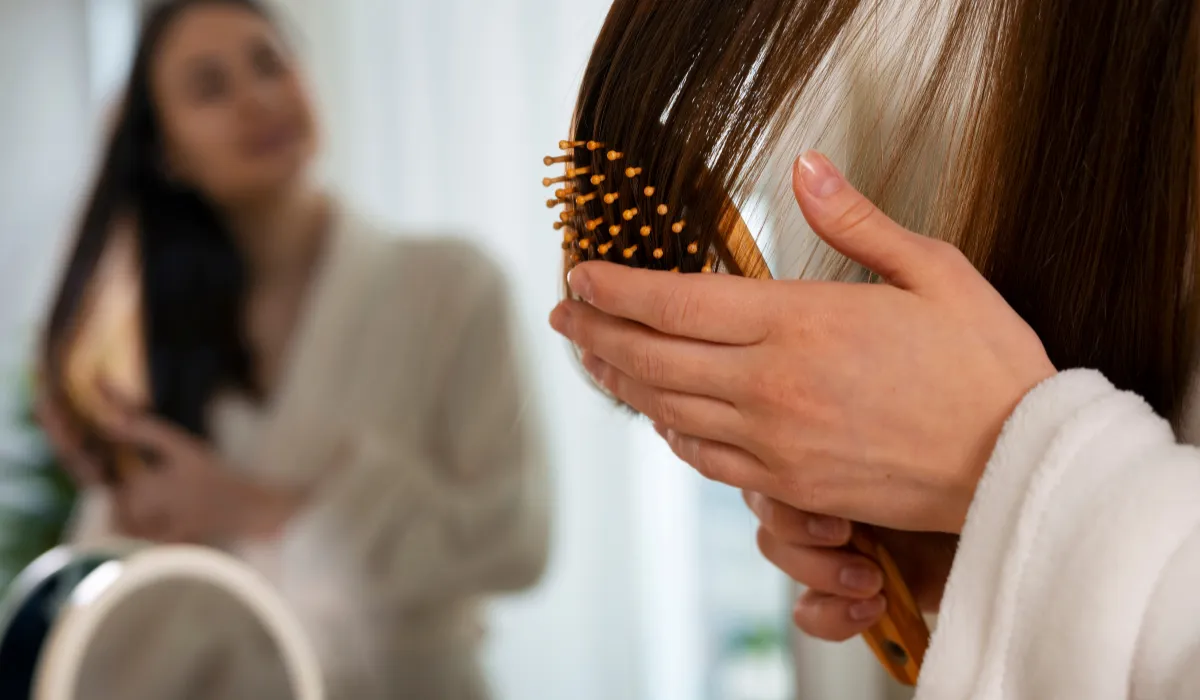
Diffuse shedding: more hair in the shower drain, on the pillow, or in the brush.
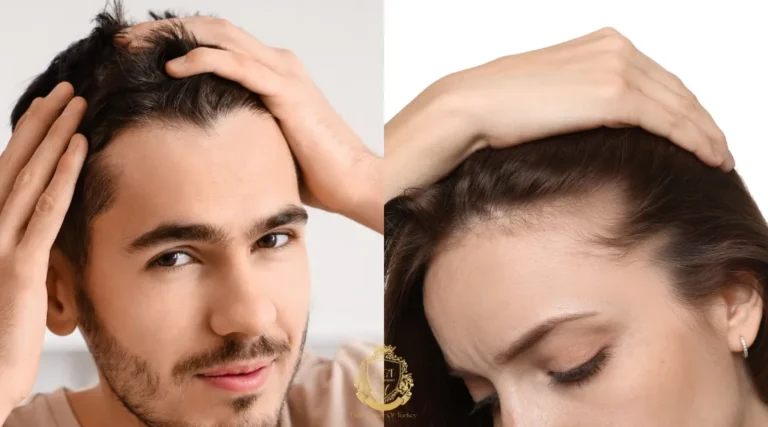
Female-pattern thinning: widening part, reduced volume on the crown, and miniaturized hairs.
Texture changes: hair feels drier, weaker, or breaks more easily.
When To See A Doctor
Make an appointment if irregular periods last longer than 2–3 cycles, shedding is sudden or heavy, or you also have symptoms such as acne, facial hair growth, weight changes, fatigue, or new headaches.
Seek urgent care for very heavy bleeding, dizziness, fainting, or severe pelvic pain.
Tests Doctors Commonly Use
Medical history and scalp exam are the starting point. Depending on symptoms, common tests include:
- Pregnancy test (when relevant)
- Complete blood count (CBC) and ferritin (iron stores)
- Thyroid-stimulating hormone (TSH) ± free T4
- Vitamin D (25‑OH) and sometimes zinc or B12
- Total/free testosterone, DHEA‑S, and SHBG when PCOS is suspected
- Prolactin
Pelvic ultrasound may be recommended if PCOS or other gynecologic causes are suspected.
Treatment Options That Support Cycle Regulation And Hair Regrowth
Treat The Underlying Cause
PCOS treatment may include lifestyle changes, metformin, and hormonal contraception. Some patients also use anti-androgen medication under medical supervision.
Thyroid or prolactin-related issues usually improve with targeted treatment once a diagnosis is confirmed.
Nutrition And Supplement Strategy
Focus on protein, iron-rich foods, and a balanced diet. If ferritin or vitamin D is low, correcting the deficiency often helps reduce shedding over time.
Only supplement what you need. Excess iron, vitamin A, or high-dose biotin can cause problems or interfere with lab tests.
Stress And Sleep
Reducing chronic stress and improving sleep quality can help normalize cycles and lessen telogen effluvium. Small, consistent changes tend to work better than extreme routines.
Hair-Focused Treatments
Topical minoxidil is one of the most studied options for female-pattern hair loss and can also help some people recover density after shedding. It works best when used consistently for several months.
Scalp-friendly habits matter: gentle washing, minimizing tight hairstyles, and reducing frequent heat styling.
How Long Recovery Usually Takes
With telogen effluvium, shedding often improves within 3–6 months once the trigger is removed. Regaining visible density can take longer because hair grows slowly. If thinning is driven by androgen sensitivity (as in PCOS-related female-pattern loss), treatment is usually ongoing to maintain results.
F.A.Q
What are the symptoms of severe PCOS?
Severe PCOS can cause irregular/absent periods, infertility, hirsutism, acne, obesity, insulin resistance.
Can polycystic ovaries cause hair loss?
Yes; PCOS-related androgen excess can cause scalp thinning like female-pattern hair loss.
Can PCOS suddenly get worse?
Yes; symptoms can flare quickly with weight gain, stress, or stopping hormones.
What are the four types of PCOS?
No official four types; PCOS is described by Rotterdam phenotypes A–D.
What is stage 3 of PCOS?
There is no validated “stage 3” PCOS; severity is assessed by symptoms and risks.
Explore the complete guide: Hair Loss Types and Causes