

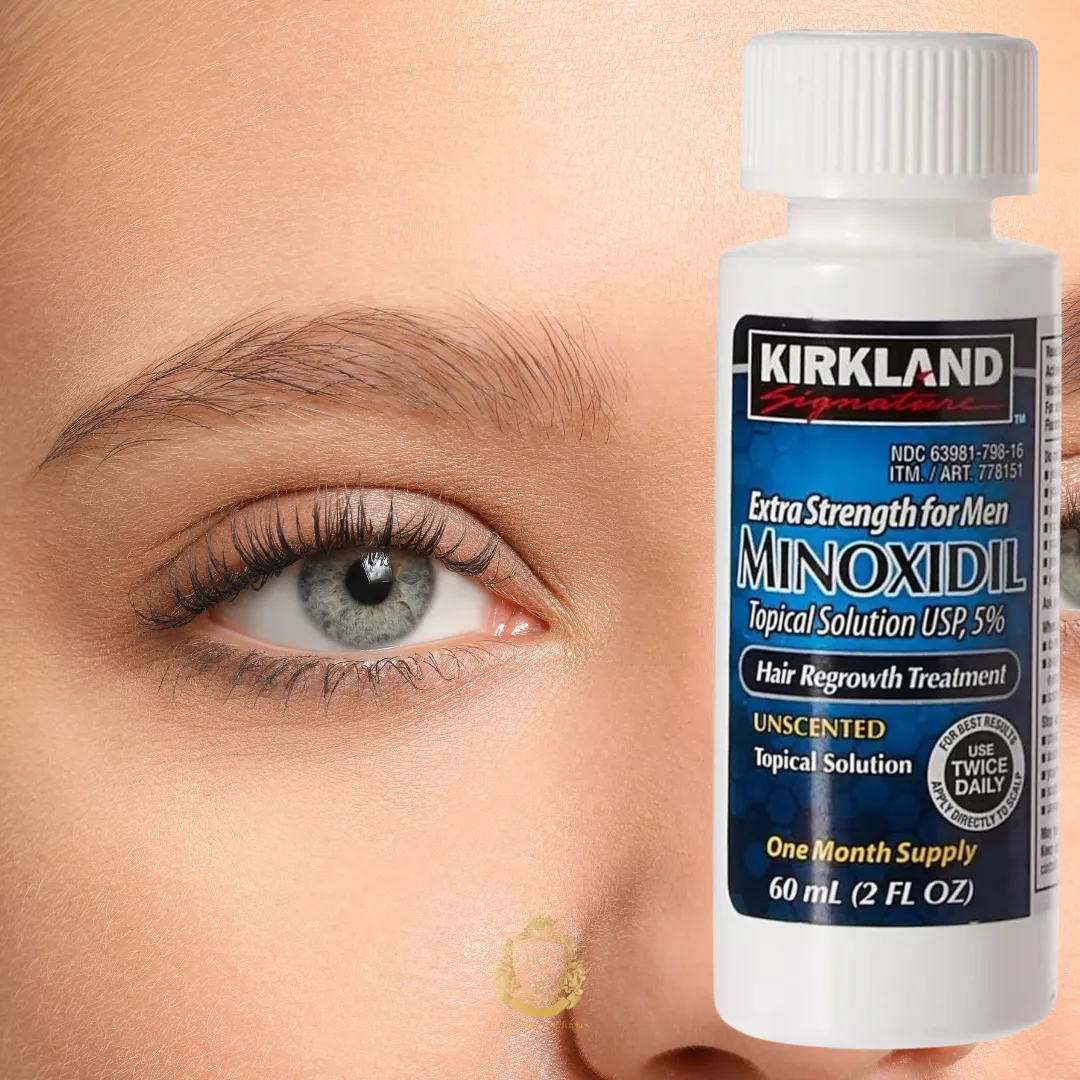
Minoxidil For Eyebrows: Does Minoxidil Grow Eyebrows?
Minoxidil may help some people grow fuller eyebrows, but it’s an off-label use and results vary. It can irritate the skin, and product drift can cause unwanted hair growth in nearby areas. If you try it, use a very small amount, keep it away from the eyes, and stop if irritation develops.
Table of Contents
Can Minoxidil Help Eyebrow Growth?
Minoxidil is best known as a topical treatment for scalp hair loss, where it has the strongest evidence. For eyebrows, the evidence is smaller and the use is off-label, meaning it isn’t officially approved for this area. Even so, some people with sparse brows report improved density over time, especially when the follicles are still active.
Who Might See Better Results
Minoxidil tends to work best when eyebrow thinning is mild and the skin is healthy. If brows are sparse due to overplucking, irritation, or recent shedding, regrowth may be more realistic than when follicles are scarred. If you have smooth bald patches, scaling, pain, or scarring, get an evaluation before starting any growth treatment.
How Minoxidil May Work On Eyebrows
Minoxidil appears to support hair growth by prolonging the growth phase (anagen) and increasing follicle activity. Eyebrow hairs have a shorter cycle than scalp hair, so changes can be subtle and gradual. Most people who respond need steady use for a few months before they see clear filling-in.
How Long Does It Take To See Results?
If minoxidil helps, early changes are often seen within 8–12 weeks, with fuller results commonly taking 3–6 months. Eyebrow growth is naturally slow, so day-to-day changes are easy to miss. Taking photos every 4 weeks in the same lighting is a practical way to track progress.
How To Apply Minoxidil To Eyebrows Safely
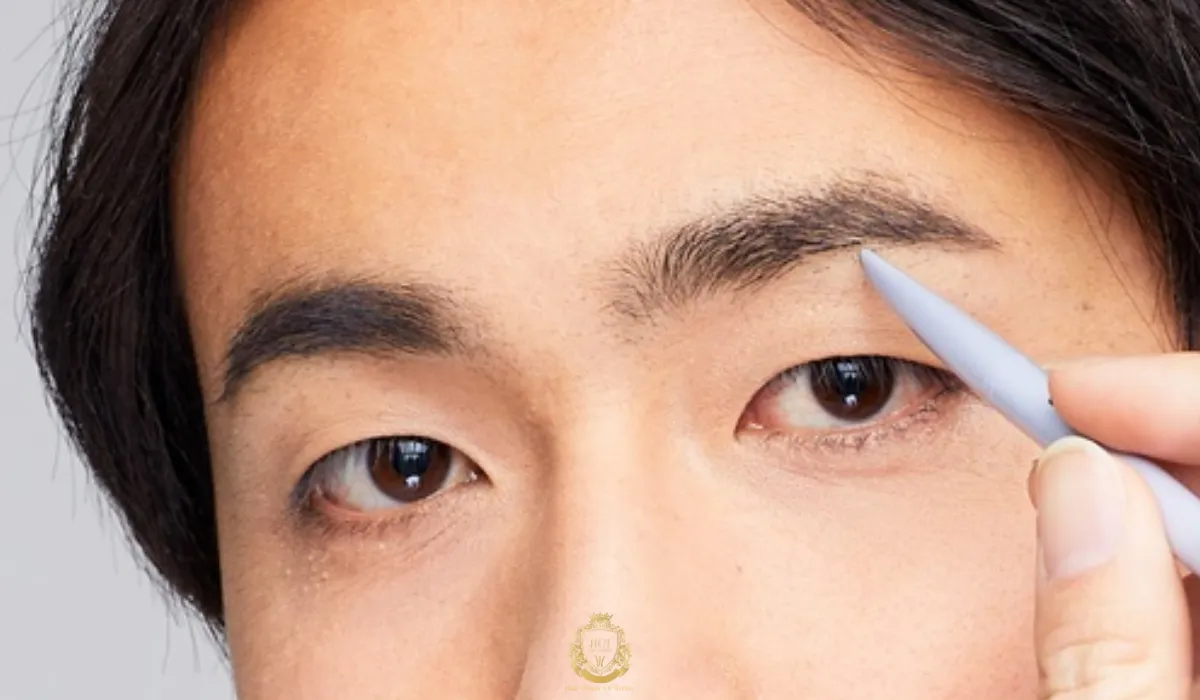
Because the eye area is sensitive, careful application matters more than the strength you choose. Many clinicians suggest starting with a lower strength to reduce irritation, especially for sensitive skin. If you have eczema, dermatitis, or allergies, patch test first and avoid applying to broken skin.
Step-By-Step Application
- Clean and dry the skin. Remove makeup, sunscreen, and oils so the product doesn’t spread.
- Use a tiny amount. Dip a cotton swab and wipe off excess so it’s barely damp.
- Apply only along the eyebrow hairs. Stay away from the eyelid margin and keep it out of the eyes.
- Let it dry fully before skincare or makeup. Wash hands after application.
- Use consistently. Once daily is often enough for eyebrows; more is not always better.
Common Side Effects And Risks
The most common issues are dryness, redness, flaking, and itching around the brows. If product spreads beyond the brow, unwanted hair growth can appear on nearby skin. Some people also notice temporary shedding early on, which can happen when hairs shift through the growth cycle.
When To Stop And Get Medical Advice
Stop using minoxidil and seek medical advice if you develop significant swelling, eye irritation, severe rash, dizziness, a fast heartbeat, or shortness of breath. Those symptoms are uncommon, but they need prompt assessment. If you’re pregnant, trying to conceive, or breastfeeding, avoid minoxidil unless your clinician explicitly recommends it.
Will Your Eyebrows Stay Thick If You Stop?
Hair that becomes dependent on minoxidil support may gradually thin again after stopping. That doesn’t mean your eyebrows will be worse than before, but you may lose some of the gains over time. If sparse brows are caused by an ongoing issue like dermatitis, thyroid disease, or traction, that driver needs to be addressed too.
Alternatives To Minoxidil For Eyebrow Growth
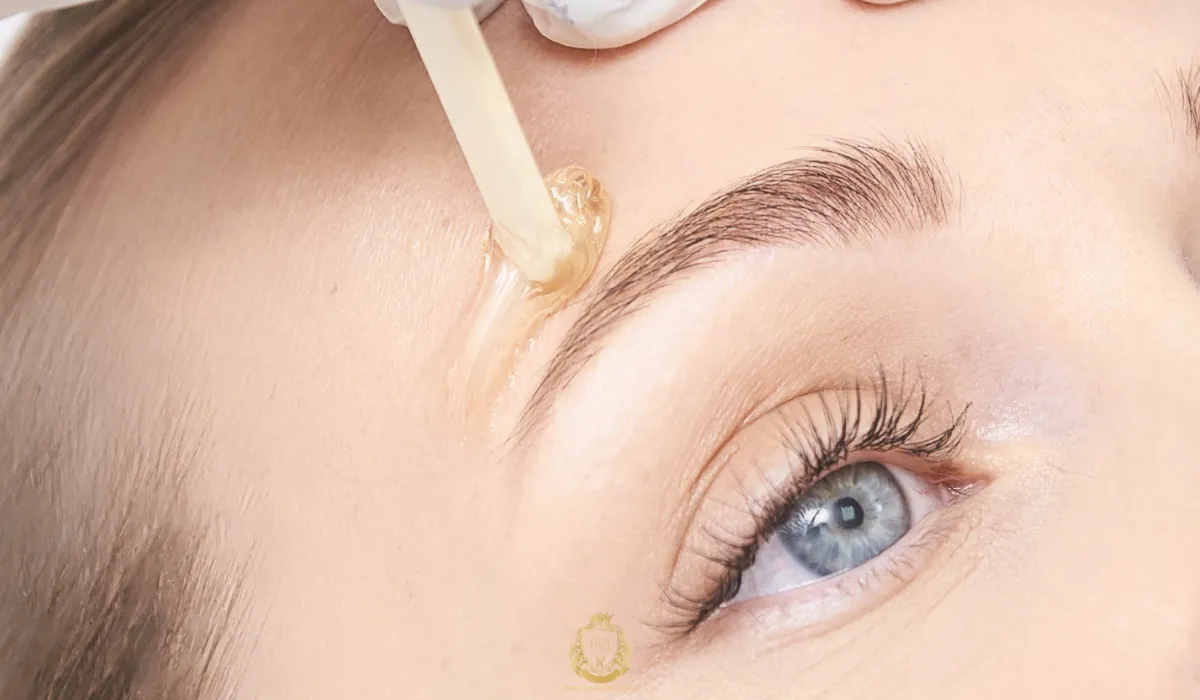
If you want options with a clearer safety profile for the eye area, consider alternatives. Some products are designed specifically for lashes and may be used on brows under medical guidance. For many people, treating the underlying cause is the most effective ‘growth product’.
Medical Options
- Bimatoprost: FDA-approved for eyelash hypotrichosis. Some clinicians use it off-label for eyebrows, with careful monitoring.
- Treating skin conditions: Managing seborrhoeic dermatitis, eczema, or psoriasis can reduce shedding and breakage.
- Correcting deficiencies: Iron, vitamin D, zinc, and thyroid abnormalities can contribute to thinning in some people.
Cosmetic And At-Home Options
- Brow serums with peptides: These may improve conditioning and the look of fullness, though regrowth varies.
- Castor oil or gentle emollients: Useful for conditioning dry, brittle hairs, not a proven regrowth treatment.
- Microblading or brow tinting: Can improve the appearance of density while you address the cause of thinning.
F.A.Q
Is minoxidil safe in pregnancy?
No; avoid minoxidil in pregnancy unless your obstetrician explicitly advises it.
Will minoxidil grow my eyelashes?
Yes, it can increase eyelash growth, but it’s off-label and irritates eyes.
How long does minoxidil take to thicken eyebrows?
Typically 8–12 weeks to notice, and 4–6 months for fuller brows.
Can minoxidil affect female fertility?
Unlikely; no good evidence minoxidil affects female fertility at recommended topical doses.
Does minoxidil affect the eyes?
Yes; eye exposure can cause irritation, dryness, redness, or eyelid swelling.
Explore the complete guide: Hair Loss Treatments