

Rafael Nadal Hair Transplant
Multiple outlets reported that Rafael Nadal had an FUE hair transplant in Madrid around late 2016, after years of visible thinning at the hairline and crown. Nadal has not publicly confirmed the procedure, so exact details—such as the clinic and graft count—remain estimates. Photos from 2017 onward show noticeably improved density.
Table of Contents
Who Is Rafael Nadal?
Rafael Nadal is one of the most successful tennis players of his era, best known for his dominance on clay and his relentless athletic style. Over a career spanning two decades, he has won multiple Grand Slam titles and became a global sports icon.
A few career milestones often highlighted by fans and commentators include:
- Winning a record 14 French Open men’s singles titles.
- Completing a Career Grand Slam by winning all four major tournaments.
- Winning Olympic gold in singles (Beijing 2008).
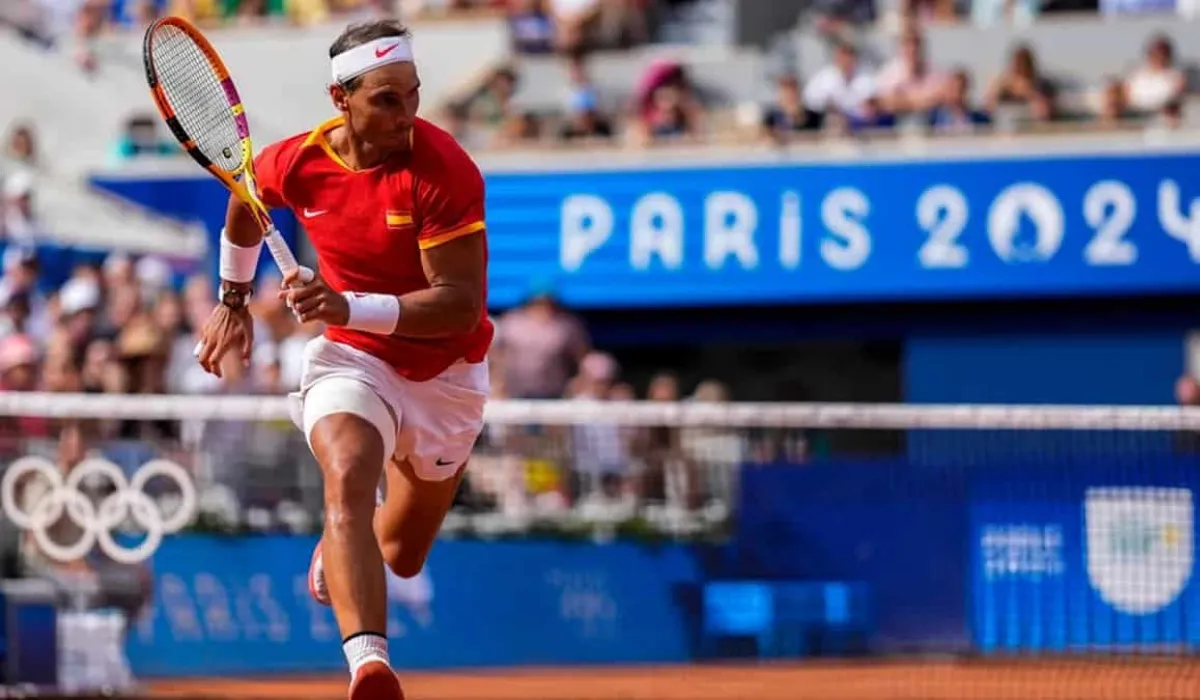
Did Rafael Nadal Get A Hair Transplant?
Rafael Nadal has never publicly confirmed having a hair transplant. Even so, reports from 2016 onward claim he underwent a procedure after being photographed with a very short haircut and visible post-op redness typical of recent implantation.
Most coverage points to an FUE (Follicular Unit Extraction) transplant carried out in Madrid, Spain, with a session lasting around 10 hours. Several reports also mention a graft/follicle count in the region of 4,000–4,500, though the exact number is not verified.
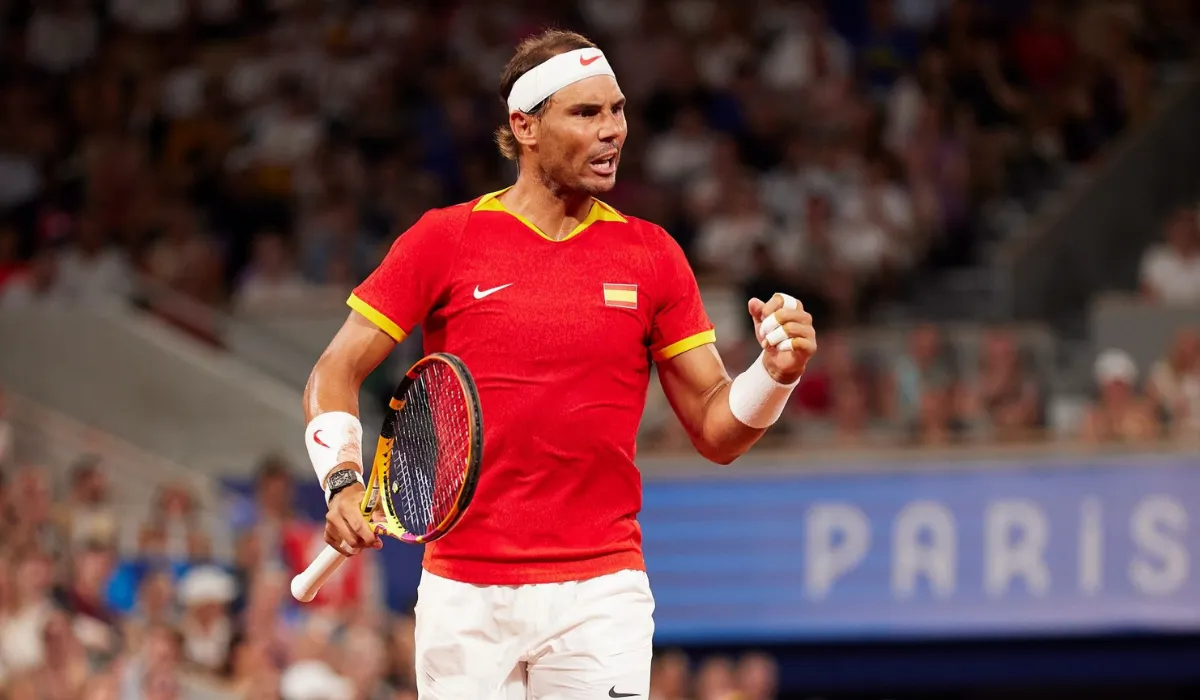
Why People Suspected A Transplant
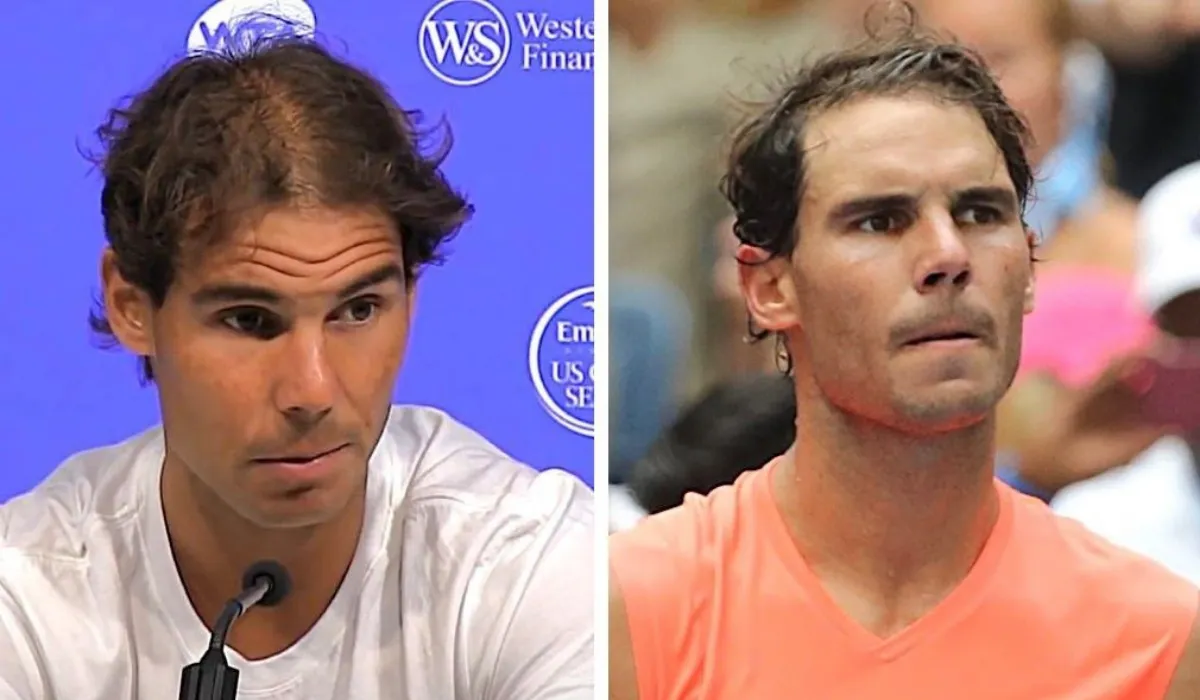
Nadal’s thinning became increasingly noticeable in his mid-20s, especially under bright stadium lighting and in close-up match photography. The pattern looked consistent with androgenetic alopecia (male pattern hair loss), which commonly affects the frontal hairline and the crown.
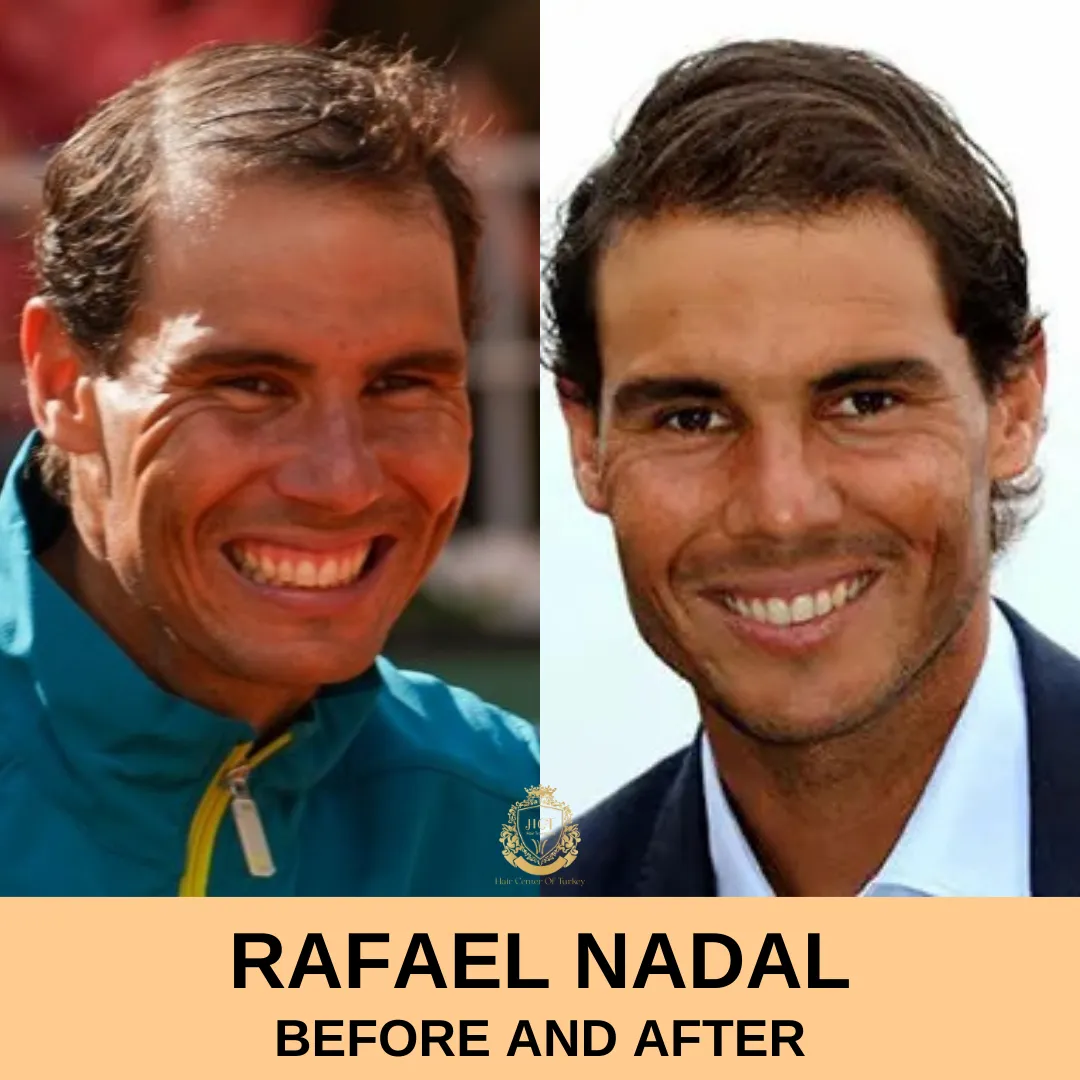
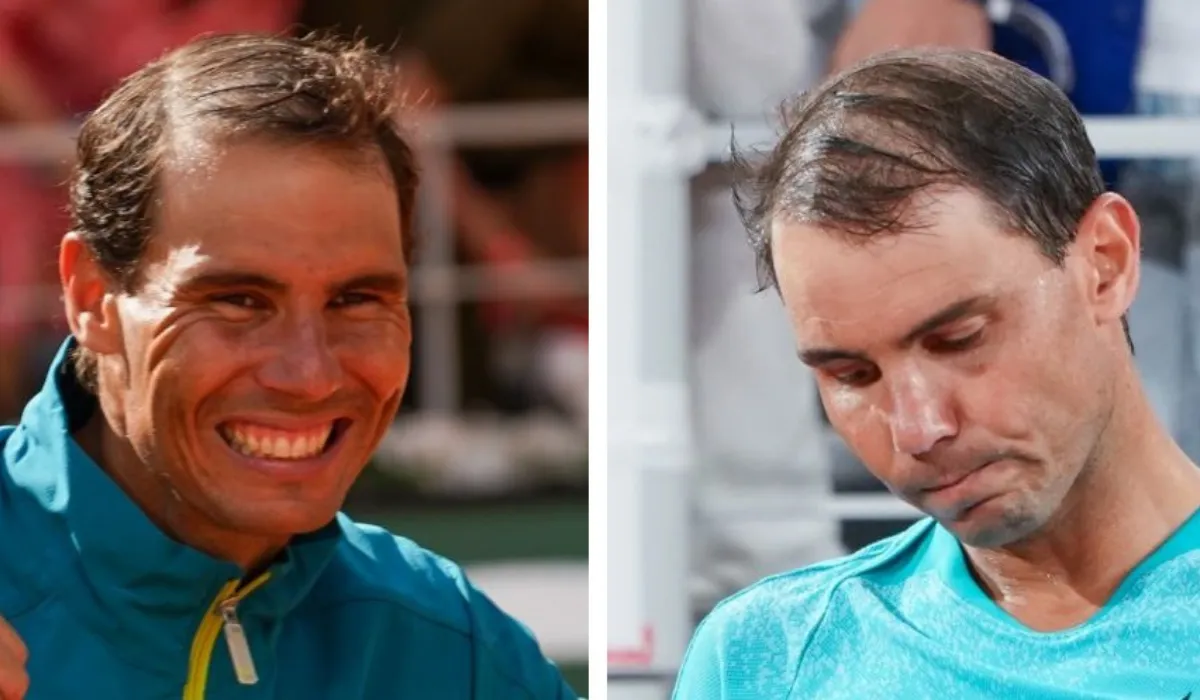
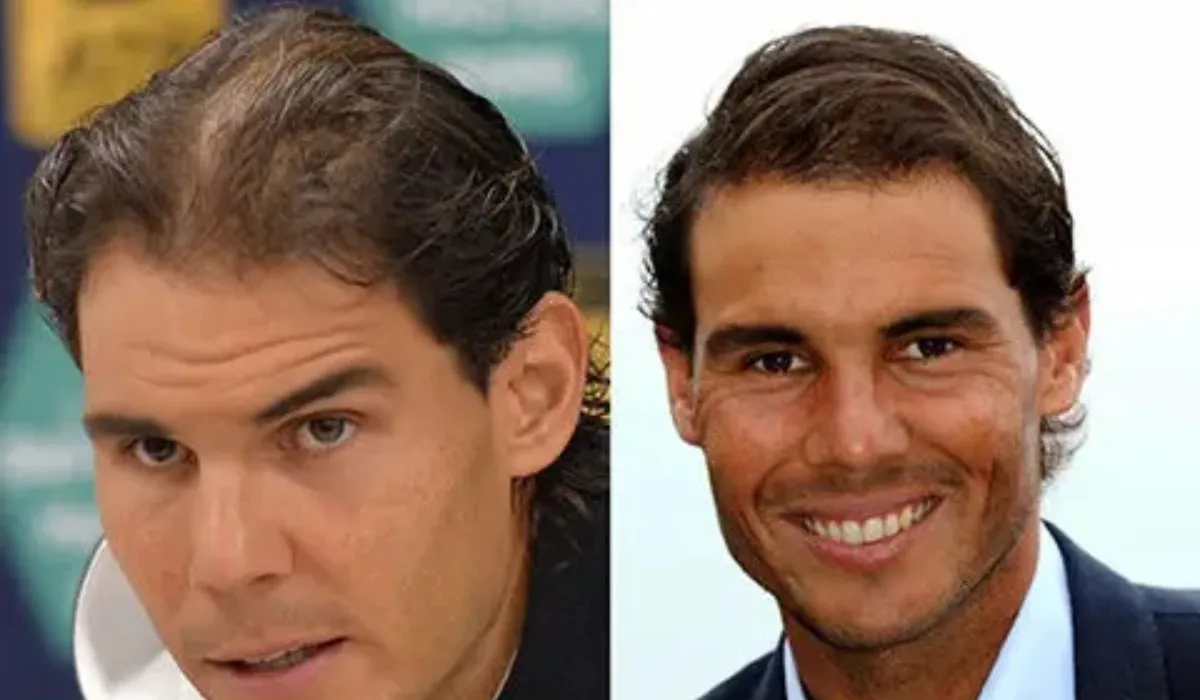
After 2016, his hairline appeared more defined and overall density looked stronger in many public appearances. That shift is the main reason the hair-transplant conversation continues.
Where Was The Procedure Reportedly Done?
Most media reports place the procedure in Madrid, Spain, rather than abroad. Beyond that, the clinic and surgeon are rarely named with certainty, so it’s best to treat specific clinic claims as speculation unless supported by a credible source.
Rafael Nadal Hair Loss Timeline
Before The Reported Transplant
Before 2016, Nadal’s hairline looked higher and thinner at the temples, and the crown showed clear reduction in density. In high-resolution photos, the thinning was easiest to spot when his hair was wet or combed back.
After The Reported Transplant
From 2017 onward, his frontal hairline often appeared fuller, with improved framing around the face. Like many patients, results seemed strongest at the front, while the crown continued to fluctuate in density over time.
Which Hair Transplant Technique Was Likely Used?
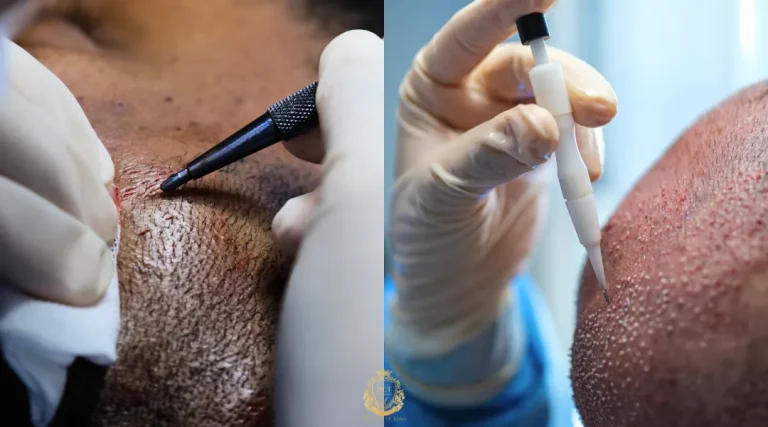
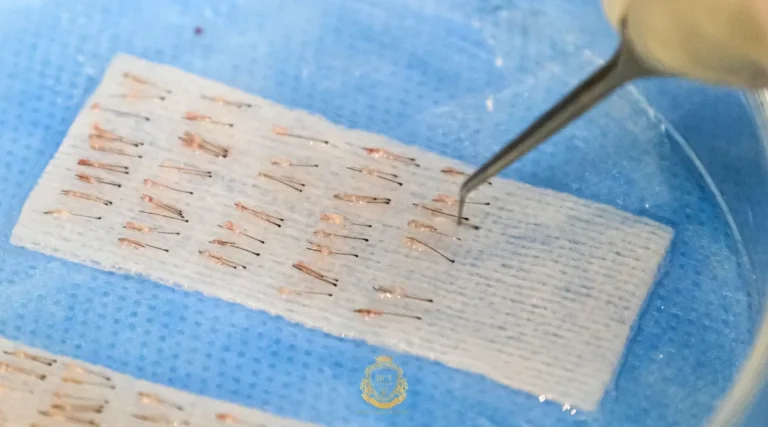
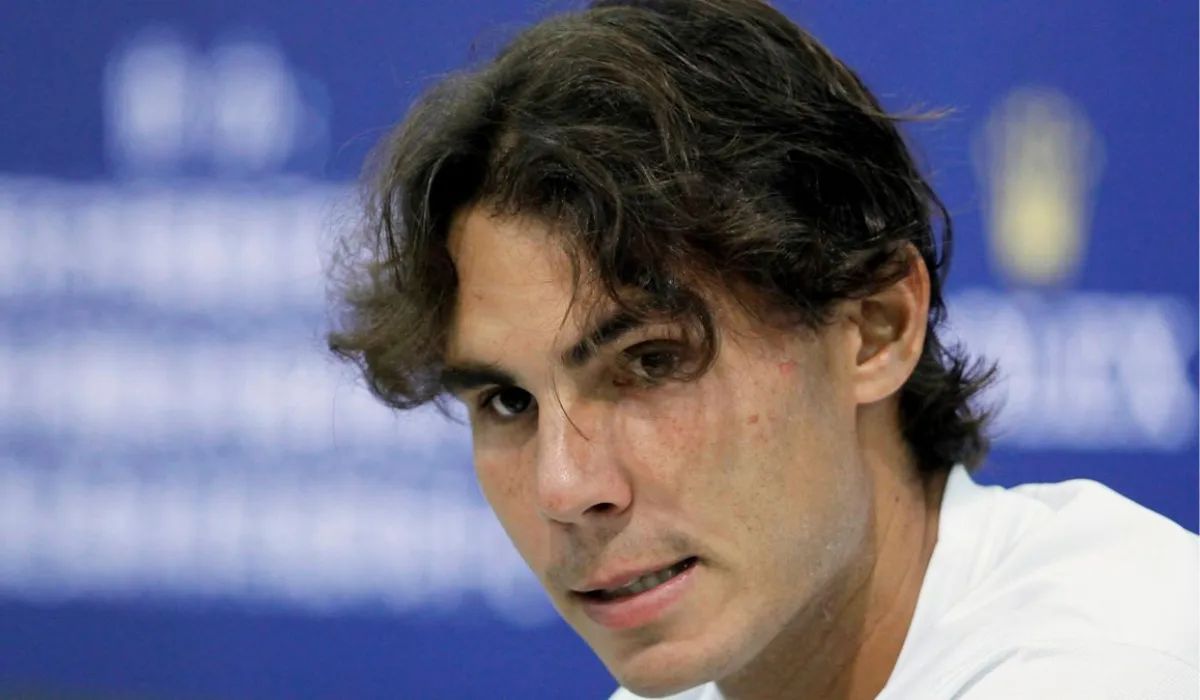
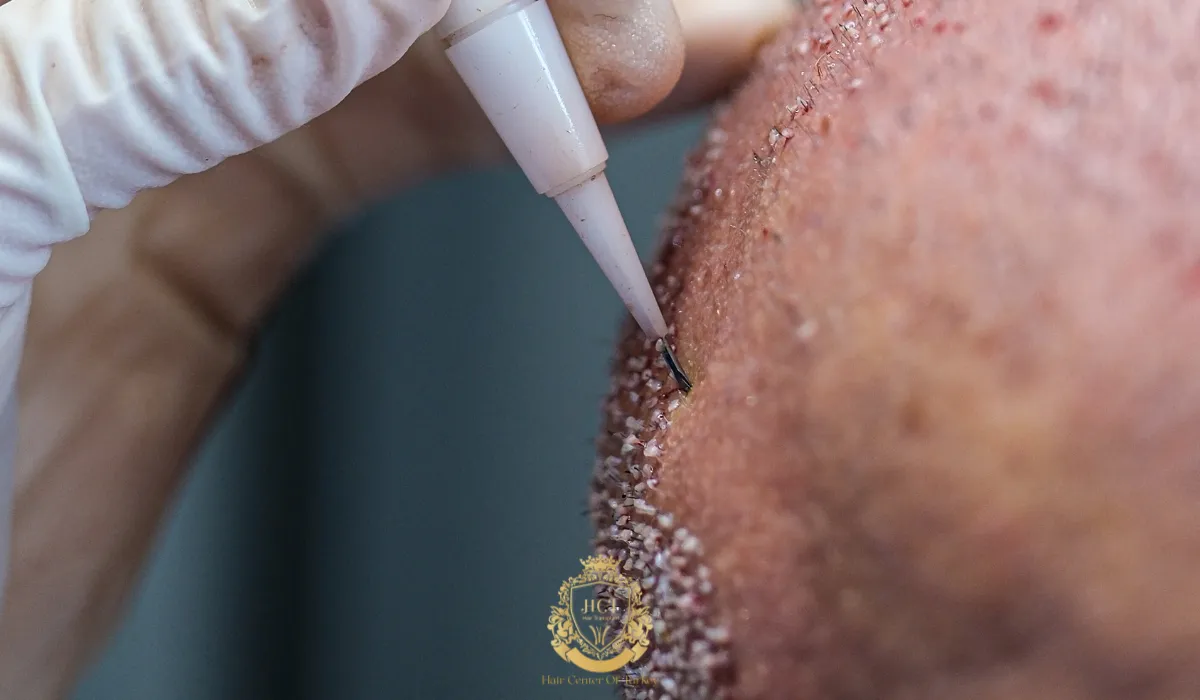
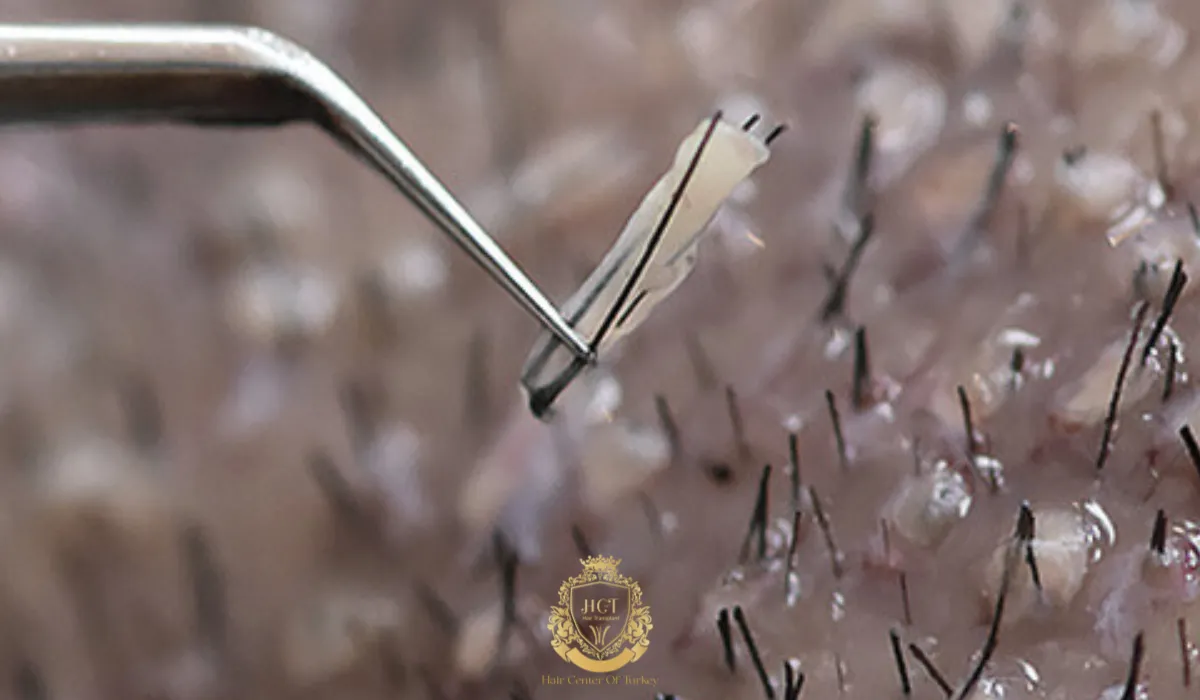
FUE is the technique most frequently linked to Nadal’s case. With FUE, follicles are taken one by one from a donor area (usually the back and sides of the scalp) and placed into thinning zones, aiming for a natural direction and density.
Athletes and public figures often prefer FUE because it typically avoids a long linear scar and supports shorter hairstyles once the donor area heals.
How Many Grafts Were Likely Implanted?
Exact graft counts are rarely confirmed for public figures, and estimates can vary by source. Still, a figure around 4,000–4,500 grafts is commonly reported for Nadal’s restoration, which would be a reasonable range for rebuilding a frontal hairline and adding coverage to the crown in moderate hair loss.
For any individual patient, the right graft number depends on the donor supply, the size of the thinning area, hair characteristics (caliber, curl, color contrast), and the density goal.
What You Can Learn From Nadal’s Results
A transplant can rebuild hairline structure and create the appearance of fuller hair, but it does not “cure” male pattern hair loss. Native hairs can keep miniaturizing over time, which is why many clinics recommend a long-term plan that may include medical therapy and follow-up assessments.
Nadal’s photos are also a reminder that lighting, styling, hair length, and camera quality can change how density looks from one appearance to the next.
Want A Similar Result With A Boutique VIP Experience?
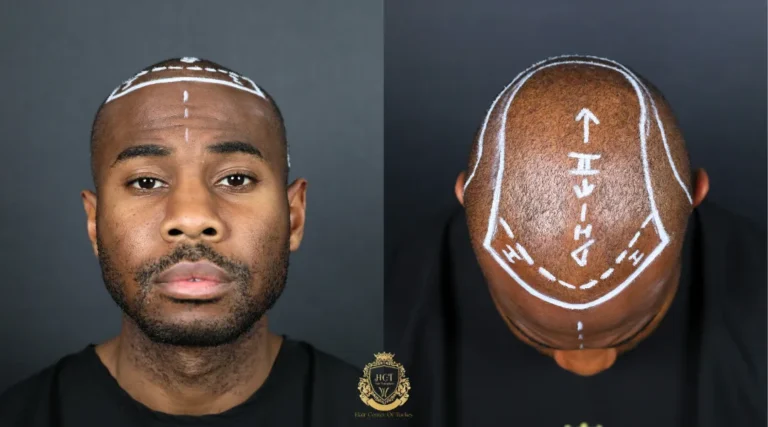
If you’re considering a hair transplant, the most important step is a proper medical evaluation and a plan built around your donor capacity and hair-loss pattern. At Hair Center of Turkey, patients are guided through a personalized approach with a private, boutique-style experience and a focus on natural hairline design.
If you’d like, you can request a consultation to understand which technique suits your case, how many grafts you may need, and what a realistic timeline looks like for growth.
Frequently Asked Questions
What is the cost of Rafael Nadal’s hair transplant?
The fee has not been made public; reports suggest it was approximately €9,000 (≈£7,700).
What happened to Rafael Nadal’s hair?
Male pattern baldness caused thinning at the crown/front; it was reported that he underwent FUE in Madrid in 2016.
How many times has Rafael Nadal had hair transplants?
There is no confirmed number; the press generally reports one procedure, but there are rumors of a “second” one.
Who are the most famous celebrities who have had hair transplants?
Wayne Rooney, Ben Stokes, Jimmy Carr, James Nesbitt, Cheyenne Jackson, Calum Best.
How many grafts did Rafael Nadal have transplanted?
The official number of grafts has not been disclosed; reports mention approximately 4,500 grafts/follicles.
Explore the complete guide: Celebrity Hair Transplants – Sports Personalities