

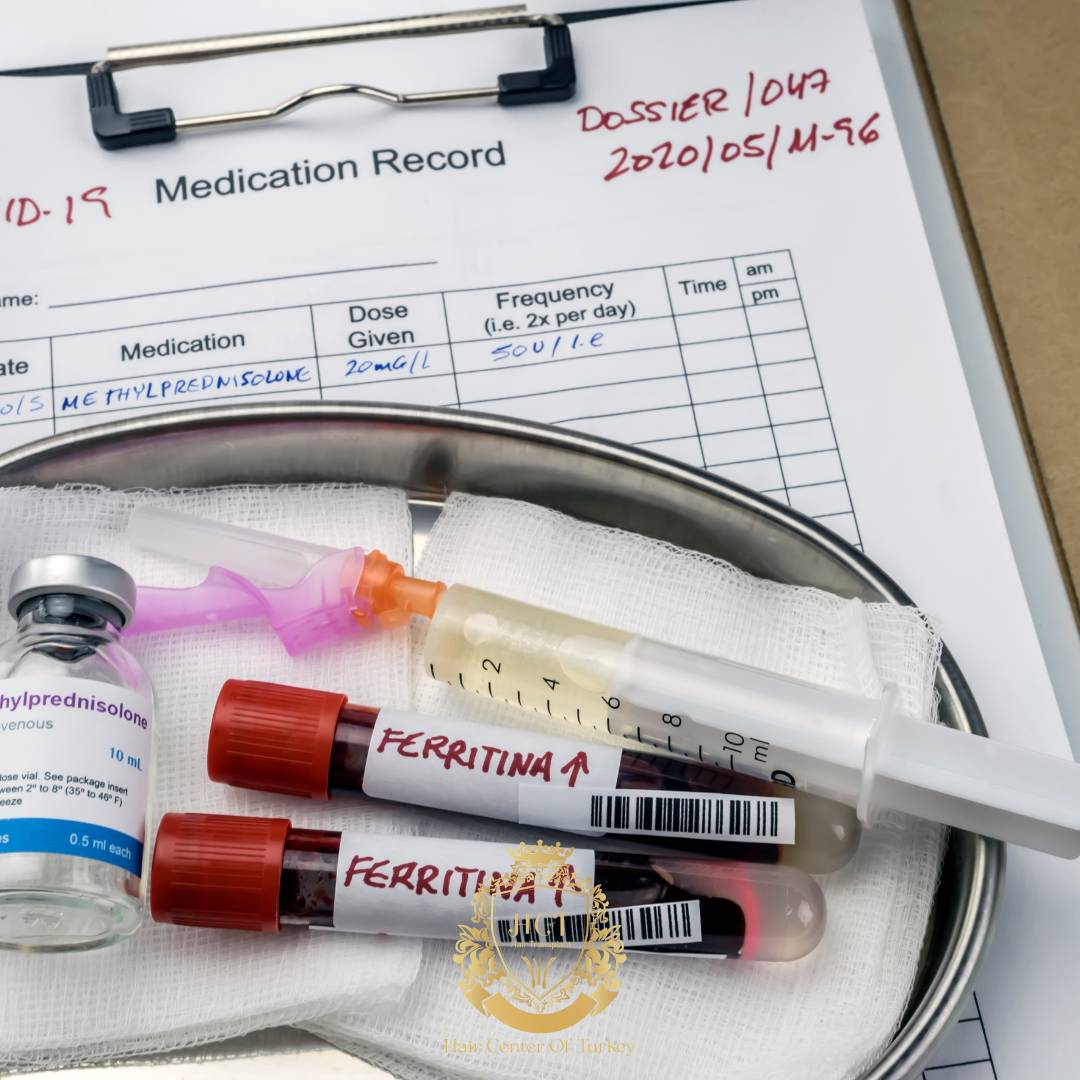
At Hair Center of Turkey, an Istanbul hair transplant and hair restoration clinic, we regularly evaluate patients whose excessive hair shedding is linked to low ferritin levels rather than permanent pattern baldness. The short answer is that low ferritin is one of the most common—and most reversible—causes of diffuse hair loss because hair follicles need adequate iron stores to remain in the active growth (anagen) phase. Ferritin is your body’s iron storage protein, and a simple blood test can reveal whether your iron reserves are sufficient to support healthy hair growth. In this guide, our specialists explain the causes of low ferritin, common symptoms, how to interpret ferritin test results, and when correcting iron deficiency may help reduce hair loss.
Table of Contents
Ferritin and hair loss: quick summary
Ferritin is your body’s stored iron, and a simple blood test shows whether those reserves are full or running low. Low ferritin is one of the most common and most reversible triggers of hair shedding, because follicles need a steady iron supply to stay in their growth phase. Shedding can begin while haemoglobin still looks normal, since ferritin drops first. For healthy hair growth, many clinicians want ferritin comfortably above 30 ng/mL, and higher when shedding is active. At Hair Center of Turkey, we test ferritin as part of a full hair-loss assessment so treatment targets the cause rather than the symptom.
Ferritin is the protein that stores iron in your body, so a ferritin blood test shows how much iron you have in reserve rather than how much is moving through your bloodstream right now. At Hair Center of Turkey, our hair restoration team often traces unexplained shedding back to low ferritin, because hair follicles are among the first tissues to feel an iron shortfall. This guide explains what ferritin means, what counts as a normal level, why ferritin drops, the symptoms that follow, and how to read your test results when hair loss is part of the picture.
Ferritin is a protein that stores iron inside your cells and releases it when your body needs it. A ferritin blood test is one of the fastest ways to estimate your iron stores and investigate symptoms like fatigue, dizziness, hair shedding, or restless legs. Low ferritin often reflects iron deficiency, while high ferritin can rise with inflammation or liver conditions.
What Is Ferritin?
Ferritin is the body’s main iron-storage protein. It binds to iron and keeps it available for key tasks such as making healthy red blood cells, supporting muscle function, and helping organs work normally.
Because ferritin reflects stored iron, it can drop before haemoglobin becomes low. That is why people can feel unwell with “normal” haemoglobin but depleted iron stores, especially if there has been ongoing blood loss or poor absorption.
Why Ferritin Levels Matter
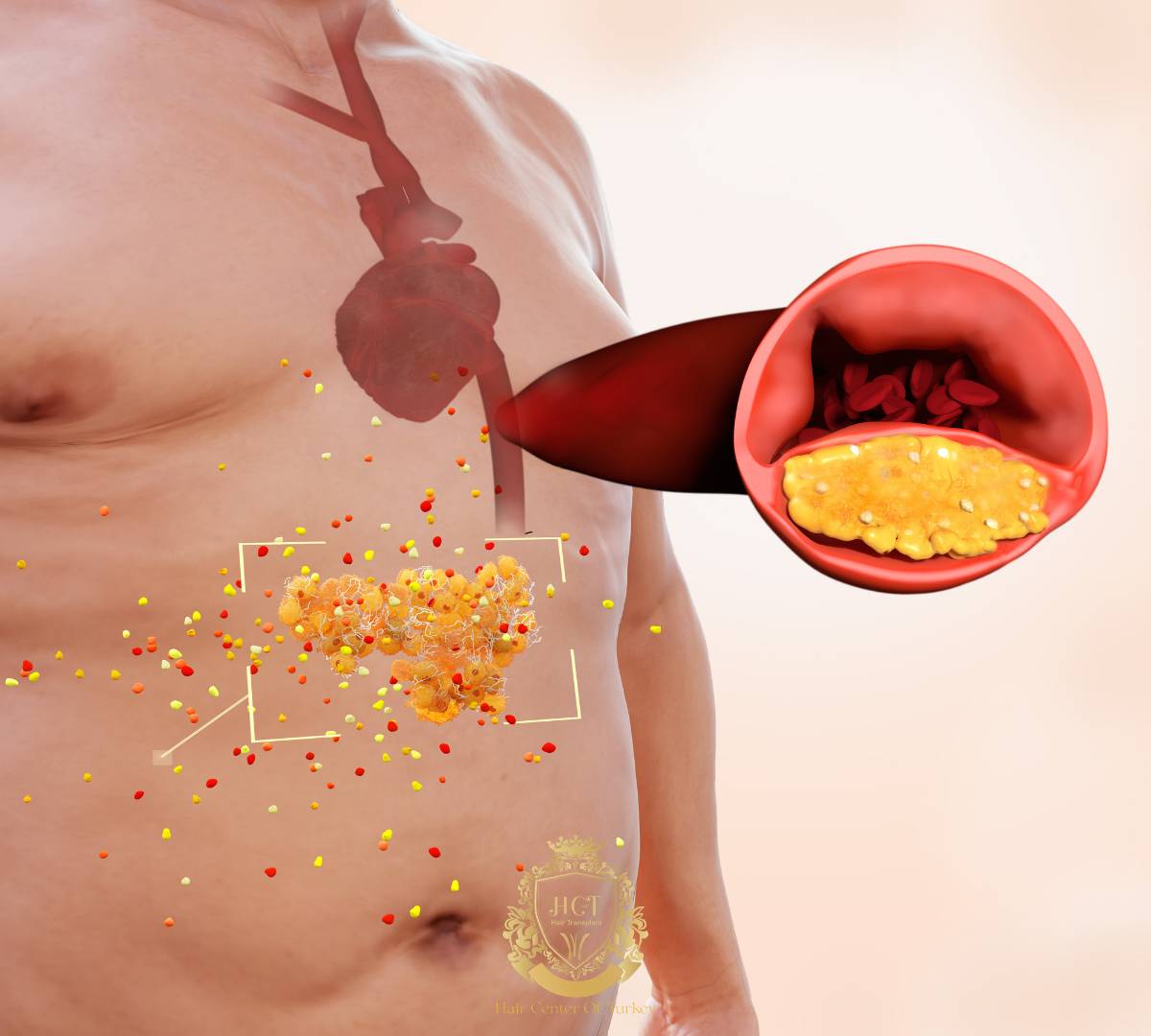
Iron is essential, but the body also needs tight control because excess iron can damage tissues. Ferritin helps keep iron in a safer, usable form and acts like a reserve supply.
Clinicians often interpret ferritin alongside other tests, such as serum iron, transferrin saturation, and total iron-binding capacity, to understand whether low energy or anaemia symptoms are linked to iron status.
What Causes Low Ferritin?
Low ferritin usually means your body’s iron stores are running low. Common causes include:
- Blood loss, especially heavy or prolonged menstrual bleeding.
- Pregnancy and the period after childbirth, when iron needs increase and blood loss may occur.
- Low dietary iron intake (for example, restrictive diets without enough iron-rich foods).
- Reduced absorption due to stomach or intestinal problems (such as coeliac disease, inflammatory bowel disease, or gastritis).
- Regular blood donation or recent surgery/trauma with blood loss.
- High intake of tea or coffee with meals, which can reduce iron absorption when eaten at the same time as iron-rich foods.
If ferritin is low, the priority is to find the reason. Treating the number without identifying ongoing blood loss or malabsorption can delay proper care.
Symptoms Linked With Low Ferritin
Symptoms vary by person and by how quickly iron stores have fallen. Low ferritin may be associated with:
- Tiredness, reduced stamina, or shortness of breath on exertion.
- Headaches, dizziness, or impaired concentration (“brain fog”).
- Hair shedding or brittle nails.
- Restless legs, especially at night.
- Pale skin or feeling cold more easily.
These symptoms are not specific to ferritin. A clinician may check for other causes such as thyroid disease, vitamin B12/folate deficiency, infection, inflammation, or sleep problems.
How Is Ferritin Measured?
Ferritin is measured with a simple blood test. Results are reported in nanograms per millilitre (ng/mL) or micrograms per litre (µg/L), depending on the laboratory.
Reference ranges differ between labs and by age and sex. Many laboratories use adult ranges similar to:
- Men: about 30–400 ng/mL
- Women: about 13–150 ng/mL
Your report will show the range used by your testing laboratory. Interpretation should consider symptoms, pregnancy status, inflammation markers, and other iron studies.
What Can High Ferritin Mean?
Ferritin can rise for reasons that have nothing to do with having too much iron. It is an “acute-phase reactant,” meaning it can increase with inflammation or illness.
Common causes of high ferritin include inflammation or infection, liver disease (including fatty liver), alcohol excess, metabolic syndrome, kidney disease, and some cancers. Iron overload conditions such as hereditary haemochromatosis are another possibility, especially when transferrin saturation is also high.
How To Improve Ferritin Safely
Improving ferritin usually means restoring iron stores and addressing the underlying cause. Typical approaches include dietary changes, treating sources of blood loss, and iron supplementation when appropriate.
Do not start iron supplements without medical advice. Too much iron can be harmful, and the right dose and duration depend on your test results and your health history.
Food choices that support iron intake include red meat, liver, poultry, fish, legumes, tofu, dark leafy greens, nuts, seeds, and fortified cereals. Vitamin C-rich foods (such as citrus fruit, peppers, and tomatoes) can improve iron absorption when eaten with iron-rich meals.
If tea or coffee is a daily habit, having it between meals rather than with meals can help. Your clinician may also advise further tests or, in certain cases, intravenous iron.
What Are Normal Ferritin Levels by Age and Sex?
Normal ferritin ranges depend on age and sex. In adults they usually run about 30–300 ng/mL for men and 13–150 ng/mL for women, while children typically fall between 7–140 ng/mL — but exact reference values vary by laboratory.
- Children (1–15 years): about 7–140 ng/mL
- Adult men: about 30–300 ng/mL
- Adult women: about 13–150 ng/mL
FAQ
What does ferritin level tell you?
Ferritin reflects stored iron and helps assess iron deficiency or overload.
How do you fix ferritin levels?
Correct the cause; raise low ferritin with iron, treat overload medically, often phlebotomy.
What will happen if ferritin is low?
Low ferritin can progress to iron-deficiency anemia, causing fatigue, weakness, breathlessness.
What is the normal ferritin level by age?
Ferritin ranges vary; adults ~30–300 ng/mL, children ~7–140 ng/mL.
What are the early signs of low ferritin?
Early signs include fatigue, reduced exercise tolerance, hair shedding, restless legs, headaches.
Explore the complete guide: Hair Loss Types and Causes