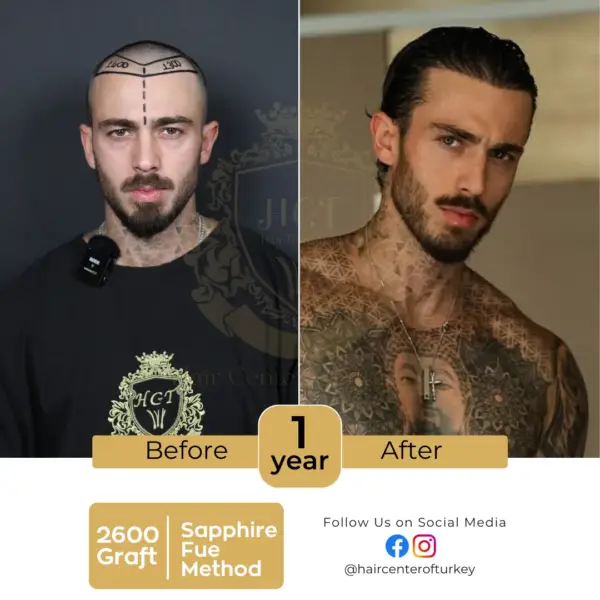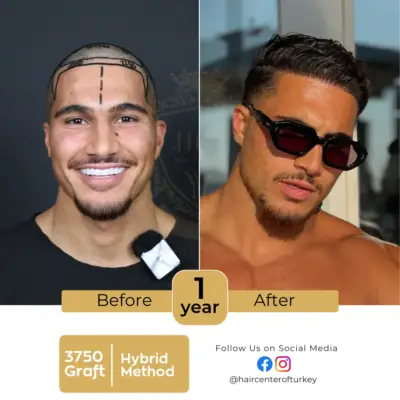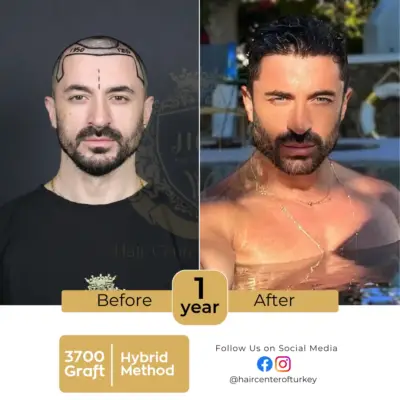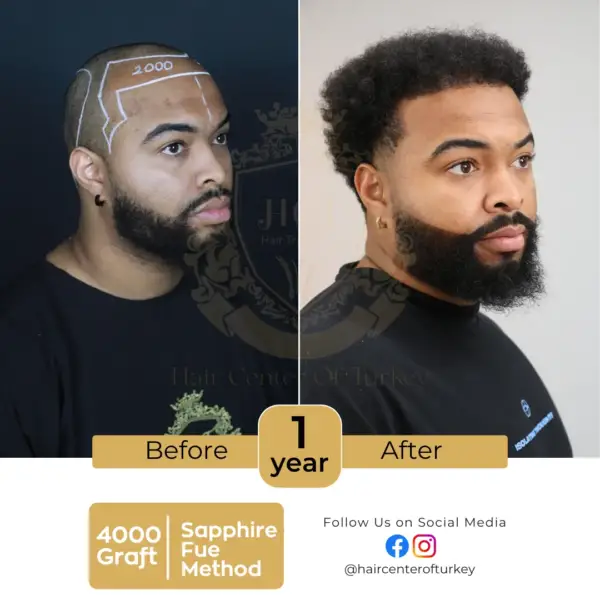


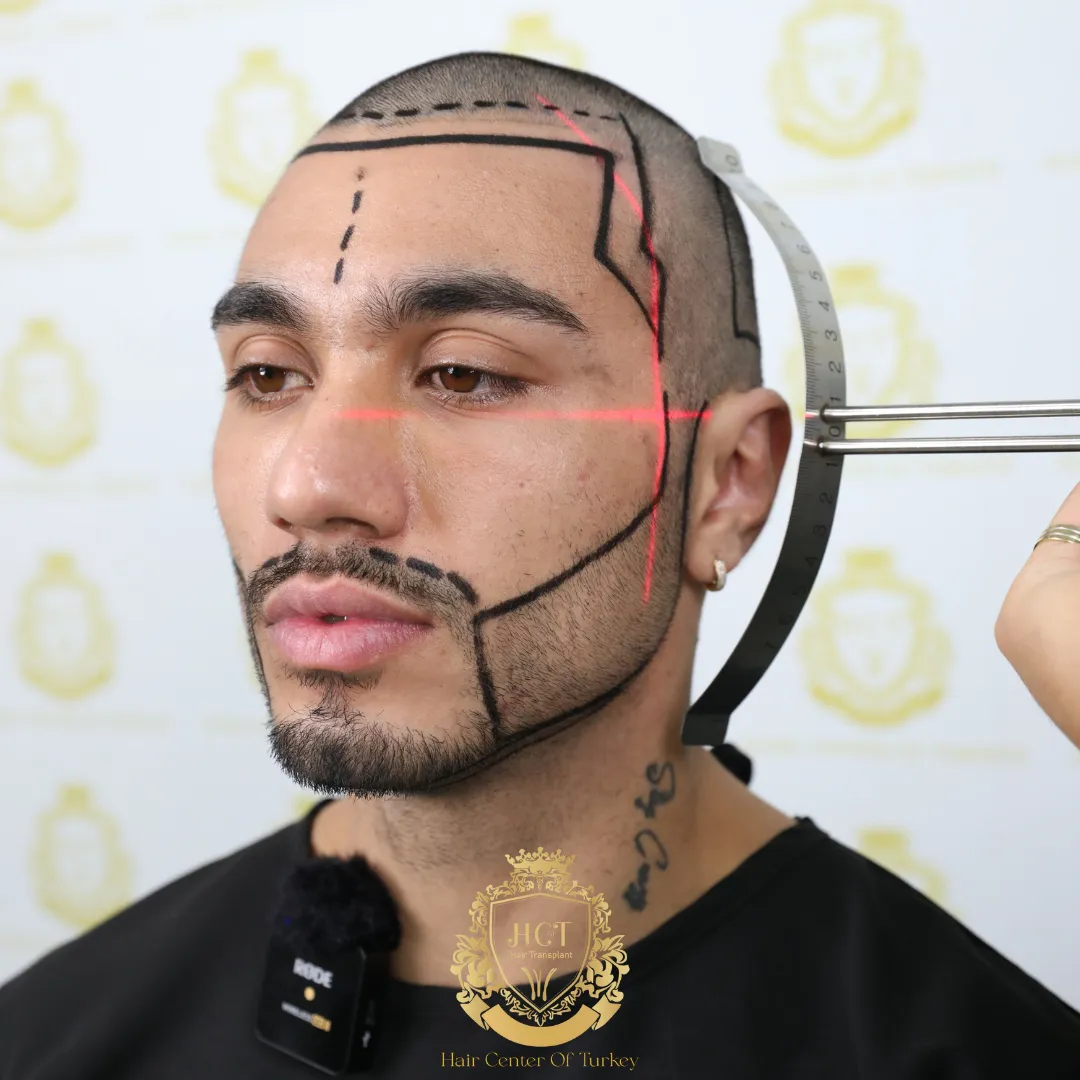
At Hair Center of Turkey, a hair transplant clinic in Istanbul, we perform DHI and FUE beard transplants year-round for men dealing with patchy growth, thin cheeks, scarring, or naturally sparse facial hair.
DHI vs FUE Beard Transplant Comparison
Facial hair has become one of the most requested areas in modern hair restoration, and that is easy to understand. A beard frames the face, changes how the jawline looks, and often has a bigger impact on overall appearance than people expect. That is why men dealing with patchy growth, thin cheeks, scarred areas, or naturally sparse facial hair often end up asking the same question: should I choose DHI or FUE for a beard transplant? The answer is not as simple as clinic advertising makes it sound. Beard and moustache reconstruction has grown steadily in recent years, and a peer-reviewed review notes that the procedure is now widely used both for correction of density deficits and for cosmetic enhancement of existing facial hair. The same review cites ISHRS data showing that non-scalp procedures in men increased meaningfully, with beard and moustache work forming a visible part of that trend.
The first thing worth clearing up is terminology. In everyday marketing, clinics often present “DHI vs FUE” as if they are two completely separate worlds. The ISHRS does not describe it that way. Its patient guidance says implanters are tools used during placement, and it explicitly states that DHI is not a separate hair transplant method in itself. In practice, what many clinics call DHI usually means FUE-style graft extraction followed by implantation with a sharp or dull implanter, rather than the more conventional premade-slit-plus-forceps approach. That distinction matters because it shifts the conversation away from buzzwords and back toward what really determines outcomes: surgeon judgment, graft handling, facial-hair design, and the skill of the team.
Table of Contents
Is DHI better than FUE for a beard transplant?
Not automatically. A better way to think about it is that DHI may offer certain practical advantages in some beard cases, but it is not a universal upgrade that makes standard FUE-style implantation obsolete. The ISHRS notes that implanters can reduce direct handling of the bulb, which may lower trauma to delicate grafts, while a peer-reviewed study on implanter use found that minimal handling and reduced out-of-body time can support efficient placement. At the same time, a detailed beard reconstruction review shows that excellent facial-hair work can also be done with premade slits or stick-and-place methods when the surgeon controls angle, direction, and density properly. Taken together, the published guidance suggests that the real winner is not the label but the execution.
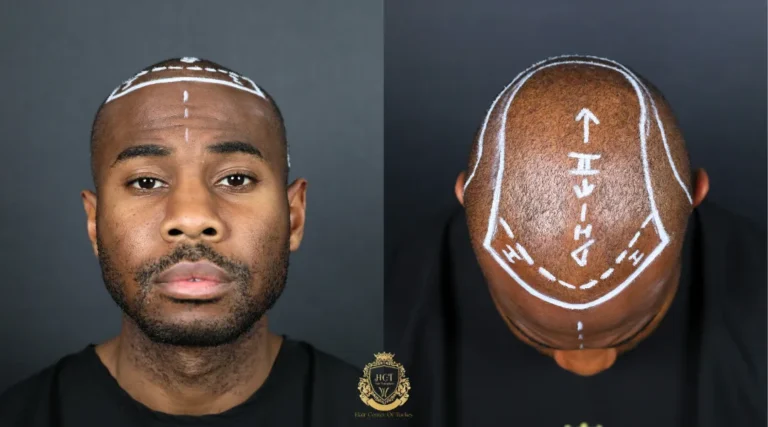
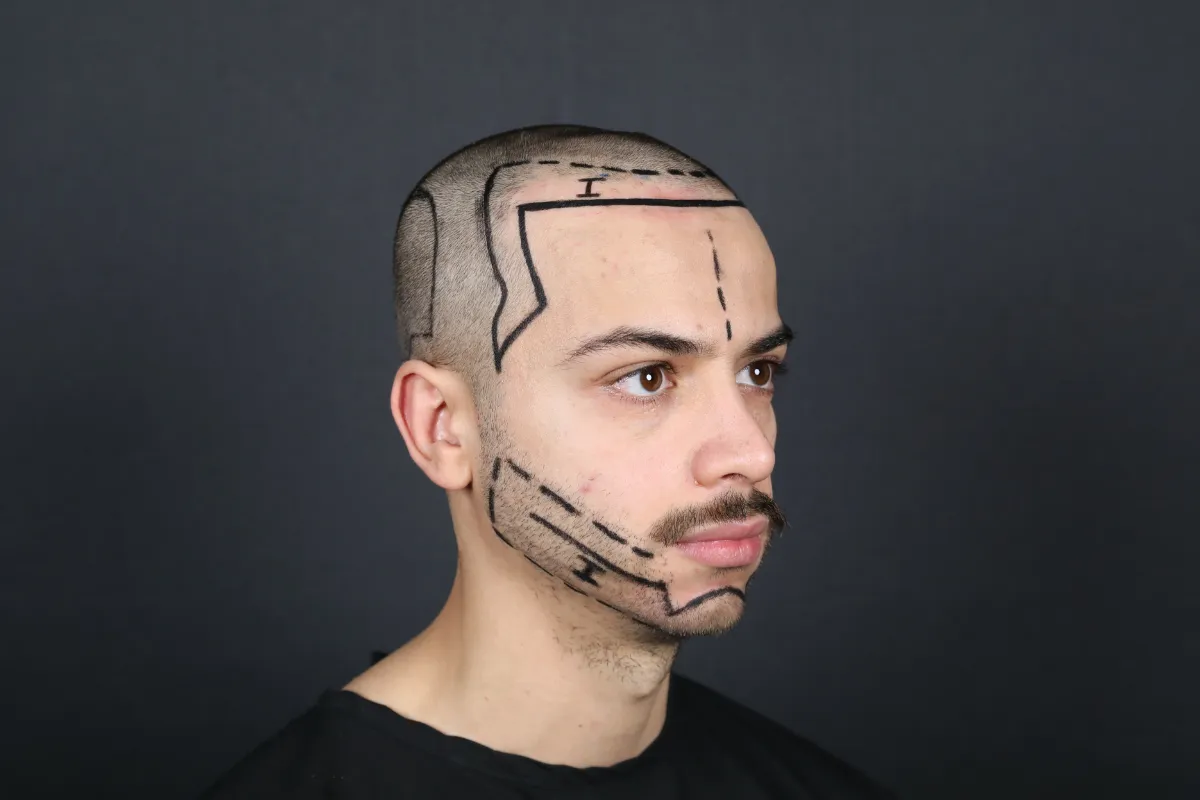
That is especially true in beard work because the face is far less forgiving than the scalp. The beard border has to look soft, the cheek line has to look believable, and the direction of growth has to match the natural way facial hair lies against the skin. In the peer-reviewed reconstruction review, the authors emphasize that beard slits should often be made at very acute angles, around 10 to 20 degrees, and aligned with the natural downward or outward direction of existing beard hair. They also note that the cheek border often looks best with lower density and single-hair grafts for a feathered edge, while fuller density belongs in the body of the beard. In other words, the artistry matters as much as the instrument.
What are the biggest practical differences between DHI and FUE for a beard transplant?
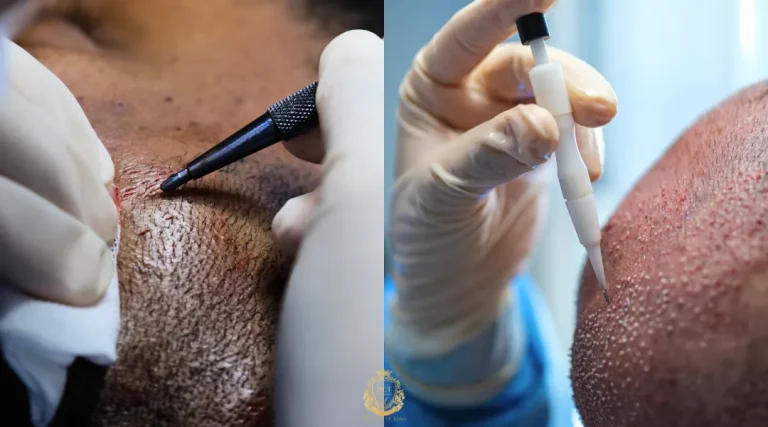
DHI usually changes the implantation step more than the extraction step. The ISHRS explains that DHI is often used to describe immediate implantation with an implanter, not a totally separate transplant method.
Standard FUE-style beard work often relies on premade slits and then graft placement, while DHI-style placement uses implanters. The beard reconstruction review describes facial-hair transplantation as scalp graft harvesting followed by placement into premade slits or by stick-and-place methods.
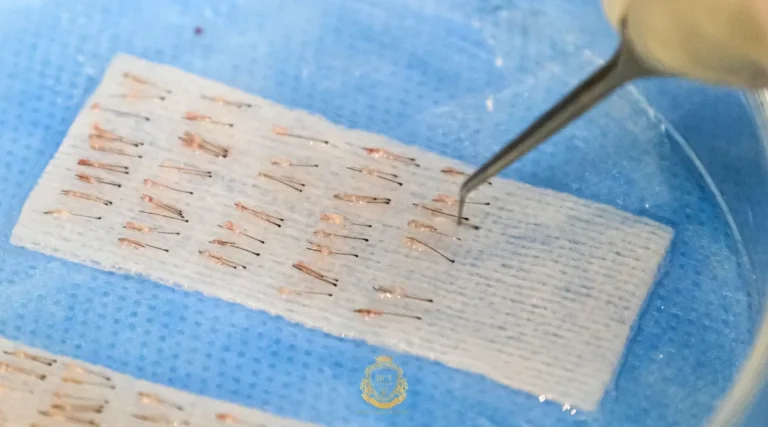
DHI may reduce direct graft handling. ISHRS says the advantage of implanters is that the bulb is not handled directly, potentially reducing trauma, and a clinical paper on implanter use found benefits from minimal handling and less out-of-body time.
Conventional FUE implantation can still be excellent for beard design when the surgeon controls angle and direction well. The same beard reconstruction review explains that the naturalness of sideburns, cheek beard, and goatee depends heavily on acute angulation, coronal slit design, and careful graft selection.
DHI is often marketed as more precise, but precision in real life still depends on the operator. Published guidance consistently centers surgeon skill and graft handling rather than claiming that one instrument guarantees the better aesthetic result.
Which technique gives a more natural-looking beard line?
If the surgeon is experienced in facial-hair design, both can look natural. That may sound frustratingly balanced, but it is the honest answer. Beard restoration is not just about putting hairs into skin. It is about placing the right graft type in the right zone. The border of the cheek beard needs softer, lighter placement, usually with single-hair grafts, while the interior can tolerate stronger density and a mix of single- and two-hair grafts. The published beard reconstruction review makes this point very clearly, and it is exactly why the final result depends so much on planning. A technically perfect implantation tool cannot save a poorly designed beard outline.
Where DHI often earns its reputation is in small, highly visible areas where control over angle and depth feels especially valuable. That can make it attractive for cheek lines, moustache detailing, scar camouflage, or cases where the patient wants a very sharp but believable beard frame. But that does not mean FUE-style slit placement is somehow crude. In fact, the beard literature describes slit design, direction, and density planning in very sophisticated detail, and the authors clearly treat recipient-site creation as a core aesthetic step. The practical takeaway is simple: for beard work, naturalness is built through design logic first and implantation method second.
Who is usually a better candidate for DHI or FUE?
- DHI often suits patients who want meticulous shaping in smaller or more visible beard zones. Because implanters can help with controlled placement and minimal graft handling, many surgeons favor this style for detail-oriented work.
- FUE with premade slits often suits patients needing broader beard coverage. Beard reconstruction literature describes large-zone planning with careful slit direction, density control, and efficient placement across the cheeks, jawline, and goatee.
- Patients with scars or patchy areas may do well with either approach, depending on the skin and design goal. Beard transplantation is used for congenital hypotrichia, post-trauma scars, post-surgical scars, and cosmetic enhancement, according to the peer-reviewed review.
- People expecting a one-session miracle may need a reality check whichever method they choose. The beard reconstruction review says one session may not always be enough for the desired density and that some patients need a second sitting.
- The best candidate is not “a DHI candidate” or “an FUE candidate” in the abstract. The best candidate is someone whose donor area, skin characteristics, beard pattern, and aesthetic goal have been properly assessed by a physician-led team. ISHRS guidance repeatedly emphasizes the surgeon’s role and warns consumers not to let unlicensed technicians dominate the case.
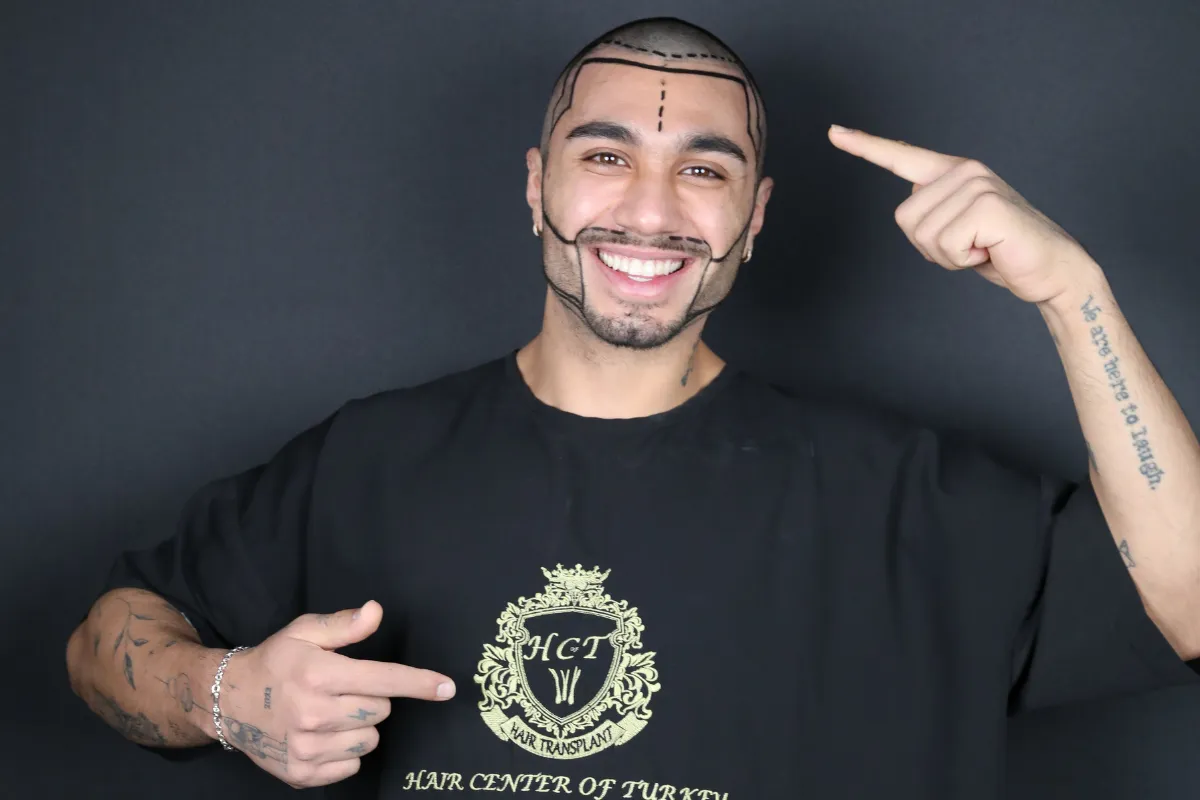
What does recovery look like after a beard transplant?
Precision And Natural Angle Control
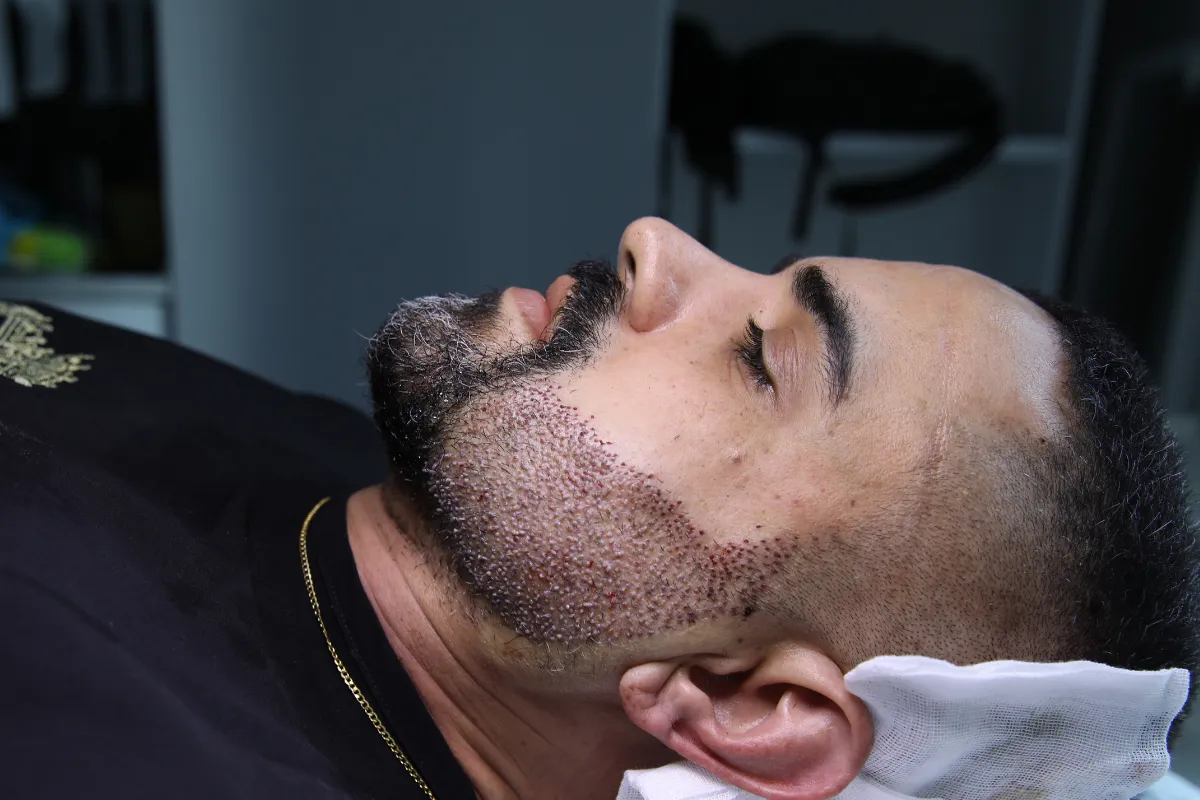
Recovery is usually manageable, but patients should not mistake manageable for trivial. General hair-transplant aftercare guidance from the NHS says grafts are not secure for the first two weeks, patients may need one to two weeks off work, exercise may need to be reduced during the first month, and the transplanted hairs often shed after a few weeks before growing back later. New growth usually starts to appear around four months, and full results may take 10 to 18 months. Even though that guidance is general rather than beard-specific, the broader lesson still applies to facial-hair work: the first weeks matter, and patience matters even more.
Beard transplantation also comes with its own technical challenges because the facial skin is mobile, vascular, and harder to work with than the scalp. The beard reconstruction review notes that implantation can be more demanding due to the laxity of the facial skin, the risk of bleeding, and the longer time needed when only one placer can work comfortably at a time. That helps explain why surgeon experience matters so much in beard cases. The procedure may sound smaller than a scalp transplant, but the margin for visible aesthetic error is often tighter.
Why do so many patients choose Turkey for DHI or FUE beard transplant?
Turkey remains one of the strongest destinations for facial-hair restoration because it combines technical familiarity with a fully developed medical-travel structure. The official Heal in Türkiye platform says the country is preferred in health tourism for its skilled personnel, advanced technological infrastructure, affordable treatment costs, and ease of access. The same platform reports that 801,723 people visited Turkey for healthcare services in the second quarter of 2024 alone, and its official treatments directory includes hair transplant as a recognized treatment category. For international patients, that matters because it signals that the journey is already built around overseas care rather than being improvised from scratch.
That said, Turkey should be chosen for the right reason. Not because every clinic is equally good, and not because a catchy package deal proves quality. The ISHRS warns consumers to be careful with cross-border hair restoration and to make sure a doctor is actually performing the surgery rather than delegating it to unlicensed technicians. That warning is important precisely because Turkey is so popular. The country offers real advantages, but those advantages only help you if you choose a doctor-led clinic that understands beard design, donor management, and long-term naturalness. When you do that, Turkey becomes more than a low-cost option. It becomes a very practical one.
FAQs About DHI vs FUE Beard Transplants
What is the difference between DHI and FUE beard transplant techniques?
DHI uses an implanter pen for placement; FUE uses pre-made sites then placement.
Which method is better for beard transplantation, DHI or FUE?
Neither is universally better; outcomes depend mainly on surgeon skill and planning.
Is DHI or FUE less painful for beard transplants?
Neither; pain is similar under local anesthesia, with comparable postoperative soreness.
How long does recovery take for DHI vs FUE beard transplants?
Recovery is similar: scabs 7–10 days; visible growth starts around 3–4 months.
Are the results of DHI and FUE beard transplants different?
Results are similar; naturalness depends on angle control, density design, and graft survival.
Explore the complete guide: Hair Transplant Techniques